
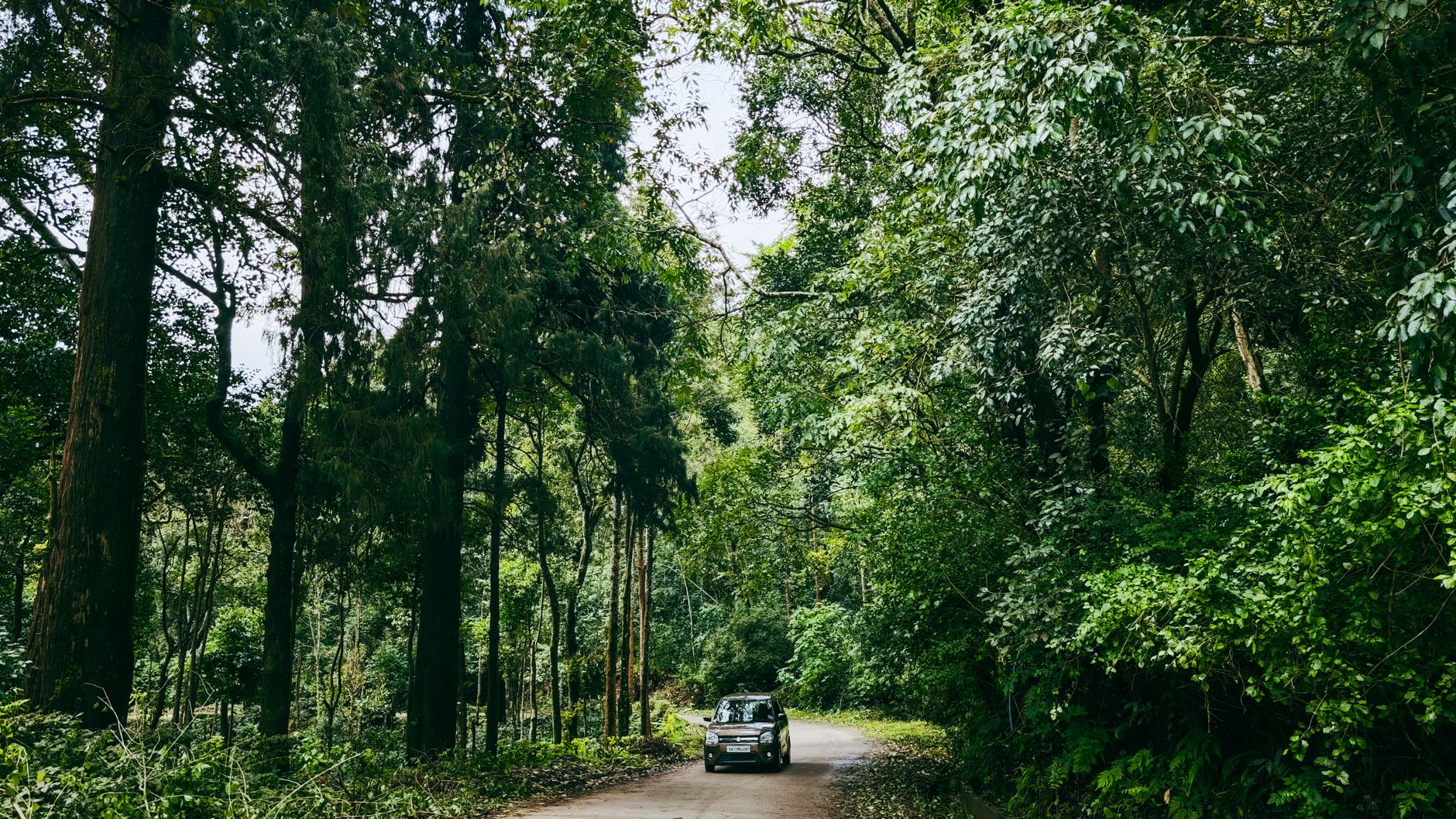
Tired of the same old tourist trails? I dared to turn off the main highway, following instinct and curiosity down every back road imaginable. What I found were not just stunning landscapes, but genuine human connections, unexpected discoveries, and a profound shift in how I experience the world. ---
The sun beat down, turning the asphalt into a shimmering mirage. Ahead, a seemingly endless line of brake lights stretched towards the horizon, a testament to peak season travel. I gripped the steering wheel, my jaw tight, watching the speedometer crawl. This wasn't the adventure I'd envisioned. This was just… traffic. My carefully planned itinerary, packed with 'must-see' landmarks, felt less like an exploration and more like a checklist.
Then, I saw it: a small, weathered sign pointing to a village I'd never heard of, nestled deep within the rolling hills. "Scenic Route," it promised, in faded paint. With a sigh of resignation, but also a flicker of rebellion, I flicked on my indicator. My travel companion, usually a stickler for schedules, looked at me, bewildered. "Where are you going?" she asked. "Somewhere else," I replied, a grin spreading across my face. That spontaneous turn wasn't just a change of direction; it was the beginning of an entirely new philosophy for my travels. From that day on, I vowed to take every back road, every obscure detour, every unpaved path. And I have never, not once, regretted it.
### The Call of the Uncharted Path: Why Back Roads Are the Real Deal
We live in a world obsessed with efficiency. Fastest route. Quickest flight. Most popular attractions. But what if the magic of travel isn't found in efficiency, but in inefficiency? In the delightful slowness of a meandering journey, in the unexpected discoveries that only happen when you relinquish control and let curiosity be your guide?
Back roads are more than just alternative routes; they are arteries into the soul of a place. They bypass the commercialized facades and lead you directly to the heartbeat of local life. Here’s why I believe they are the real deal:
* Authenticity Unlocked: You won't find souvenir shops selling mass-produced trinkets or chain restaurants. Instead, you'll discover family-run businesses, local markets brimming with fresh produce, and unpretentious eateries serving generations-old recipes.
* Serendipitous Encounters: The beauty of the back road lies in its unpredictability. You might stumble upon a forgotten ruin, a vibrant local festival, or strike up a conversation with a fascinating stranger who shares a story that stays with you forever. These are the moments you can't plan, only experience.
* A Deeper Connection: When you slow down, you start to notice details: the unique architecture of a farmhouse, the wildflowers blooming by the roadside, the rhythm of daily life. You become an observer, not just a transient visitor, fostering a deeper appreciation for the environment and its people.
* Escape the Crowds: Let's be honest, sometimes the sheer volume of tourists can detract from the experience. Back roads offer solace, space, and the chance to enjoy breathtaking landscapes or charming towns without fighting for elbow room.
My first back-road detour led me to a tiny Portuguese village called Monsaraz, a hilltop fortress town in the Alentejo region. The main road would have taken me straight to Lisbon, but this turn-off promised... nothing in particular. What I found was a whitewashed labyrinth of cobbled streets, a castle with panoramic views of a vast lake, and a silence so profound it felt like a embrace. I spent an afternoon sipping local wine at a tiny cafe, listening to the proprietor recount tales of the village's history, feeling more connected than I ever had at a crowded monument. That day, Monsaraz wasn't just a place; it was a feeling.
### Europe's Sun-Drenched Detours: A Taste of Authentic Iberia
Europe, often perceived as a continent of well-trodden paths, truly shines when you venture off the beaten track. Forget the high-speed trains and toll roads; rent a car and let the GPS "avoid highways." My most cherished European memories are from these slower journeys.
My Alentejo Revelation (Portugal):
After that initial detour to Monsaraz, the Alentejo region became my spiritual home for back-road exploration. Imagine endless olive groves, cork trees, and fields of wild poppies. The roads here are often narrow, winding, and blissfully empty.
* Specifics: I rented a modest car (a Renault Clio, perfect for tight turns) from Lisbon airport for about €25/day, including basic insurance. My route took me from Monsaraz to Évora (a UNESCO site, but easily explored without crowds if you stay off the main squares), then deeper into the Alentejo, visiting small towns like Arraiolos (famous for its hand-embroidered rugs) and Vila Viçosa (with its stunning Ducal Palace).
Cultural Insight: The Alentejo is Portugal's breadbasket and wine region, but also its soul. The pace of life is incredibly slow. Lunch often stretches for hours, and conversations are punctuated by sips of robust red wine. I learned a few key Portuguese phrases – olá (hello), obrigado/a (thank you), por favor* (please) – which opened doors to warm smiles and friendly waves.
Local Perspectives: In Arraiolos, I watched an elderly woman painstakingly stitch a rug in her tiny shop. She offered me a shot of ginjinha* (cherry liqueur) and explained the centuries-old tradition. It was a moment of profound connection, far more meaningful than any museum visit.
Budget Tips: Accommodation in small Alentejo towns can be found for as little as €40-60/night for a charming guesthouse or casa de campo. Meals are incredibly affordable; a hearty lunch of migas (bread-based dish) or bacalhau* (codfish) with local wine can cost €10-15 per person.
* Best Time to Visit: Spring (April-May) for wildflowers and pleasant temperatures, or early autumn (September-October) for harvest festivals and cooler evenings. Avoid July-August when it can be scorching hot.
### Southeast Asia's Verdant Veins: Motorbiking into the Heart of Culture
The chaos of Southeast Asia's major cities often gives way to serene beauty and vibrant local life just a few kilometers off the main thoroughfares. Here, the back roads are often unpaved, dusty, and best explored on two wheels.
The Ha Giang Loop (Vietnam):
This 300km mountainous loop in northern Vietnam is legendary among adventurous travelers, and for good reason. It’s not exactly a "back road" in the sense of being unknown, but its remoteness and the nature of travel make it feel incredibly off-grid.
* Specifics: I rented a semi-automatic motorbike in Ha Giang city for about 150,000 VND (approx. $6.50 USD) per day. My route took 4 days, staying in various homestays along the way in towns like Dong Van, Meo Vac, and Yen Minh. Fuel is cheap and readily available at small roadside stalls.
* How to Get There: From Hanoi, you can take an overnight sleeper bus to Ha Giang city (around 7-8 hours, 200,000-250,000 VND / $8-11 USD).
* Cultural Insight: This region is home to numerous ethnic minority groups – Hmong, Tay, Dao, Giay – each with their unique dress, customs, and languages. Homestays are an incredible way to experience this firsthand. I stayed with a Hmong family, sharing communal meals, learning about their farming practices, and even helping prepare dinner.
* Safety Tips: The roads are incredibly winding, often steep, and can be slippery in the rain. Experience riding a motorbike is essential. Always wear a helmet, drive slowly, and be aware of livestock, children, and other vehicles. Travel insurance is a must. Check weather forecasts, especially during monsoon season (June-September).
* Personal Anecdote: One evening, after a particularly challenging day of riding through misty mountains, I arrived at a small homestay in a village called Lung Cu. The family welcomed me with warm tea and a delicious dinner of local greens, tofu, and rice wine. Despite the language barrier, we communicated through smiles and gestures. The patriarch pointed to the stars, then to his heart, conveying a universal sense of belonging. It was a moment of pure, unadulterated connection.
* Budget Tips: Homestays typically cost 100,000-150,000 VND ($4-6.50 USD) per night, often including dinner and breakfast. Street food or small local restaurants are incredibly cheap, usually less than 50,000 VND ($2 USD) per meal.
### North America's Forgotten Freeways: Americana, Unfiltered and Raw
North America's vastness makes it a prime candidate for back-road exploration. Beyond the interstates lie a tapestry of small towns, quirky roadside attractions, and landscapes that unfold with quiet grandeur.
The Appalachian Foothills (USA):
Forget the bustling coastal cities; head inland into the heart of the American South. My journey took me through parts of rural North Carolina and Tennessee, along what were once primary routes before the interstates siphoned off traffic.
* Specifics: I rented a car from Charlotte, NC (approx. $40-60/day depending on season). My route wound through towns like Mount Airy, NC (Andy Griffith's hometown, a charming step back in time), Floyd, VA (a hub for Appalachian folk music), and along segments of the Blue Ridge Parkway (a designated scenic byway, but with plenty of smaller roads branching off).
* Getting Around: A car is essential. GPS works, but an old-fashioned paper map or offline maps app can be invaluable for finding those truly off-the-grid spots.
* Cultural Insight: This region is rich in Appalachian culture – storytelling, bluegrass music, traditional crafts, and hearty Southern cooking. People are incredibly friendly and eager to share their local history.
* Personal Anecdote: In Floyd, I stumbled upon the "Friday Night Jamboree" at the Floyd Country Store. Locals and tourists alike gathered to play fiddles, banjos, and guitars, tapping their feet to traditional tunes. I bought a cheap biscuit and gravy for $3 and spent hours soaking in the raw, authentic music, feeling like I'd walked into a movie scene. Later, a kind old man with a twinkle in his eye taught me a few basic banjo chords.
* Budget Tips: Motels in smaller towns can be found for $60-90/night. Eating at local diners and BBQ joints is affordable; a generous plate of pulled pork with sides might cost $10-15. Many of the best experiences, like the Floyd Jamboree, are free or very low cost.
* Best Time to Visit: Spring (April-May) for blooming dogwoods and azaleas, or Fall (September-October) for spectacular foliage. Summers can be hot and humid, and winters bring snow to higher elevations.
### Navigating the Off-Grid: Your Practical Guide to Back-Road Bliss
Taking the back roads isn't about being reckless; it's about being prepared for anything. Here's how to make your detours smooth and enjoyable:
1. Vehicle Choice is Key: For most European and North American back roads, a standard rental car is fine. For more rugged terrain (like parts of Southeast Asia or remote areas in the US), a motorbike or 4x4 might be necessary. Always check the road conditions for your destination.
2. Navigation Beyond GPS: While Google Maps or Waze are useful, they can sometimes lead you astray on truly undeveloped roads.
* Offline Maps: Download maps for the region before you lose signal. Apps like Maps.me or Gaia GPS are excellent.
* Paper Maps: Old school, but reliable. They give you a broader sense of the area.
* Ask Locals: The best navigation tool! Point to where you want to go on a map (or even draw it), and locals will often give you the best, most up-to-date directions.
3. Fuel Up & Pack Snacks: Gas stations can be scarce on back roads. Keep your tank at least half full. Carry water, non-perishable snacks, and a basic first-aid kit.
4. Embrace Flexibility: Your itinerary will change. Road closures, unexpected detours, or simply falling in love with a place might mean staying longer. That's the beauty of it!
5. Language Basics: Learn a few essential phrases in the local language. Even a simple "hello" or "thank you" can make a huge difference in interactions. Google Translate (with offline language packs) is your friend.
6. Cultural Sensitivity: You are entering people's homes and communities. Dress modestly when appropriate, ask permission before taking photos, and be respectful of local customs and traditions. A genuine smile goes a long way.
7. Budgeting for Spontaneity: Back roads often lead to cheaper food and accommodation, but always have an emergency fund. You might need an unexpected repair or want to splurge on a unique local experience.
### The Art of Serendipity: Embracing the Unexpected
The most valuable lesson back-road travel has taught me is the art of embracing serendipity. It's about letting go of the need for control and opening yourself up to whatever the road brings.
Food Adventures: Forget Michelin stars; seek out the roadside stalls, the hole-in-the-wall eateries, the bustling local markets. In Vietnam, I once pulled over at a tiny, nameless stall in a rice paddy, where a woman served me the most incredible bún chả* (grilled pork with noodles) I've ever tasted, all for a dollar. In Portugal, it was a charcoal-grilled sardine vendor by the sea. These are the flavors that truly define a place.
* Unexpected Lodgings: Instead of pre-booking, I often drive until I find a charming guesthouse or ask locals for recommendations. This has led me to a rustic cabin overlooking a lake, a beautiful riad in Morocco (another back-road adventure for another time!), and a family homestay where I was treated like a long-lost relative.
* The Kindness of Strangers: When you're a little bit lost, a little bit out of your comfort zone, you'll find that people are often incredibly kind and willing to help. I've had strangers invite me for coffee, offer directions with hand gestures, and even share their lunch. These moments are the true souvenirs.
Back-road travel isn't just about the places you see; it's about the person you become. It strips away the pretense, challenges your assumptions, and broadens your perspective. It teaches you resilience, patience, and the profound joy of genuine discovery.
### My Final Detour: The Road Ahead
Taking every back road has transformed my travel philosophy. It’s no longer about ticking off landmarks, but about collecting moments, stories, and connections. It’s about understanding that the journey truly is the destination, and the most beautiful paths are often the ones less traveled.
So, the next time you're planning a trip, or even just driving through your own region, I urge you: look for that faded sign. Take that turn you've always wondered about. Let curiosity be your compass and spontaneity your guide. You might get a little lost, you might encounter a few bumps in the road, but I promise you, what you find will be far more enriching, far more memorable, and far more real than anything you'll find on the highway.
What's your favorite back-road discovery? Share your stories and inspire others to take the scenic route!
---
Visual journey


Tags
Share this adventure
Join the travel community
New adventures, cultural insights and travel inspiration, straight to your inbox.
We may receive a commission if you click on a link and buy a product, service or policy, at no extra cost to you. How affiliate links work.
Been there?