
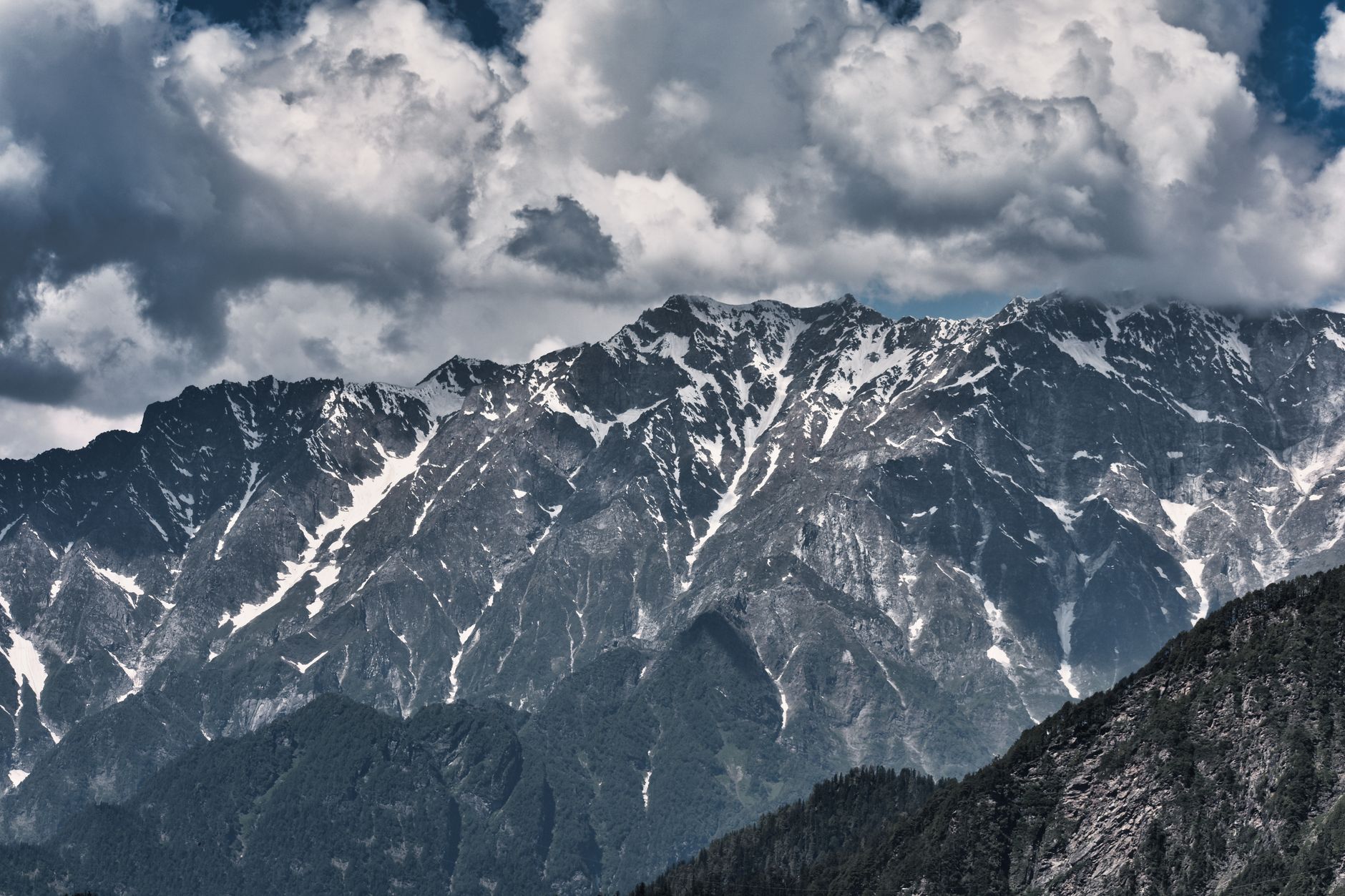
Imagine a train journey where every window frame is a living, breathing masterpiece, far from the madding crowds. I found this hidden gem winding through the heart of the Indian Himalayas, offering unparalleled views and cultural immersion that no mainstream tour can match. Prepare to be enchanted, because this secret won't stay secret for long. ---
## This Train Journey Through the Himalayas Left Me Speechless (Before It Becomes Mainstream!)
The hum of the tracks, the rhythmic clickety-clack, the whistle echoing through a valley carved by ancient glaciers – there’s a magic to train travel that no plane or car can ever replicate. But what if I told you I found a train journey so profoundly beautiful, so utterly untouched, that it felt like stepping into a forgotten dream? A journey through the very heart of the Himalayas that left me utterly speechless, long before the Instagram hordes descend.
Let me rewind. I’d been chasing adventures for years, ticking off the usual suspects: the bustling streets of Bangkok, the ancient ruins of Rome, the iconic beaches of Bali. But a quiet restlessness had begun to stir within me. I craved something deeper, something more authentic, a connection to a place that wasn't filtered through a thousand travel guides or a million hashtags.
It was during a serendipitous conversation in a smoky chai shop in Delhi that the seed was planted. An elderly local, his eyes twinkling with stories, gestured vaguely towards the north. "If you want to see the real Himalayas," he whispered, "find the small train. The one that dances with the mountains." A cryptic clue, perhaps, but for a travel blogger like me, it was an irresistible challenge. Armed with little more than a vague map, a crumpled note with a few Hindi words, and an insatiable curiosity, I set off to find that train.
What I discovered was the Kangra Valley Railway, a narrow-gauge line in Himachal Pradesh, India. While its more famous cousin, the Kalka-Shimla Railway, draws crowds, this lesser-known gem remains largely off the international tourist radar. And believe me, that's precisely why you need to experience it now.
### The Call of the Rails: Why This Journey?
My quest for an authentic Himalayan experience led me directly to the charmingly antiquated platforms of Pathankot Cantonment, the starting point for this extraordinary adventure. Unlike the grand, bustling stations of India's major cities, this one hummed with a different kind of energy – a quieter, more local rhythm. Farmers hauling their produce, families visiting relatives, students heading home from boarding schools – these were my fellow travelers.
I chose this specific train not just for its promise of unparalleled scenery, but for the allure of slow travel. In a world obsessed with speed and efficiency, the Kangra Valley Railway offers a deliberate deceleration, a chance to truly absorb the landscape as it unfolds. This isn’t a journey designed for rushing; it’s an invitation to pause, to breathe, to simply be.
The tickets were ridiculously affordable, a testament to its local utility rather than tourist attraction. I opted for a second-class general compartment, eager to immerse myself fully in the local experience. The carriage was simple, the seats wooden, but the windows were enormous – perfect frames for the masterpiece I was about to witness. As the whistle shrieked and the train lurched forward, I felt a thrill that went beyond mere excitement; it was the joy of embarking on a true discovery.
### Chugging Through Paradise: The Scenery Unfolds
From the moment the train left Pathankot and began its gentle ascent, the world outside transformed. The initial flat plains quickly gave way to rolling foothills, cloaked in dense pine forests that smelled of fresh resin and damp earth. The track, a delicate ribbon of steel, clung precariously to the mountainsides, tracing contours only nature could have designed.
The Kangra Valley Railway is a marvel of engineering, built by the British over a century ago. It navigates a staggering 164 kilometers, crossing 971 bridges and passing through two short tunnels, all without the aid of rack and pinion, a testament to its gentle gradients. This means a smoother, less jarring ride, allowing you to truly soak in the views.
Every turn brought a new panorama more breathtaking than the last. We chugged alongside the roaring Beas River, its glacial waters a milky turquoise, carving ancient paths through the rock. Terraced fields, vibrant green with paddy or golden with wheat, clung to impossible slopes, a testament to the perseverance of the local farmers. Distant waterfalls cascaded down sheer cliffs, catching the sunlight like shimmering silver threads. And then, there they were – the majestic Dhauladhar Range, their snow-capped peaks piercing the azure sky, grand and silent sentinels watching over the valley.
I remember one particular moment, leaning out of the open window (when safe to do so, of course!), feeling the crisp mountain air on my face. The train rounded a bend, and suddenly, a hawk soared directly above us, its wings spread wide, gliding effortlessly on the updrafts. Below, a tiny village nestled in a verdant bowl, its slate roofs glinting in the sun, smoke curling lazily from stone chimneys. It was a scene of such profound tranquility and raw beauty that I literally felt tears welling in my eyes. It wasn't just a view; it was an experience that reset my soul.
The rhythm of the train became my heartbeat. The aroma of local chai, brewed by vendors who hopped on and off at various stations, mingled with the scent of pine and wild herbs. My camera struggled to keep up, but I soon realized some moments were meant to be stored in the heart, not just on an SD card. Still, for those Instagram-worthy shots, keep your camera ready for the unexpected: sunrises painting the peaks in fiery hues, quaint station platforms adorned with vibrant flowers, and the playful dance of light and shadow across the valleys.
### Beyond the Window: Cultural Encounters & Local Life
The magic of this journey wasn't confined to the scenery alone; it was woven into the fabric of the local interactions. My second-class compartment became a microcosm of Himachali life. I shared smiles with an elderly woman whose face was a map of wrinkles, each one a story; she offered me a piece of homemade siddu (a local steamed bread) that was surprisingly delicious. A group of boisterous students, returning home for a holiday, taught me a few basic Hindi phrases and shared their dreams of the future.
At brief stops, the platform would burst into life. Chaiwallas deftly poured steaming tea into tiny clay cups (kulhads), their calls echoing down the line. Vendors sold fresh fruit, roasted corn, and local snacks. I remember buying a crisp, sweet apple from a small boy with the brightest eyes, feeling an authentic connection that felt miles away from any organized tour.
We passed through tiny hamlets where life seemed to move at a pace dictated by the sun and seasons. Women in traditional attire worked in the fields, their laughter carrying on the breeze. Children waved enthusiastically from their homes, their pure joy infectious. This wasn't a curated cultural show; it was real life unfolding before my eyes.
The Kangra Valley is also a region steeped in Buddhist culture, particularly around places like Baijnath and the nearby Bir-Billing (a paragliding paradise). You’ll spot prayer flags fluttering from trees and bridges, their vibrant colors a stark contrast to the verdant landscape, carrying silent prayers on the wind. It’s a subtle yet powerful reminder of the deep spiritual roots of this land and its people.
### Planning Your Own Himalayan Rail Odyssey: Practicalities & Tips
This isn't just a story; it's an invitation. If you're ready to embark on this extraordinary journey, here's everything you need to know.
The Route:
The Kangra Valley Railway runs from Pathankot Cantonment (PTKC) to Jogindernagar (JDNX). The full journey takes approximately 9-10 hours, covering 164 km. You can choose to do the entire route or hop on and off at various points. Key stations include Palampur (PALM), Baijnath Paprola (BJPL), and Kangra (KGRA).
Booking Tickets:
* Availability: Tickets are generally easy to get as it's primarily a local service. You won't find it on major online booking platforms like IRCTC for advance booking.
* How to Book: The best way is to purchase your ticket directly at the station counter on the day of travel. Arrive at least 30-45 minutes before departure, especially if starting from Pathankot.
* Classes & Prices: There are typically two classes: General (unreserved) and First Class (reserved). General class tickets are incredibly cheap, often ₹50-₹150 for significant portions of the journey. First class might be ₹150-₹300. The experience in General class is more authentic, but First Class offers slightly more comfort.
* Tip: If you can't get a First Class ticket, grab a General ticket and discreetly ask the ticket collector if there's space in First Class once onboard. Sometimes, for a small fee, they might allow you to upgrade if seats are available.
Best Time to Visit:
* Spring (March-May): Pleasant weather, lush greenery, wildflowers blooming, clear views. Ideal for trekking and enjoying the scenery.
* Autumn (September-November): Post-monsoon, the air is crisp, skies are incredibly clear, offering spectacular views of the snow-capped Dhauladhars. This is arguably the best time.
* Avoid: Monsoon season (July-August) due to heavy rains, landslides, and reduced visibility. Winters (December-February) can be very cold, and while snow is beautiful, some services might be affected.
Getting There:
* To Pathankot: Pathankot is a major railhead and bus hub in Punjab.
* By Train: Well-connected to major Indian cities like Delhi (approx. 8-10 hours), Mumbai, Kolkata.
* By Bus: Frequent bus services from Delhi (ISBT Kashmiri Gate), Chandigarh, Amritsar.
* By Air: The nearest airport is Gaggal Airport (Kangra Airport - DHM), about 2-3 hours drive from Pathankot. You can fly into Gaggal and take a taxi or bus to a station along the Kangra Valley Railway like Kangra or Palampur to start your journey mid-route. Alternatively, fly to Amritsar or Chandigarh and take a train/bus to Pathankot.
Accommodation:
* Pathankot: Offers a range of hotels from budget to mid-range for an overnight stay before or after your train journey.
* Along the Route:
* Palampur: A beautiful tea town, offers guesthouses, homestays, and mid-range hotels. Explore tea gardens, visit the Neugal Khad.
* Bir-Billing: (A short detour from Baijnath Paprola) Famous for paragliding, great for guesthouses, hostels, and boutique stays. Also home to many Tibetan monasteries.
* Dharamshala/McLeod Ganj: (A short detour from Kangra station) The spiritual home of the Dalai Lama, offers a wide range of accommodation and cultural experiences.
What to Pack:
* Layers: Himalayan weather can change quickly. Pack light layers, even in summer. A light jacket is always a good idea.
* Comfortable Shoes: For exploring stops along the way.
* Camera & Power Bank: You’ll be taking a lot of photos!
* Snacks & Water: While vendors are available, it’s good to have your own supplies.
* Motion Sickness Medication: If you're prone to it, though the journey is relatively smooth.
* Small Backpack: For day trips.
* Sunscreen, Hat, Sunglasses: The mountain sun is strong.
* Basic First-Aid Kit: Band-aids, antiseptic, pain relievers.
* Book/Journal: For quiet moments of reflection.
* Cash (INR): Many small vendors won't accept cards.
### Beyond the Tracks: Exploring the Region
The train journey itself is the star, but the towns and villages it connects offer their own unique charm. Don't just ride the train; get off and explore!
* Palampur: Known as the "Tea Capital of North India," it's surrounded by lush tea gardens. Take a stroll through the plantations, visit the Himachal Pradesh Agricultural University, or relax by the Neugal Khad stream.
* Baijnath: Home to the ancient Baijnath Temple, dedicated to Lord Shiva, an exquisite example of early medieval North Indian temple architecture.
* Kangra: Explore the historic Kangra Fort, one of the oldest and largest forts in the Himalayas, offering panoramic views.
* Bir-Billing: (Around 1-1.5 hours by road from Baijnath) If you're an adventure seeker, this is the paragliding capital of India. Even if you don't fly, the Tibetan settlements, monasteries, and vibrant markets are worth a visit.
* Dharamshala/McLeod Ganj: (Approx. 1 hour by road from Kangra) A bustling hub of Tibetan culture, home to the Dalai Lama. Explore monasteries, meditation centers, and vibrant local markets.
Foodie Delights:
Don't leave without trying authentic Himachali cuisine!
* Siddu: A local steamed bread, often served with ghee or dal.
* Dham: A traditional festive meal, varying by region, often includes rice, dal, curd, and local vegetables.
* Local Thali: A platter offering a variety of Himachali dishes.
* Kangra Tea: Freshly brewed, aromatic, and invigorating.
Budget vs. Luxury:
* Budget Traveler: This journey is incredibly budget-friendly. Stay in guesthouses, eat at local dhabas (roadside eateries), use local buses for onward travel, and opt for General Class on the train. You can comfortably explore this region on ₹1000-₹2000 (approx. $12-$25 USD) per day, excluding major flights.
* Mid-Range/Luxury: You can elevate the experience by staying in boutique hotels or resorts in places like Palampur or Dharamshala, hiring private taxis for transfers and day trips, and enjoying curated experiences like tea garden tours or private treks. The train ride itself, however, remains an authentic, rustic experience for all.
Safety Tips:
* Stay Hydrated: Carry ample water, especially during warmer months.
* Altitude Sickness: While the Kangra Valley Railway doesn't reach extreme altitudes, if you plan to trek higher, be aware of altitude sickness symptoms.
* Local Customs: Dress modestly, especially when visiting temples or rural areas. Always ask for permission before photographing people.
* Be Aware: Like any travel, be mindful of your belongings. While generally safe, petty theft can occur.
* Health: Carry necessary medications. Consult your doctor about vaccinations for India.
### Why This Journey Left Me Speechless: The Deeper Impact
As the train slowly pulled into Jogindernagar, the final destination, a profound sense of peace settled over me. I wasn't just left speechless by the sheer beauty of the Himalayas – though that was certainly a major part of it. It was the entire experience: the gentle pace, the genuine smiles of strangers, the feeling of discovery, and the humbling realization of how much beauty exists in the world, often in the most unassuming places.
This journey wasn't about conquering mountains; it was about connecting with them, about letting their ancient wisdom seep into your soul. It was a reminder that true luxury in travel isn't about thread counts or Michelin stars, but about authentic experiences, unadulterated views, and human connection.
The Kangra Valley Railway is a secret whispered by the mountains themselves, a timeless journey that offers a rare glimpse into the heart of the Himalayas before the world catches on. It's an adventure for the soul, a chance to rediscover the simple joys of travel, and an unforgettable chapter in any wanderer's story.
So, if you're yearning for an adventure that transcends the ordinary, if you're ready to trade crowded tourist traps for untouched beauty, and if you want to experience the Himalayas in a way that truly leaves you speechless, then pack your bags. The Kangra Valley Railway is calling. Go now, before the secret gets out.
---
Visual journey


Tags
Share this adventure
Join the travel community
New adventures, cultural insights and travel inspiration, straight to your inbox.
We may receive a commission if you click on a link and buy a product, service or policy, at no extra cost to you. How affiliate links work.
Been there?