
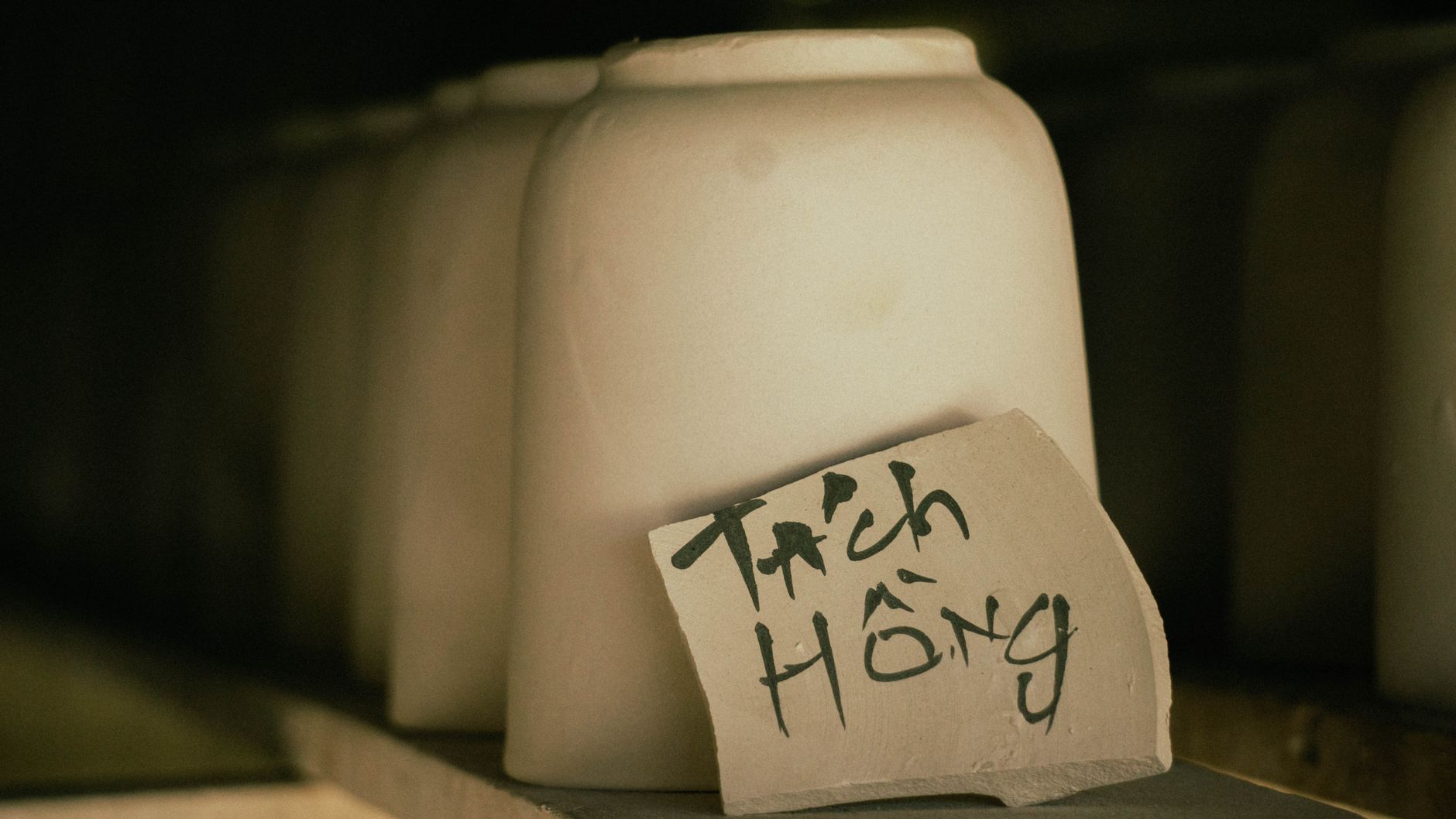
Forget crowded tours! I stumbled upon a centuries-old pottery tradition in Vietnam, learning directly from a master artisan whose family has guarded this craft for generations. This isn't just a workshop; it's a journey into the soul of a culture, an experience you'll want to have before it becomes the next big thing. ---
## The Whispers of Clay: How I Found a 500-Year-Old Craft Before the Crowds Did
Let’s be honest, as a travel blogger, I’m always on the hunt for that thing. That truly authentic, off-the-beaten-path experience that hasn’t been diluted by mass tourism, hasn’t been plastered all over Instagram (yet), and genuinely connects you to the heart of a place. It’s a quest that often feels like chasing a ghost – the internet is a blessing and a curse, revealing so much, yet sometimes obscuring the truly unique.
After countless trips where I’d felt a pang of disappointment at how commercialized some "authentic" experiences had become, I found myself in Vietnam, specifically the enchanting lantern-lit streets of Hoi An. It’s a magical place, no doubt, but even here, the tourist circuit can feel a little… well, circuited. I yearned for something deeper, something that whispered tales of ancient hands and forgotten skills.
My quest began with a simple question to my guesthouse owner, a wizened woman named Bà Mai, whose eyes held stories older than the ancient town itself. "Bà Mai," I ventured, "Is there… a place? A person? Who still practices the old ways? Something truly untouched?" She paused, her gaze drifting towards the Thu Bồn River, a slight smile playing on her lips. "There is Ông Ba," she said, her voice a low murmur. "In Thanh Ha. But he does not seek students. He just… makes." And with those few words, my adventure into a 500-year-old legacy began.
### Thanh Ha's Secret: Beyond the Tourist Trail
Thanh Ha Pottery Village isn't exactly a secret. It’s a well-known stop just a few kilometers from Hoi An, famous for its terracotta products, from roof tiles to cooking pots. Most visitors pop in for an hour, try their hand at a quickly-spun pot, buy a souvenir, and move on. But Bà Mai's hushed tone suggested a different Thanh Ha, a deeper layer beneath the surface.
My journey to find Ông Ba wasn't guided by Google Maps or a tour brochure. It was a series of hushed conversations, a nod from a local fisherman, a direction pointed by a child playing by the riverbank. I rented a bicycle, the humid air thick with the scent of damp earth and woodsmoke, and pedaled past the more obvious workshops, deeper into the village's quieter lanes. The air grew stiller, the sounds of tourist chatter fading into the rhythmic clinking of tools and the soft whir of kick wheels.
Finally, tucked away behind a small, unassuming bamboo fence, I found it: a humble, open-air workshop, shaded by a sprawling mango tree. Inside, bathed in the dappled sunlight, sat Ông Ba. He was an older man, perhaps in his late 70s, his skin like worn leather, his hands – oh, those hands – were a roadmap of every pot, every vessel, every piece of clay he had ever touched. They were gnarled, strong, yet moved with an astonishing grace as he coaxed life from a lump of red earth on a traditional kick wheel. This wasn't a performance; this was a man absorbed in his life's work. This was it. This was my hidden gem.
### A Handful of Clay, Centuries of Wisdom: My First Day with Ông Ba
Approaching Ông Ba felt like stepping into a sacred space. I offered a respectful "Chào Ông" (hello, respected elder), and he merely nodded, his eyes, dark and deep like river stones, acknowledging my presence before returning to his work. I spent the first hour just watching, mesmerized. He wasn't using an electric wheel; his foot powered a large wooden disc beneath the bench, providing the rhythmic momentum. His technique, I later learned, was a specific form of hand-coiling and shaping on the kick wheel, a method passed down through his family for over five centuries, largely unchanged.
The clay itself was special, sourced from the Thu Bồn River, known for its unique red hue and strength when fired. Ông Ba didn't speak much English, and my Vietnamese was rudimentary at best, but the language of shared craft transcended words. Through gestures, smiles, and the occasional translation from his granddaughter, who sometimes popped in, I conveyed my earnest desire to learn.
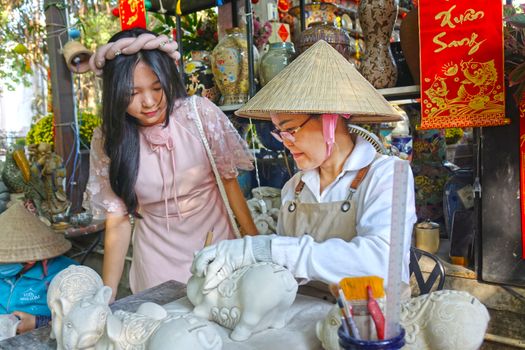
He finally offered me a small lump of clay. It felt cool, heavy, and surprisingly alive in my hands. My first attempt on the kick wheel was, predictably, a disaster. The clay wobbled, collapsed, and flew off the wheel in a messy explosion. Ông Ba let out a soft chuckle, a sound like dry leaves rustling. He didn't scold; he simply took my hands, his strong, calloused fingers guiding mine. The warmth of his hands, the subtle pressure, the way he centered the clay with such effortless precision – it was like receiving an electric current of centuries of wisdom.
He taught me the importance of breath, of finding my own rhythm with the wheel, of listening to the clay. "It tells you what it wants to be," his granddaughter translated, "You just need to listen." It wasn't about forcing the clay; it was about coaxing it, understanding its resistance, and working with it. This was the true essence of traditional craftsmanship.
### Beyond the Wheel: The Philosophy of the Craft
Over the next week, I became a fixture in Ông Ba’s workshop. My days began with the gentle thud of his kick wheel, the scent of fresh clay, and the quiet camaraderie of shared purpose. I learned not just how to throw a pot, but the philosophy behind it.
Patience as a Virtue:
In our fast-paced world, we expect instant results. Pottery, especially this ancient method, demands the opposite. Each stage – wedging the clay, centering, pulling up the walls, shaping, drying, firing – takes time, care, and an almost meditative focus. I learned to slow down, to appreciate the minute details, the subtle changes in the clay’s texture. My initial frustration at my clumsy attempts slowly gave way to a quiet determination.
Connection to the Earth:
Ông Ba’s family has been using the same river clay for generations. He spoke (through his granddaughter) of the river as a living entity, providing not just the raw material but the very soul of their craft. He showed me how they prepared the clay, removing impurities, kneading it until it was perfectly pliable. It was a profound lesson in respecting resources and understanding the provenance of materials.
The Legacy of Family:
This wasn’t just Ông Ba’s craft; it was his family’s legacy. His father taught him, and his father before that. His workshop was filled with pieces made by his ancestors, and the hope was that his grandchildren would continue. There was a quiet pride, a deep sense of responsibility, in preserving this living history. My presence, a curious outsider wanting to learn, seemed to validate the importance of what he did. We shared meals of simple, delicious Vietnamese food, and I listened to stories of his youth, of typhoons, and of how the village had changed – or hadn't changed, in the most important ways.
One afternoon, a particularly tricky vase I was working on kept collapsing. I was ready to give up, to smash the clay back into a lump. Ông Ba gently stopped my hand. He took the misshapen clay, and with a few deft movements, transformed it into a small, elegant cup. He handed it to me, a silent lesson: "Failure is just another form." It wasn't about perfection; it was about the journey, about finding the beauty in the imperfect, and about the resilience to try again. That cup, with its slight wobble and uneven rim, is now one of my most cherished possessions.
### Practical Magic: How You Can Find Your Own Master
My experience with Ông Ba was transformative, and I firmly believe everyone should seek out such authentic encounters. Here’s how you can find your own hidden master artisan, whether in Thanh Ha or elsewhere:
1. Go Local, Really Local: Forget the big tour operators. Start by asking your guesthouse owner, the local street food vendor, or the shopkeeper whose store you frequent. These are the people with the true insider knowledge, the ones who know the "Ông Bas" of their communities. In my case, Bà Mai's quiet suggestion was gold.
2. Look for the Unassuming: The most authentic experiences rarely have flashy signs or aggressive touts. Look for quiet workshops, simple setups, and places where the focus is clearly on the craft, not on selling to tourists. My first clue to Ông Ba’s workshop was the distinct, earthy smell of his specific clay.
3. Be Prepared to Invest Time (and a Little Effort): This isn't a 30-minute stop. True learning takes time. I committed to a week, which allowed for a deeper connection and actual skill development. If you can only spare a day, convey your genuine interest and willingness to learn.
4. Offer Fair Compensation: While Ông Ba wasn't seeking students, I insisted on paying him for his time and materials. Agree on a fair price upfront. For my week-long immersion, including materials and occasional meals, I paid roughly 3,000,000 VND (approximately $120-130 USD). This might seem like a lot for a local, but it's a small price for such an invaluable experience and helps support these fading traditions.
5. Embrace the Language Barrier: Don't let a lack of shared language deter you. Body language, smiles, gestures, and a good translation app (Google Translate is a lifesaver) can bridge many gaps. Better yet, if your guesthouse owner or a local friend can introduce you and help translate, that's ideal.
6. Be Respectful and Patient: Show genuine reverence for the craft and the artisan. Don't rush them, don't interrupt their work, and always ask permission before taking photos. Remember, you are a guest in their world.
7. Specifics for Thanh Ha/Hoi An:
* Getting There: Rent a bicycle from Hoi An (around 20,000-30,000 VND/day) or take a short Grab ride.
* Finding Ông Ba (or someone like him): Ask around the less-traveled parts of Thanh Ha, away from the main entrance. Describe an older potter working with a traditional kick wheel and specific red river clay. My guesthouse owner, Bà Mai (at "Old Town Garden Villa"), was instrumental, and a kind word from her goes a long way.
* What to Expect: Expect a rustic setting, no fancy equipment. Be ready to get dirty! The focus is on the manual process, not mass production.
### My Masterpiece (and My Mess-Up): Lessons Learned
By the end of my week, my hands, once clumsy and uncertain, moved with a newfound confidence. I wasn’t an expert, not by a long shot, but I could now center clay, pull up walls, and even attempt a simple shape without it collapsing into a sad puddle. My proudest creation was a small, perfectly imperfect bowl, fired in Ông Ba’s traditional wood-fired kiln – a process in itself that was a spectacle of roaring flames and smoky air. The bowl emerged with a beautiful, earthy red hue, a testament to the river clay and centuries of technique. It now sits on my desk, a constant reminder of the patience, perseverance, and profound connection I found.
Of course, there were also my "mess-ups." The leaning tower of Pisa-esque vase, the bowl that became a plate, the clay that stubbornly refused to cooperate. But even these failures were lessons, teaching me humility and the beauty of embracing imperfection. Each lump of clay taught me something about myself, about slowing down, about finding joy in the process rather than just the outcome.
The Instagram-worthy moments were abundant: the sun streaming into the rustic workshop, Ông Ba's hands guiding mine, the rows of drying pots, the vibrant finished pieces. But the true 'gram' was in the feeling – the quiet satisfaction, the deep sense of privilege, the connection to a living history.
### The Legacy Lives On: Why These Crafts Matter (and Why You Should Go Now)
My time with Ông Ba was more than just learning a craft; it was a profound cultural immersion. It was a reminder that true travel isn't about ticking off landmarks but about connecting with people, their stories, and their way of life. These master artisans are living libraries, guardians of traditions that are slowly fading in the face of modernization and mass production.
The urgency to seek out these experiences is real. Ông Ba’s generation of artisans is dwindling, and while his family hopes to continue, the allure of modern jobs can pull younger generations away. By seeking them out, by learning from them, and by supporting them, we not only gain an unforgettable personal experience but also contribute to the preservation of invaluable cultural heritage.
So, when you plan your next adventure, look beyond the well-trodden path. Ask the quiet questions, follow the faint whispers, and be open to finding your own Ông Ba. You might just uncover a piece of history, a profound lesson, and a masterpiece (or a beautiful mess-up) that will stay with you long after you’ve returned home. Go now, before these precious secrets become just another story in a history book. Your hands, and your soul, will thank you.
---
Visual journey



Tags
Share this adventure
Join the travel community
New adventures, cultural insights and travel inspiration, straight to your inbox.
We may receive a commission if you click on a link and buy a product, service or policy, at no extra cost to you. How affiliate links work.
Other angles on this trip
These notes are written by AI to show how different kinds of traveller might see this destination. They are not comments from real readers.