

Tired of tourist traps, I accidentally stumbled upon a wildlife sanctuary in Thailand that completely redefined my understanding of ethical animal encounters. This isn't just a travel story; it's a guide to finding experiences that genuinely help animals and leave a lasting positive impact. ---
## My Elephant Encounter Nightmare... Until This Accidental Discovery
Let’s be honest. As travel bloggers, we chase those "wow" moments. Those Instagram-perfect shots, the stories that make your followers gasp. For years, I’d seen the photos: travelers riding elephants, bathing with them, even painting with them. And for a long time, I, like many, fell for the allure. My first elephant encounter, years ago in a different part of Thailand, was one of those. I rode an elephant, grinning for the camera, convinced I was living out a travel fantasy. But even then, a knot of unease sat in my stomach. The chain around its leg, the bullhook clutched by its mahout, the vacant look in its eyes – it didn't feel right. It felt... exploitative.
Over the years, as I learned more about responsible tourism and animal welfare, that knot grew into a full-blown ache of regret. I swore off any wildlife experience that prioritized human entertainment over animal well-being. But that left a void. How could I connect with these magnificent creatures, or any wild animal, without causing harm? Was there a way to actually help them, to contribute to their welfare, rather than just observe or, worse, exploit?
This question gnawed at me on a recent trip to Northern Thailand. I was in the bustling, vibrant city of Chiang Mai, known for its temples, night markets, and yes, its elephant sanctuaries. But I was wary. Every tour operator promised "ethical" encounters, and I knew how easily that word could be co-opted. I wasn't looking for a tour; I was looking for something genuine, something that felt right. And then, almost by accident, I found it. A hidden gem, tucked away in the lush hills, a place that wasn't just ethical but truly transformative.
### The Serendipitous Detour to Doi Suthep's Secret
My discovery wasn't planned. I was on a scooter, trying to escape the city's hum, aiming for a waterfall I'd seen marked on a faded, hand-drawn map given to me by a local street food vendor. I'd taken a wrong turn, as one often does when relying on charmingly unreliable directions. The paved road soon gave way to a dusty track, winding deeper into the emerald embrace of the jungle-clad mountains near Doi Suthep. I was about to turn back when I saw a small, weathered sign: "The Golden Temple Wildlife Rescue & Rehabilitation Center." No flashy billboards, no tourist buses. Just a simple, almost shy invitation.
Intrigued, and with a healthy dose of skepticism (my radar for greenwashing was on high alert), I followed the arrow. The track narrowed, leading me through dense foliage, past small, rustic farmhouses, until I reached a clearing. What greeted me wasn't a commercial enterprise, but a sprawling, peaceful haven. There was a modest, open-air reception hut, a few simple bungalows, and the unmistakable, earthy scent of elephants. My first impression wasn't of a tourist attraction, but of a dedicated, living, breathing mission.
A young Thai woman, beaming, introduced herself as Nisa, a volunteer coordinator. She explained that the center was founded by a local family, deeply rooted in the region, who had dedicated their lives and land to rescuing abused, injured, or orphaned wildlife. It wasn't just elephants; they cared for a menagerie of creatures, all with their own heartbreaking stories. This wasn't a place for rides or tricks. This was a place for healing, for rehabilitation, and for allowing animals to simply be animals. My skepticism began to melt away, replaced by a quiet sense of hope. I felt like I'd stumbled into a secret garden of compassion.
### More Than Just Elephants: A Symphony of Rescue
What truly set The Golden Temple Wildlife Rescue & Rehabilitation Center apart was its holistic approach. While elephants were certainly a significant part of their work – majestic creatures like Mali, a 40-year-old female rescued from a brutal logging camp, or little Boon, an orphan whose mother had been poached – they were far from the only residents.
As Nisa guided me through the grounds, I saw enclosures that were vast, natural, and meticulously maintained. There were gibbons, their haunting calls echoing through the canopy, swinging freely in immense, tree-filled spaces designed to mimic their natural habitat. I saw slow lorises, rescued from the illegal pet trade, blinking sleepily in their specialized nocturnal habitats. There were pangolins, those critically endangered, scaly anteaters, tucked away in secure, private spaces, being prepared for eventual release back into the wild. Birds with broken wings, civets caught in traps, even a python recovering from a road accident – each animal had a name, a story, and a dedicated team working tirelessly for its recovery and well-being.
The focus here was unequivocally on the animals. Human interaction was minimal, always respectful, and strictly for their welfare or rehabilitation. There were no shows, no forced performances, no photo ops that put the animals under stress. Instead, there was an atmosphere of quiet devotion, a humming symphony of care. Veterinarians, animal behaviorists, and local mahouts (who had learned ethical elephant care) worked in harmony. The center’s philosophy was simple: provide a safe, natural environment, expert care, and the chance for these animals to recover their wild instincts, with the ultimate goal of releasing as many as possible back into their natural habitats. For those like Mali, whose past trauma meant a return to the wild was impossible, the sanctuary offered a forever home where they could live out their days with dignity and peace. It was truly inspiring to witness.
### Walking with Giants (Responsibly): My Day at the Sanctuary
My day at The Golden Temple Wildlife Rescue & Rehabilitation Center wasn't about "interacting" with animals in the traditional tourist sense; it was about observing, learning, and contributing to their welfare. It was an experience far more profound than any ride or performance could ever be.
My morning began not with a selfie stick, but with a machete. Along with a small group of other conscious travelers, we were tasked with chopping vast quantities of bananas, pineapples, and sugarcane – fresh, organic produce grown on the sanctuary's own land or sourced from local farmers. The air was filled with the sweet, tropical scent of fruit, and the rhythmic thud of blades against wood. This was the elephants' breakfast, and preparing it felt like a genuine act of service.
After the food prep, we joined one of the mahouts, a gentle man named Somchai, who had been with Mali since her rescue. He led us to a shaded observation deck overlooking a vast, natural enclosure. From here, we watched Mali and another elephant, Chaba, slowly emerge from the dense trees, their massive forms moving with an almost ethereal grace. They ambled towards the feeding stations we had helped prepare, their trunks delicately plucking the fruit. Somchai spoke softly, sharing Mali’s story, her past traumas, and the incredible resilience she had shown. He explained how they encouraged natural foraging behaviors, how they never used chains (except for medical necessity), and how the mahouts' bond with the elephants was built on trust and understanding, not dominance.
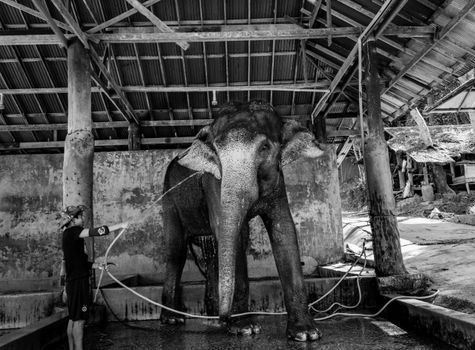
Later, we observed the elephants at their mud wallow – a vast, natural pool where they caked themselves in cooling mud, then sprayed each other playfully with water from their trunks. It was a joyful, unadulterated display of natural elephant behavior. We weren't allowed into the water with them; instead, we sat on the bank, silent and respectful, simply witnessing their happiness. This distance, this lack of forced interaction, made the experience infinitely more powerful. It wasn't about me; it was about them.
The afternoon was dedicated to learning about the other residents. We watched veterinarians conduct a routine check-up on a rescued civet, learning about its diet and recovery. We heard the incredible success stories of gibbons released back into protected forests. We learned about the center's anti-poaching initiatives and their educational programs for local communities, teaching them the importance of protecting Thailand's precious wildlife. The passion of the staff was infectious, their dedication unwavering.
Leaving that evening, my heart felt full, not with the fleeting thrill of a tourist activity, but with a deep sense of connection and purpose. I hadn't just seen animals; I had witnessed true compassion, dedicated conservation, and the quiet dignity of creatures reclaiming their lives. It was an experience that fundamentally reshaped my understanding of what ethical wildlife tourism could and should be.
### The Price of True Compassion: What it Costs (and Why it's Worth It)
Let's talk money, because ethical wildlife experiences often come with a higher price tag than their exploitative counterparts, and for good reason. My full-day visit to The Golden Temple Wildlife Rescue & Rehabilitation Center cost me 3,500 Thai Baht (approximately $100 USD). This might seem steep compared to some of the cheaper, less ethical elephant riding camps that might charge half that. But let me tell you, every single Baht felt incredibly well spent.
Here's why:
Direct Animal Care: A significant portion of the fee goes directly to feeding (elephants eat a lot*!), veterinary care, and maintaining vast, natural habitats for all the animals. Imagine the cost of fresh fruit for several elephants daily, plus medical supplies for a whole host of rescued creatures.
* Staff Wages: It supports the dedicated local staff, including mahouts, veterinarians, and animal caretakers, who work tirelessly to ensure the animals' well-being. These are often people from the surrounding communities, so it also contributes to local employment.
* Conservation & Rehabilitation: It funds ongoing rescue missions, rehabilitation programs, and efforts to release rehabilitated animals back into the wild. It also supports their anti-poaching and community education initiatives.
* No Hidden Costs: There were no aggressive upselling tactics, no pressure to buy overpriced souvenirs. The experience itself was the value.
The center also offers longer-term volunteer programs, ranging from a few days to several weeks, where you can get even more hands-on (in a respectful, animal-welfare-focused way) with tasks like enclosure maintenance, food preparation, and general support. While I couldn't commit to a longer stay this time, knowing these options exist for deeper engagement is incredibly reassuring.
When you choose an experience like this, you're not just buying a ticket; you're making an investment. An investment in animal welfare, in conservation, and in the future of ethical tourism. It's about consciously directing your travel dollars to places that truly make a difference, rather than inadvertently supporting cruelty.
### Spotting the Scammers vs. Supporting the Saviors: Your Ethical Travel Guide
My accidental discovery taught me invaluable lessons about identifying truly ethical wildlife experiences. Here’s a practical guide to help you make informed choices on your next adventure:
Red Flags (Avoid These!):
1. Direct Contact & Rides: Any place offering elephant rides, direct petting of wild animals (especially big cats, primates, or slow lorises), or photo opportunities where animals are forced into unnatural poses. This often involves cruel training methods to break their spirit.
2. Chains & Bullhooks: Observe if elephants are chained for extended periods, especially with short chains, or if mahouts frequently use bullhooks (an ankus) to control them.
3. Performances & Tricks: Animals performing unnatural tricks (painting, playing soccer, dancing) are almost certainly subjected to abusive training.
4. Small Enclosures & Isolation: Look for expansive, natural habitats. Animals kept in small, barren enclosures or isolated from their own kind (unless for medical reasons) are likely stressed.
5. Lack of Transparency: If a sanctuary is secretive about its funding, rescue stories, or allows visitors to interact with infant animals (which often leads to them being taken from their mothers prematurely for tourism), be wary.
6. "Selfie" Culture: If the primary focus seems to be on getting a viral photo with an animal, rather than education or conservation, it's a huge red flag.
Green Flags (Seek These Out!):
1. Observation Over Interaction: The best ethical centers prioritize allowing animals to behave naturally. You observe from a respectful distance, learning about their behavior and habitat.
2. Rescue, Rehabilitation, Release: A genuine sanctuary’s primary mission is rescue, providing veterinary care, and rehabilitating animals with the goal of returning them to the wild if possible. For those that can't be released, they offer a permanent, natural home.
3. Large, Natural Habitats: Animals should have ample space to roam, forage, and express natural behaviors. For elephants, this means acres of forest, not small pens.
4. Educational Focus: Ethical centers emphasize education – teaching visitors about the animals, conservation challenges, and the importance of protecting wildlife.
5. Community Involvement: Look for centers that employ local people, contribute to local economies, and engage with surrounding communities on conservation efforts.
6. No Breeding Programs (Unless for Endangered Species Release): True sanctuaries generally don't breed animals, as their focus is on caring for existing rescued individuals. Exceptions might be for highly endangered species with a clear, scientifically-backed release program.
7. Positive Reviews (with a critical eye): Check reviews on platforms like TripAdvisor, but read them critically. Look for mentions of responsible practices, knowledgeable staff, and a focus on animal welfare, not just "fun" interactions. Organizations like World Animal Protection also provide useful guides.
### Beyond the Postcard: Why Ethical Wildlife Tourism is the Future
My accidental detour to The Golden Temple Wildlife Rescue & Rehabilitation Center wasn't just a travel experience; it was a profound lesson in conscious living. It showed me that it is possible to connect with the wild world in a way that truly benefits the animals, supports local communities, and leaves you with a far deeper, more meaningful memory than any staged photo ever could.
This kind of ethical wildlife tourism is more than just a trend; it's the future. It's about traveling with purpose, using our collective power as tourists to demand better, to fund genuine conservation, and to protect the incredible biodiversity of our planet. It’s about leaving a destination better than you found it, not just taking from it.
So, next time you plan a trip, especially one involving wildlife, do your homework. Research, ask questions, and seek out those hidden gems that are quietly, diligently doing the right thing. Your travel choices have power. Use them to make a difference.
Have you had a transformative ethical wildlife experience? Share your stories and recommendations in the comments below! Let's inspire each other to travel responsibly.
---
Visual journey



Tags
Share this adventure
Join the travel community
New adventures, cultural insights and travel inspiration, straight to your inbox.
We may receive a commission if you click on a link and buy a product, service or policy, at no extra cost to you. How affiliate links work.
Other angles on this trip
These notes are written by AI to show how different kinds of traveller might see this destination. They are not comments from real readers.