

Forget the bustling streets and towering skyscrapers – Seoul holds a surprising secret. I stumbled upon an urban waterway that completely redefined my idea of city exploration, transforming from a mere concrete jungle into my absolute favorite walk. Prepare to be enchanted by a story of rebirth, tranquility, and vibrant urban life.
The first time I heard someone recommend "walking along the stream" in Seoul, I’ll admit, I was skeptical. Seoul, in my mind, was a metropolis of neon lights, relentless energy, and towering concrete. A "stream" sounded like a quaint, perhaps even slightly out-of-place, attempt at greenery. I envisioned a narrow, perhaps a bit murky, trickle of water flanked by uninspiring sidewalks. How could an urban waterway possibly compete with the ancient palaces, the vibrant markets, or the futuristic design of Dongdaemun?
But travel, as we all know, is about embracing the unexpected. It’s about letting go of preconceptions and allowing a place to reveal its true self. And so, on a sun-drenched afternoon, with nothing but a vague sense of curiosity and my trusty walking shoes, I descended the steps into Cheonggyecheon (청계천) Stream. What I found wasn’t just a stream; it was a pulsating artery of Seoul, a testament to visionary urban planning, and, without exaggeration, the most captivating urban walk I’ve ever experienced. It quickly became my favorite place to escape the city within the city, a sanctuary that felt both ancient and incredibly modern. From that moment on, I knew I had to share its story – and inspire you to discover its magic for yourself.
### The Phoenix Rises: A Stream's Incredible Rebirth
To truly appreciate Cheonggyecheon, you must first understand its extraordinary journey. This isn't just a pretty park; it's a living monument to urban regeneration. For centuries, Cheonggyecheon was a natural stream, a vital part of Seoul's landscape, providing water and a social hub. However, as Seoul industrialized rapidly in the mid-20th century, the stream became an open sewer, a blight on the cityscape. In a drastic move to modernize and accommodate ever-increasing traffic, the stream was paved over, buried beneath concrete, and an elevated highway was built directly on top of it. The stream was gone, forgotten under a blanket of asphalt and steel.
Fast forward to the early 2000s, and Seoul embarked on one of the most ambitious and controversial urban renewal projects in history. The decision was made to dismantle the highway, remove the concrete covering, and restore Cheonggyecheon Stream to its former glory. Critics scoffed, fearing traffic chaos and astronomical costs. Yet, against all odds, the project succeeded. In 2005, the stream was reopened to the public, flowing once more for 10.9 kilometers (about 6.8 miles) through the heart of Seoul.
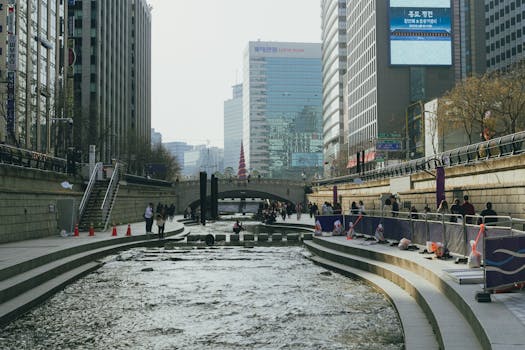
Walking along its banks, it’s hard to fathom that just two decades ago, a roaring highway occupied this very space. The air is fresher, the sounds of traffic are muted by the gentle murmur of water, and vibrant greenery thrives where concrete once dominated. This transformation isn’t just aesthetic; it’s ecological and social. The stream has lowered ambient temperatures in the surrounding areas, increased biodiversity, and provided a much-needed public space for recreation and relaxation. For me, knowing this history adds an incredible layer of wonder to every step. It's not just a walk; it's a walk through a miracle of urban planning.
### Strolling Through Seoul's Green Artery: What You'll See & Feel
The beauty of Cheonggyecheon is its dynamic nature. It’s not a static park; it’s a living, breathing part of Seoul, constantly evolving with the city around it. My walks often started at Cheonggye Plaza, the stream's picturesque starting point near City Hall. Here, the iconic "Spring Sculpture" (a colorful, swirling seashell-like structure) stands tall, and the Candlelight Fountain cascades down, marking the official beginning of the stream. It's a popular spot for photos, public events, and simply soaking in the atmosphere.
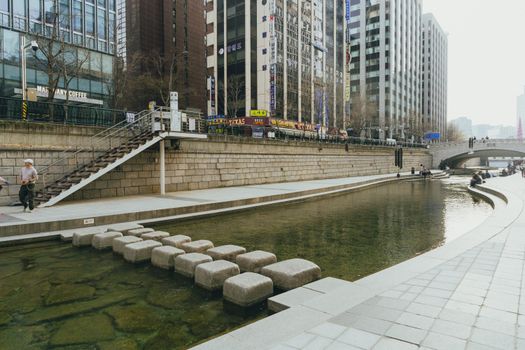
As you venture downstream, the initial grandeur gives way to a more intimate experience. The stream is flanked by beautifully landscaped pathways, dotted with benches, stepping stones that invite you to cross the water, and lush plant life. You'll encounter a series of unique bridges, each with its own story or design. The Gwanggyo Bridge, for instance, has historical significance, and many bridges feature intricate carvings or artistic elements.
One of my favorite stretches is near the Wall of Hope, a mosaic mural created from thousands of tiles painted by Seoul citizens, each bearing a wish or message. It’s a powerful, heartwarming display of collective dreams and resilience. Further along, you might discover hidden nooks, small waterfalls, and even fish swimming in the surprisingly clear water.
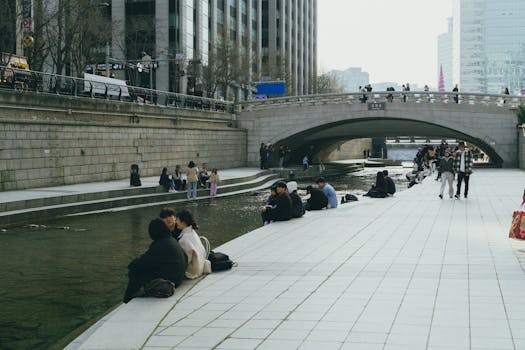
What truly makes Cheonggyecheon special, however, is the people. This is where Seoulites come to unwind. You'll see office workers on their lunch breaks, couples strolling hand-in-hand, families picnicking, students reading, and even street performers adding to the lively ambiance. I often found myself just sitting on a bench, watching the world go by – the epitome of slow travel in a fast-paced city. The juxtaposition of ancient bridges and modern skyscrapers, the tranquil water against the urban hum, creates a unique sensory experience that feels deeply authentic to Seoul.
### Beyond the Banks: Exploring Cheonggyecheon's Neighborhoods
One of the greatest advantages of Cheonggyecheon is its central location and how it seamlessly connects different facets of Seoul. Think of it as a natural pedestrian highway, allowing you to explore diverse neighborhoods without ever having to brave the chaotic street traffic above.
My typical strategy was to start at Cheonggye Plaza and decide my direction based on my mood or appetite.
Westward (towards Gwanghwamun/Insadong): A short walk upstream from Cheonggye Plaza brings you closer to the majestic Gwanghwamun Square and its grand statues of King Sejong and Admiral Yi Sun-sin. From there, it's an easy detour to Insadong, a treasure trove of traditional Korean culture. Here, you can browse antique shops, art galleries, and tea houses, or pick up unique souvenirs. Practical Tip: Grab a traditional street snack like hotteok* (sweet pancake) or a swirl of green tea ice cream while you explore.
* Eastward (towards Jongno/Gwangjang Market/Dongdaemun): This is where the stream truly becomes a conduit to some of Seoul's most vibrant, traditional, and modern districts.
* Jongno 3-ga: Known for its jewelry district and a more local, gritty charm.
Gwangjang Market: A culinary paradise! This historic market is a must-visit for foodies. I always made a point to walk this far, primarily to feast on bindaetteok (mung bean pancakes) and mayak gimbap (addictive mini gimbap) with a glass of makgeolli* (rice wine). Prices are incredibly reasonable, usually around ₩5,000-₩10,000 per dish. It’s an explosion of sights, sounds, and smells.
* Dongdaemun Design Plaza (DDP): Continuing further east, the stream leads you directly to the futuristic, curvaceous architecture of the DDP. This area is a hub for fashion, design, and late-night shopping, with massive malls like Doota and Migliore. The contrast between the tranquil stream and the bustling, illuminated DDP at night is breathtaking and incredibly Instagram-worthy.
Using Cheonggyecheon as your guide allows for an organic, unhurried exploration of Seoul, letting you stumble upon hidden cafes, intriguing street art, and local eateries you might otherwise miss. It’s a fantastic way to experience the city's diverse layers.
### A Walk for Every Season: Best Times to Visit & Special Events
Cheonggyecheon is a year-round delight, each season bringing its own unique charm.
* Spring (March - May): My personal favorite. The weather is mild, cherry blossoms burst into bloom along the banks (though not as intensely as specific cherry blossom parks, there are still beautiful clusters), and the air is crisp. It’s perfect for long, leisurely strolls.
* Summer (June - August): While Seoul summers can be hot and humid, the stream offers a welcome respite. The flowing water creates a microclimate that’s noticeably cooler than the surrounding streets. Evenings are particularly popular, with locals seeking relief from the heat. Keep an eye out for water-themed festivals or light installations.
* Autumn (September - November): A close second to spring. The foliage turns to vibrant reds and golds, creating a picturesque backdrop. The crisp air and clear skies make for ideal walking conditions. This is also when the famous Seoul Lantern Festival often takes place (usually in November), transforming the stream into a magical wonderland of illuminated lanterns and art installations. It's absolutely breathtaking at night, and an experience you won't forget.
* Winter (December - February): While chilly, the stream takes on a serene, almost magical quality. Winter lighting decorations, particularly around Christmas and New Year, add a festive glow. I recall a winter walk where the stream was partially frozen, creating beautiful icy patterns, and the crisp air invigorated every step. Plus, fewer crowds mean a more tranquil experience.
Best Time of Day:
* Morning: Peaceful, fewer people, great for photography and quiet reflection.
* Afternoon: Bustling with locals, perfect for people-watching and soaking in the everyday life.
* Evening: Absolutely magical. The stream is beautifully lit, creating a romantic and vibrant atmosphere. Many nearby areas like Dongdaemun come alive at night.
Pro Tip:
Check the official Seoul tourism website or local event calendars before your trip to see if any festivals or special exhibitions are happening along the stream.
### Practicalities & Planning Your Cheonggyecheon Adventure
Ready to lace up your shoes and discover your own favorite urban waterway? Here's everything you need to know:
Getting There:
Cheonggyecheon is incredibly accessible via Seoul's excellent subway system. You can start your walk from various points, depending on what you want to see.
* For Cheonggye Plaza (the start): Take the subway to City Hall Station (Lines 1 & 2), Exit 4, or Gwanghwamun Station (Line 5), Exit 5. It’s a very short walk from either.
* Mid-stream (near Insadong/Jongno): Jonggak Station (Line 1), Exit 5 or Euljiro 1-ga Station (Line 2), Exit 2 or 3 will place you right by the stream.
* Eastern end (near Dongdaemun): Dongdaemun History & Culture Park Station (Lines 2, 4, 5), Exit 14 or Dongdaemun Station (Lines 1 & 4), Exit 8 are good options.
Accessibility:
The pathways along Cheonggyecheon are mostly flat, well-maintained, and wide, making it suitable for all ages and fitness levels. There are numerous ramps and stairs leading down to the stream level, making it relatively accessible for strollers and wheelchairs, though some sections might require a slight detour for ramp access.
Duration:
You can spend as little as 30 minutes enjoying a section or dedicate half a day to walking the majority of its length and exploring nearby attractions. A full end-to-end walk would take approximately 2.5 to 3 hours at a leisurely pace, not including stops. My advice? Don't rush it. Pick a segment, walk until something catches your eye, and then deviate into the surrounding streets.
Budget Tips:
* It's FREE! Walking along Cheonggyecheon costs absolutely nothing.
Food: As mentioned, Gwangjang Market offers incredible, affordable eats. Elsewhere, look for smaller local restaurants (식당 - sikdang*) away from the main tourist hubs for budget-friendly Korean fare. Street food vendors along the stream or in nearby areas offer delicious and cheap snacks.
* Water: Carry a reusable water bottle. There are public drinking fountains available in some sections, or you can buy bottled water from any convenience store (conveniently located everywhere in Seoul) for around ₩1,000-₩1,500.
Safety Tips:
Seoul is generally a very safe city, and Cheonggyecheon is no exception. The stream is well-lit at night, and there are always people around. However, as with any urban area:
* Be aware of your surroundings.
* Keep an eye on your belongings.
* If walking alone at night, stick to well-populated and well-lit areas.
* Don't wade into the water unless explicitly permitted. The water depth varies, and there might be slippery spots.
What to Bring:
* Comfortable walking shoes: This is non-negotiable!
* Camera/Smartphone: For all those Instagram-worthy shots!
* Portable charger: You'll be taking lots of photos.
* Water bottle: Stay hydrated.
* Light jacket or sweater: Even on warm days, the microclimate by the water can be a bit cooler, especially in the evenings.
Insider Tip:
Look for the small fish that gather around the stepping stones or under the bridges. It's a delightful detail often missed. Also, many sections have small stone steps or platforms right by the water's edge – perfect for dipping your feet on a hot day (though generally not encouraged due to water quality and safety, I've seen many locals doing it responsibly).
### Conclusion: Embrace the Unexpected Urban Oasis
Cheonggyecheon Stream isn't just a waterway; it's a living testament to human ingenuity, a vibrant community hub, and a serene escape in the heart of one of the world's most dynamic cities. It completely shattered my expectations of what an urban space could be, proving that even in the most bustling metropolises, pockets of tranquility and natural beauty can thrive.
My walks along Cheonggyecheon became an essential part of my Seoul routine, a way to ground myself, observe local life, and simply breathe. It's a place that fosters connection – with nature, with the city's history, and with the rhythm of Seoul itself.
So, when you plan your trip to Seoul, don't just visit the palaces and markets. Make time for Cheonggyecheon. Descend those steps, feel the cool air, listen to the gentle murmur of the water, and let this extraordinary urban waterway surprise and enchant you. It might just become your favorite walk too.
Ready to find your own urban oasis? Tell me in the comments: what's your favorite surprising city escape?
Visual journey


Tags
Share this adventure
Join the travel community
New adventures, cultural insights and travel inspiration, straight to your inbox.
We may receive a commission if you click on a link and buy a product, service or policy, at no extra cost to you. How affiliate links work.
Been there?