

After years of global adventures, I thought I'd seen it all – until one country completely redefined "surprise." Prepare to have your expectations shattered as I reveal why Georgia isn't just a destination; it's an unforgettable revelation that will capture your heart and ignite your wanderlust. ---
## This Place Surprised Me More Than Anywhere Else: Unveiling Georgia's Irresistible Charm
My passport is practically a work of art, adorned with stamps from every continent save Antarctica. I’ve hiked the Himalayas, surfed in Southeast Asia, marveled at ancient ruins in Latin America, and sipped espresso in countless European capitals. I’ve developed a seasoned traveler’s intuition, a knack for sniffing out authentic experiences, and a somewhat jaded perspective on "hidden gems" that often turn out to be not-so-hidden or not-so-gem-like.
Then, there was Georgia.
Not the U.S. state, but the captivating country nestled at the crossroads of Europe and Asia, where the towering Caucasus mountains kiss the sky and ancient traditions weave seamlessly with burgeoning modernity. I went with a vague notion of "former Soviet republic" and "good wine." I left utterly, completely, and irrevocably enchanted. This isn't just a place that impressed me; it surprised me more profoundly than anywhere else I've ever traveled. It shattered every preconceived notion and replaced them with vibrant memories of unparalleled hospitality, breathtaking landscapes, and a culinary scene that deserves its own international fan club.
If you're looking for an adventure that will genuinely surprise and delight you, pack your bags. We're going to Georgia.
### Tbilisi: Where Ancient Souls Meet Bohemian Beats
My Georgian journey began in Tbilisi, the capital city, and from the moment I stepped out of the taxi, I knew this wasn't going to be a typical city break. The air hummed with a unique energy – a blend of old-world charm and youthful exuberance. The Mtkvari River snakes through the city, dividing its historic heart from more modern districts, all overlooked by the formidable Narikala Fortress perched high on a hill.
I checked into a charming guesthouse in the Old Town, a labyrinth of narrow cobblestone streets, brightly painted wooden balconies, and hidden courtyards. My first afternoon was spent simply wandering, getting gloriously lost. I stumbled upon tiny bakeries selling piping hot lobiani (bean-filled bread), passed men playing backgammon in shaded alleys, and caught glimpses of ornate churches tucked away behind crumbling walls. The scent of sulfur from the famous Abanotubani bathhouses hung gently in the air, a historic reminder of Tbilisi's spa town roots.
A Personal Anecdote:
One evening, after a long day exploring, I decided to treat myself to a private sulfur bath. For about 60-100 GEL (approx. $20-35 USD) for an hour, I had a private room with a natural hot sulfur pool and a cold plunge. It was incredibly relaxing, especially after a traditional kisa scrub (a vigorous exfoliation by a bath attendant, which is an experience in itself!). Afterwards, I felt utterly refreshed, ready to dive into Tbilisi’s buzzing nightlife. The city truly comes alive after dark, with trendy bars popping up in unexpected places, from converted factories to hidden basements. Head to Fabrika, a former Soviet sewing factory turned multi-functional cultural space, for a taste of Tbilisi’s bohemian scene.
Must-Dos in Tbilisi:
* Narikala Fortress: Take the cable car (just 2.5 GEL / $0.90 USD one way using a Metromoney card) up for panoramic views of the city.
* Abanotubani Sulfur Baths: Experience a traditional Georgian bath. Public baths are cheaper (5-10 GEL / $1.80-3.50 USD), but private rooms offer more comfort.
* Bridge of Peace: A modern architectural marvel connecting the old and new parts of the city. Best seen at night when it's illuminated.
* Holy Trinity Cathedral (Sameba): One of the largest Orthodox cathedrals in the world, awe-inspiring in its scale.
* Dry Bridge Market: Hunt for treasures, from Soviet-era memorabilia to local art.
### The Cradle of Wine: Exploring Kakheti's Vineyards
Beyond the urban sprawl of Tbilisi lies Kakheti, a region often called the "Cradle of Wine." Georgia boasts an 8,000-year-old winemaking tradition, employing unique Qvevri (large clay amphorae buried underground) methods recognized by UNESCO. Even if you're not a wine connoisseur, a trip here is essential for understanding Georgian culture and hospitality.
The landscape is a patchwork of rolling vineyards, ancient monasteries, and charming villages. The picturesque town of Sighnaghi, often dubbed the "City of Love," perches on a hilltop with stunning views of the Alazani Valley and the distant Caucasus peaks. Its cobblestone streets, pastel-colored houses, and defensive walls make it incredibly Instagram-worthy.
A Personal Anecdote:
I rented a car for a day trip (around 100-150 GEL / $35-50 USD for 24 hours, excluding fuel, often cheaper if booked in advance) and drove through the valley, stopping at small family-run wineries. At one such place, a grandmotherly figure offered me endless samples of amber wine (white wine made with skin contact) and explained the Qvevri process with gestures and broken English. I didn't understand every word, but the warmth of her smile and the generosity of her spirit transcended language barriers. It felt like being welcomed into someone's home, not just a tasting room. Many wineries offer tastings from 15-30 GEL ($5-10 USD), often including a snack.
Recommended Kakheti Experiences:
* Sighnaghi: Walk the city walls, enjoy the views, visit the Bodbe Monastery nearby.
* Telavi: The regional capital, with a bustling market and a royal fortress.
* Winery Tours: Visit larger estates like Schuchmann Wines or Twins Wine House, or seek out smaller, traditional producers. Many guesthouses in Sighnaghi can arrange tours.
* Alaverdi Monastery: A beautiful 11th-century cathedral, one of Georgia’s tallest religious buildings.
### Majestic Mountains & Mythical Towers: The Call of Svaneti
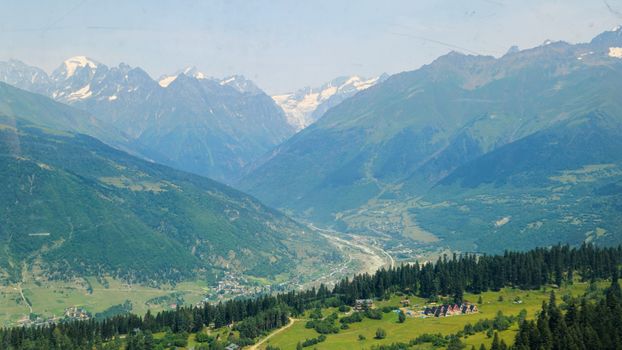
If Tbilisi is Georgia’s heart and Kakheti its soul, then Svaneti is its wild, untamed spirit. Nestled high in the Greater Caucasus, this remote region is famous for its unique Svan defensive towers, ancient traditions, and unparalleled hiking opportunities. It’s a place where time seems to slow down, and the grandeur of nature commands your full attention.
Getting to Mestia, the regional capital, is an adventure in itself. You can take a domestic flight from Tbilisi (around 70-100 GEL / $25-35 USD one way, book well in advance as they are small planes and weather dependent), a marshrutka (minibus) from Tbilisi’s Didube station (40-50 GEL / $14-18 USD, 8-10 hours), or a combination of train to Zugdidi then a marshrutka. I opted for the marshrutka – a bumpy, sometimes terrifying, but ultimately rewarding journey through incredible scenery.
A Personal Anecdote:
My most indelible memory of Svaneti is the trek from Mestia to Ushguli, Europe's highest continuously inhabited village. This multi-day hike (typically 3-4 days) takes you through alpine meadows, past glaciers, and into villages where life feels unchanged for centuries. I stayed in guesthouses along the way (around 50-80 GEL / $18-28 USD per night, including dinner and breakfast), sharing stories with fellow trekkers and local families. Reaching Ushguli, with its iconic cluster of Svan towers set against the backdrop of Mount Shkhara, was nothing short of magical. It felt like stepping into a fantasy novel.
Safety Tip:
When hiking in Svaneti, always inform your guesthouse of your route, carry sufficient water and snacks, dress in layers, and consider hiring a local guide for longer or more challenging treks, especially if you're not an experienced hiker. Weather can change rapidly in the mountains.
Svaneti Highlights:
* Mestia: Explore the Ethnographic Museum, climb a Svan tower, and enjoy the views from the Hatsvali cable car.
* Ushguli: A UNESCO World Heritage site, truly a village lost in time. Hire a shared taxi from Mestia for a day trip (150-200 GEL / $50-70 USD for the entire car, split among passengers) if you don't want to hike.
* Koruldi Lakes: A challenging but rewarding day hike from Mestia with incredible panoramic views of Ushba and other peaks.
* Skiing: In winter, Mestia and Tetnuldi offer excellent, uncrowded slopes.
### Beyond the Beaten Path: Vardzia & Borjomi
While Tbilisi, Kakheti, and Svaneti are often on travelers' radars, Georgia offers countless other treasures. Two that truly captivated me were the cave city of Vardzia and the spa town of Borjomi.
Vardzia:
This incredible cave monastery complex, carved into the side of the Erusheti Mountain in the 12th century, is nothing short of an architectural marvel. It once housed thousands of monks, complete with churches, living quarters, and intricate irrigation systems. Walking through its tunnels, climbing its stairs, and imagining life here centuries ago is a humbling experience. The entrance fee is 15 GEL (approx. $5 USD).
* How to Get There: It's best visited as part of a day trip from Akhaltsikhe (where you can also visit Rabati Castle, a recently restored fortress) via marshrutka or shared taxi. A full day tour from Tbilisi is also an option, though it's a long drive.
Borjomi:
Famous for its naturally carbonated mineral water (you'll see the distinctive green bottles everywhere), Borjomi is a charming spa town nestled in a picturesque valley. The Borjomi Central Park is a lovely place to stroll, taste the mineral water directly from the spring (it has a strong, unique taste!), and take the cable car up for views. The surrounding Borjomi-Kharagauli National Park offers fantastic hiking trails for all levels.
* How to Get There: Regular trains run from Tbilisi to Borjomi (2 GEL / $0.70 USD, approx. 4 hours), offering a scenic and incredibly cheap way to travel. Marshrutkas are also available.
### The Gastronomic Revelation: Feasting in Georgia
I cannot overstate this: Georgian food is a revelation. It's hearty, flavorful, diverse, and deeply interwoven with the country's culture of hospitality. Forget everything you thought you knew about European or Asian cuisine; Georgia offers something entirely unique and utterly delicious.
A Personal Anecdote:
My first Supra, a traditional Georgian feast, was an unforgettable experience. I was invited by locals I'd just met at a guesthouse. The table was groaning under the weight of dishes: platters of khachapuri (cheese bread, in many glorious forms), mounds of khinkali (soup dumplings, often filled with meat), skewers of mtsvadi (grilled meat), vibrant salads of tomatoes and cucumbers with walnut dressing, and endless varieties of pkhali (vegetable pâtés). The tamada (toastmaster) led a series of eloquent toasts, each one a mini-speech about friendship, family, peace, and Georgia itself. It’s not just a meal; it’s a performance, a celebration of life, and a profound act of sharing.
Must-Try Georgian Dishes:
Khachapuri: The national dish, a warm cheese-filled bread. Varieties include Adjaruli (boat-shaped with an egg and butter), Imeruli (round), and Megruli* (with cheese on top).
* Khinkali: Delicious dumplings, usually filled with spiced meat and broth. The trick is to bite a small hole, slurp the broth, then eat the rest (leaving the doughy 'handle').
* Mtsvadi: Georgian shashlik, grilled meat skewers, often pork or beef, marinated and incredibly tender.
* Badrijani Nigvzit: Fried eggplant rolls filled with walnut paste and spices.
* Churchkhela: "Georgian Snickers," walnuts strung on a string and dipped repeatedly in thickened grape juice, then dried. A delicious and healthy snack.
* Georgian Wine: Explore the amber wines, Saperavi reds, and Rkatsiteli whites.
Budget Tip:
Eating out in Georgia is incredibly affordable. You can get a delicious khachapuri for 8-15 GEL ($3-5 USD), and a plate of khinkali (5-7 pieces) for 10-18 GEL ($3.50-6 USD). Look for local 'Dukani' (small eateries) for the most authentic and budget-friendly meals.
### Practical Magic: Navigating Georgia Like a Local
So, you're convinced, right? Good. Here’s how to make your Georgian adventure a reality.
How to Get There:
* Flights: Tbilisi International Airport (TBS) is the main hub, with direct flights from many European and Middle Eastern cities. Kutaisi (KUT) is another option, often served by budget airlines like Wizz Air, though it's a further journey to Tbilisi.
Getting Around:
* Tbilisi: The metro is efficient and cheap (1 GEL / $0.35 USD per ride, using a Metromoney card which costs 2 GEL refundable deposit). Taxis are readily available via apps like Bolt or Yandex Go (much cheaper and more reliable than hailing on the street).
* Intercity:
* Marshrutkas (Minibuses): The backbone of Georgian public transport. They’re cheap, frequent, and go almost everywhere. They leave when full. Expect a crowded, sometimes bumpy, but authentic experience. Major marshrutka stations in Tbilisi are Didube (for western Georgia: Mestia, Kutaisi, Borjomi) and Samgori (for eastern Georgia: Kakheti).
* Trains: Georgian Railways offers comfortable, affordable trains to key destinations like Batumi, Borjomi, and Zugdidi. Book online at tickets.railway.ge.
* Shared Taxis: A quicker (though more expensive) alternative to marshrutkas, especially for smaller groups. Negotiate the price beforehand.
* Rental Cars: Good for exploring regions like Kakheti or if you're comfortable driving on sometimes challenging roads. Be prepared for aggressive local drivers and poorly marked routes outside major cities.
Accommodation:
* Guesthouses: My preferred choice. They offer incredible local hospitality, often with home-cooked meals, and are very affordable (50-100 GEL / $18-35 USD per night).
* Hostels: Plenty of options in Tbilisi and Kutaisi for budget travelers (20-40 GEL / $7-14 USD per night for a dorm bed).
* Boutique Hotels: Tbilisi has a growing number of stylish boutique hotels offering modern comforts with a local flair.
Budget Tips:
* Eat Local: Stick to traditional Georgian restaurants and bakeries.
* Use Marshrutkas: Embrace the minibus for intercity travel.
* Walk: Tbilisi is very walkable, and many sights are free or low-cost.
* Free Walking Tours: Look for these in Tbilisi for a great introduction to the city and its history.
* Negotiate: For taxis (if not using an app) and market purchases.
Safety Tips:
* Generally Safe: Georgia is considered a very safe country, even for solo female travelers.
* Pickpocketing: Be aware of your belongings in crowded areas like markets and public transport, especially in Tbilisi.
* Mountain Safety: If hiking, be prepared for weather changes, inform someone of your route, and consider a guide for remote areas.
* Driving: Exercise caution if driving yourself; local driving styles can be aggressive.
* Tap Water: Generally safe to drink in cities, but bottled water is widely available.
Cultural Sensitivity:
* Churches: Dress modestly when visiting churches and monasteries (shoulders and knees covered for both men and women; women should also cover their heads, scarves are often provided at entrances).
Toasting: If invited to a Supra*, participate in the toasts. It's a key part of Georgian hospitality.
* Greetings: A simple "Gamarjoba" (hello) and "Madloba" (thank you) will go a long way. Georgians appreciate the effort.
Best Time to Visit:
* Spring (April-May): Mild weather, blooming landscapes, perfect for city exploration and wine country.
* Autumn (September-October): Harvest season in Kakheti, vibrant fall foliage, pleasant temperatures for hiking.
* Summer (June-August): Ideal for mountain trekking in Svaneti and other high-altitude regions. Can be hot in Tbilisi.
* Winter (November-March): Ski season in the mountains, charming snow-dusted cities.
### Go. Just Go.
Georgia isn't just a dot on a map; it's an experience that will challenge your perceptions, warm your heart, and tantalize your taste buds. It’s a country of dramatic contrasts – ancient traditions juxtaposed with modern art, towering mountains meeting sun-drenched valleys, and a history steeped in both triumph and struggle.
But more than anything, Georgia is a country of immense hospitality. Time and again, I was met with genuine warmth, invitations to share meals, and a sincere desire from locals to ensure I loved their country as much as they do. It’s this spirit, this unexpected generosity, combined with its stunning beauty and rich culture, that made Georgia surprise me more than anywhere else.
So, if you're yearning for an adventure that promises discovery, authenticity, and a little bit of magic, stop scrolling and start planning. Georgia is waiting to surprise you too.
Have you ever been unexpectedly blown away by a destination? Share your biggest travel surprises in the comments below!
---
Visual journey


Tags
Share this adventure
Join the travel community
New adventures, cultural insights and travel inspiration, straight to your inbox.
We may receive a commission if you click on a link and buy a product, service or policy, at no extra cost to you. How affiliate links work.
Been there?