
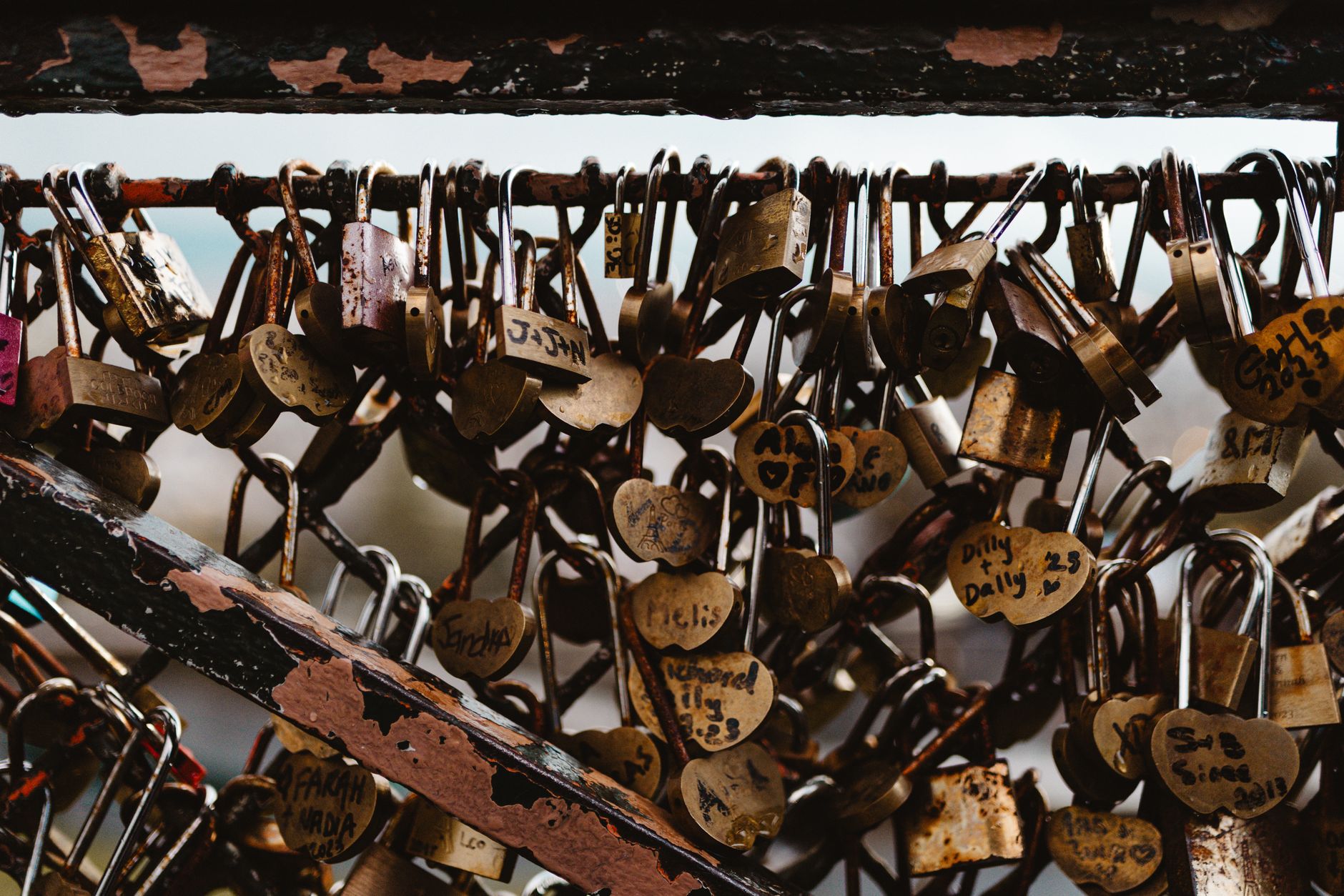
I journeyed to Paris, drawn by the romantic allure of its famed love lock bridge, expecting to witness a timeless tradition. What I discovered instead was a profound, heartwarming twist that completely redefined my understanding of connection and lasting love. Get ready for a story that will sweep you off your feet and inspire a new way to mark your own journey.
## This Paris Love Lock Bridge Had a Surprise Ending I Never Expected!
There are some travel experiences you plan meticulously, and then there are those that simply unfold, surprising you with unexpected magic. My trip to Paris, the city of love, was definitely the latter. I went with a heart full of romantic ideals, a camera ready to capture every cobblestone street and every Eiffel Tower sparkle, and a singular goal: to witness the legendary love lock bridge.
Like countless romantics before me, I pictured a bridge groaning under the weight of a million metallic promises, each lock a testament to an unbreakable bond. I imagined the clinking symphony of metal, the vibrant colours of ribbons, and the sheer volume of human affection displayed in one iconic spot. I confess, I even secretly wondered if I should bring my own lock – just in case destiny (or a particularly charming Parisian) decided to intervene.
But what I found on the Pont des Arts wasn't just a bridge, nor was it exactly what I expected. Instead, it was a journey through history, an encounter with innovation, and ultimately, a surprise ending that taught me more about love, memory, and connection than any physical lock ever could. This isn't just a story about a bridge; it's a story about how love evolves, and how sometimes, the most beautiful declarations are found not in what’s attached, but in what’s remembered, shared, and newly created.
### The Allure of the Love Lock Bridge: A Global Phenomenon
For decades, the Pont des Arts, connecting the Institut de France and the central square of the Louvre Museum, was synonymous with a unique, if controversial, romantic tradition: the love lock. Couples from around the globe would inscribe their initials or a special date onto a padlock, secure it to the bridge’s railing, and then ceremoniously toss the key into the River Seine below. It was a tangible, weighty symbol of eternal love, an unbreakable bond, a promise cast into the flowing waters of time.
The appeal was undeniable. What could be more romantic than leaving a physical piece of your love story in the heart of the world's most romantic city? The bridge became a living, breathing monument to human connection, a kaleidoscope of metal reflecting sunlight, each lock whispering a tale of passion, hope, and unwavering commitment. It drew millions, becoming an Instagram sensation long before Instagram was even a thing.
For me, the idea was enchanting. I’d seen photos, read countless articles, and dreamt of walking across that very bridge, feeling the collective weight of so much love. It felt like a pilgrimage, a necessary stop for anyone who believed in grand gestures and enduring romance. My heart was set on experiencing this iconic slice of Parisian magic.
### The Journey to the Heart of Paris
My Parisian adventure began with the usual flurry of excitement: navigating the Métro, breathing in the scent of fresh baguettes and strong coffee, and getting delightfully lost down labyrinthine side streets. On the day I decided to visit the Pont des Arts, the weather was perfect – a crisp autumn morning, with the kind of soft, diffused light that makes Paris look like a watercolour painting.
I started my walk near the Latin Quarter, soaking in the vibrant student atmosphere, the scent of old books spilling from bouquinistes along the Seine. With each step closer to the Île de la Cité, the air seemed to hum with history. I passed Notre Dame Cathedral, still majestically recovering, a testament to resilience, and felt a profound sense of connection to the centuries of stories etched into this city.
Anticipation bubbled within me. I imagined the crescendo of romantic energy as I approached the bridge. Would I see couples clinging to each other, giggling as they fumbled with a new lock? Would there be street musicians serenading passersby? My mind painted a vivid picture of a bustling, romantic tableau, all centered around those infamous locks. The Seine glittered beside me, promising to hold countless keys to untold love stories, and I hurried my pace, eager to join the narrative.
### The Moment of Truth – And the Initial Disappointment
As I finally rounded the corner and the Pont des Arts came into full view, my breath caught in my throat – but not for the reason I expected. The bridge was beautiful, undeniably. Its elegant iron framework, the stunning views of the Louvre on one side and the Île de la Cité on the other, were breathtaking. But it was different. Vastly different from the images I’d held in my mind.
The metal railings, once densely packed with thousands upon thousands of padlocks, were now mostly bare. Instead, sturdy, transparent panels stretched along much of the bridge's length, offering unobstructed views of the Seine and its picturesque banks. A wave of mild disappointment washed over me. I knew, intellectually, that the locks had been removed years ago due to structural concerns (the sheer weight was quite literally threatening the bridge’s integrity) and safety issues. But seeing it with my own eyes, the stark absence of those metallic declarations of love, still felt like a punch to my romantic gut.
"So, this is it," I thought, a little deflated. "The era of the love locks is truly over." I walked along the bridge, admiring the views, but a part of me felt like I'd missed out on a quintessential Parisian experience. I saw other tourists, some of whom, like me, seemed to pause, a little confused, perhaps also searching for something that was no longer there.
Just as I was about to turn and explore another part of the city, thinking my love lock pilgrimage had ended in a beautiful but slightly anticlimactic view, something caught my eye.
### The Unveiling of the Surprise Ending: A Tapestry of Stories
It wasn't a lock, or even a replacement tradition immediately obvious. As I reached the far end of the bridge, closer to the Institut de France, I noticed a small, beautifully crafted, almost sculptural installation. It was a series of delicate, interwoven metal branches, forming a kind of "tree," but without leaves. Instead, hanging from these branches were hundreds of colourful, biodegradable ribbons. Each ribbon wasn't tied with a name or initials, but with a handwritten word: "Hope," "Dream," "Promise," "Joy," "Heal," "Future."
Intrigued, I approached. A small, elegant plaque explained the concept: "The Tree of Promises." It was a community art project, inviting visitors to write a personal promise – to themselves, to a loved one, to the world – on a biodegradable ribbon and tie it to the tree. No locks, no keys thrown into the Seine. Just a quiet, personal declaration of intent, a whisper of a better tomorrow.
This was lovely, a gentle, thoughtful evolution of the tradition. But it wasn't the full surprise.
As I continued to explore, noticing how some of the transparent panels along the bridge weren't just clear glass, but subtly etched with faint, almost ghostly images, I realized there was more. These etchings, barely visible unless you caught the light just right, were actually representations of the old love locks. They weren't real, but artistic impressions, a homage to the bridge's past.
Then, I saw it. Tucked away in a small, recessed alcove, almost hidden from plain sight, was a meticulously curated display. It was a single, original love lock, encased in a clear resin block. It looked old, weathered, its metal dulled by years of exposure. Attached to its side was a small, elegant brass plaque with a QR code.
My curiosity piqued, I pulled out my phone and scanned the code. What unfolded on my screen was truly breathtaking. It wasn't just a website; it was a beautifully designed digital archive, a "Library of Lost Keys." The archive contained thousands of stories, submitted by people from all over the world, recounting the history behind their specific love lock. There were photos of the locks before removal, copies of the messages inscribed, and most poignantly, the stories of the couples themselves.
I scrolled through, captivated. There was the story of an elderly couple who had placed their lock on their 50th wedding anniversary, their faces beaming. A young couple who met backpacking and left a lock as a promise to reunite. A family who placed a lock in memory of a lost loved one, their names etched alongside "Always in our hearts."
And then, I found the story. It was a simple lock, crudely engraved with the initials "M+J" and a date from the early 2000s. The accompanying text was a short, heartfelt message from "M" explaining that they had placed the lock with "J" during a whirlwind romance in Paris. They had lost touch over the years, life taking them in different directions. But the message concluded with an update, submitted just months ago: "M" had recently reconnected with "J" through a chance encounter. They were now older, wiser, and planning to revisit Paris, not to find their old lock (they knew it was gone), but to walk the bridge again, this time with a new promise – a promise not of 'forever' in a fixed sense, but of 'always evolving' together. The surprise ending wasn't about the removal of the locks, but the preservation of their stories and the unexpected continuation of a love story that had been locked away for years. It was a testament to the enduring human spirit, to second chances, and to the idea that love, like the Seine itself, keeps flowing, adapting, and finding new paths.
My initial disappointment vanished, replaced by a profound sense of wonder. The city hadn't just removed locks; it had transformed a physical burden into a digital treasure trove of human connection, allowing the spirit of those declarations to live on, accessible to anyone who cared to look.
### Beyond the Locks – A New Meaning of Love
This "surprise ending" at the Pont des Arts wasn't just a clever solution to a logistical problem; it was a profound commentary on the nature of love itself. The physical locks, though romantic, were static, heavy, and ultimately unsustainable. The new "Tree of Promises" and the "Library of Lost Keys" offered something more dynamic, more enduring, and perhaps, more meaningful.
The Tree of Promises encouraged introspection and personal commitment, a gentle act of hope rather than an attempt to literally "lock down" a future. And the Library of Lost Keys proved that the true value wasn't in the metal object, but in the stories, the memories, and the human connections they represented. It allowed love to transcend its physical form, becoming an intangible legacy that could be shared and revisited.
It felt incredibly Parisian – a city that cherishes its history fiercely but is also a global leader in art, innovation, and philosophical thought. They didn't just remove a problem; they created a new, more thoughtful experience. It felt authentic, respectful of the past, yet forward-thinking. This new interpretation of love's declarations felt more grown-up, more resilient, and ultimately, far more powerful. It taught me that sometimes, letting go of the physical allows for a deeper, more profound connection to emerge.
### Practical Tips for Your Own Parisian Love Story (With or Without Locks!)
Inspired to discover your own Parisian magic? Here are my tips for making the most of your visit, whether you're seeking romance, history, or just a beautiful view:
*
Visual journey


Tags
Share this adventure
Join the travel community
New adventures, cultural insights and travel inspiration, straight to your inbox.
We may receive a commission if you click on a link and buy a product, service or policy, at no extra cost to you. How affiliate links work.
Been there?