
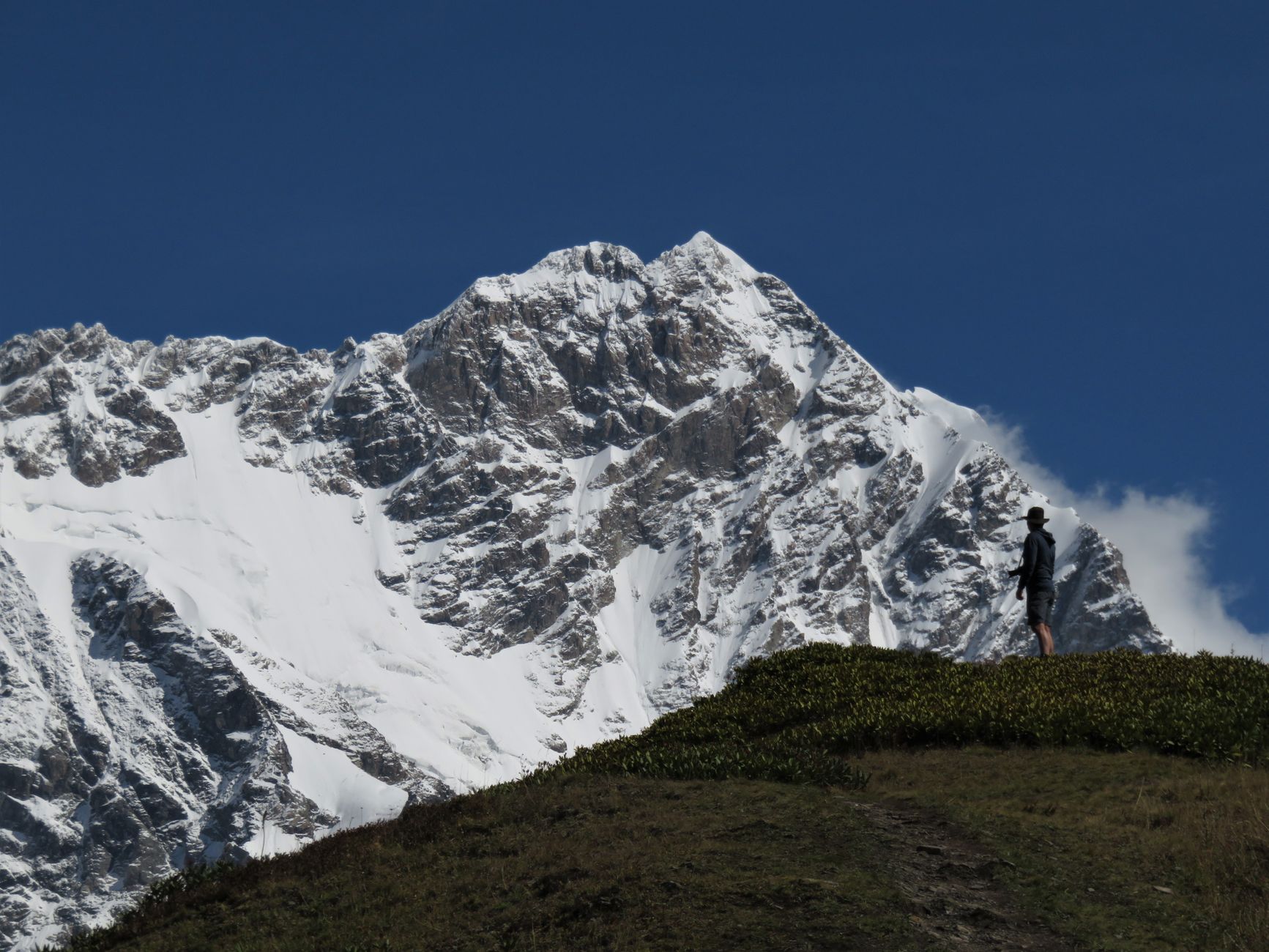
I set out for an epic hike in the Georgian Caucasus, seeking adventure and solitude. What I found wasn't just stunning landscapes, but a hidden village where time stood still, a place so profound it forced me to re-evaluate every aspect of my modern existence. This isn't just a travel story; it's an invitation to see the world—and yourself—anew. ---
## This Hike Led Me to a Village Lost in Time that Made Me Rethink Everything
My backpack was heavy, my legs were tired, and a persistent drizzle had turned the already challenging mountain path into a slippery, muddy ordeal. Yet, with every aching step, a thrill of anticipation ran through me. I was deep in the heart of the Georgian Caucasus, far from any paved road, any cell signal, or any sign of the modern world. I was chasing a whisper, a rumor of a place untouched by time, a village where ancient traditions still held sway. And what I found there didn't just meet my expectations; it shattered them, rebuilt them, and fundamentally changed how I view life, happiness, and connection.
### The Call of the Wild: Trading Wi-Fi for Wilderness
Let's be honest, my usual travel style involves a comfortable balance: a bit of adventure, sure, but always with the promise of a hot shower and decent Wi-Fi at the end of the day. But lately, the constant hum of connectivity, the endless scroll, the relentless pursuit of "more" had left me feeling… hollow. I craved something raw, authentic, a place where the only notifications were the rustle of leaves or the distant bleating of sheep.
Georgia, with its dramatic landscapes and ancient culture, had been calling to me for a while. Specifically, the Svaneti region, home to the iconic medieval stone towers, promised a glimpse into a bygone era. But even Mestia, Svaneti's regional capital, felt a little too developed for my new quest. I consulted weathered maps, talked to seasoned local guides in broken English and enthusiastic gestures, and pieced together a route that would take me off the well-trodden trails, deeper into a less-explored valley. My destination: a rumored village named Khadi-Dze, a place so isolated it barely registered on modern maps.
My gear was meticulously packed: sturdy hiking boots, layers for unpredictable mountain weather, a reliable compass (because GPS was a gamble here), a first-aid kit, and enough non-perishable snacks to last a few days. My camera, of course, was paramount – I had a feeling I’d be capturing more than just pretty landscapes. There was a nervous flutter in my stomach, a mix of excitement and trepidation. Was I truly prepared to go completely off-grid? To embrace the unknown? I was about to find out.
### The Path Less Taken: A Symphony of Solitude
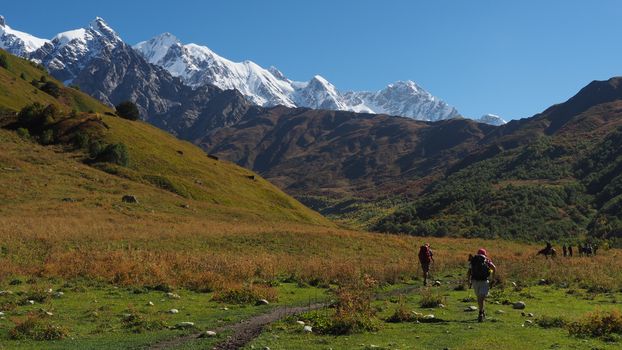
The first day of the hike was exhilarating. Leaving the last signs of civilization behind, the path quickly narrowed, winding through dense pine forests that smelled of damp earth and resin. The air was crisp, clean, and filled with the symphony of nature – the rush of glacial rivers, the chirping of unseen birds, and the occasional distant rumble of thunder echoing off the peaks.
The landscape was breathtaking, a geological masterpiece. Towering, jagged peaks, some still capped with snow even in late summer, pierced the impossibly blue sky. Below them, vibrant green alpine meadows stretched out, dotted with wildflowers in every conceivable color – crimson poppies, electric blue gentians, and sunny yellow buttercups. It was like stepping into a painting, a wild and untamed canvas that made you feel incredibly small and utterly alive.
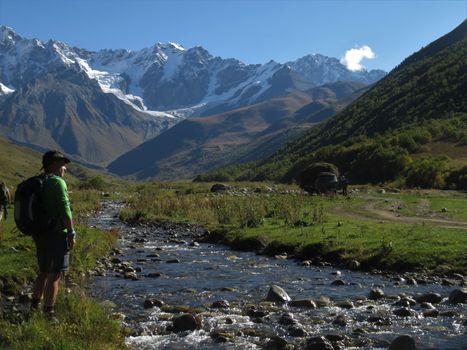
But this beauty came with its challenges. The trail, often little more than a goat path, was relentlessly steep in places, forcing me to scramble over loose rocks and navigate slippery mud slicks. There were river crossings where I had to balance on moss-covered stones or, at one point, wade through icy-cold water that stole my breath. The weather, too, was a fickle companion, shifting from bright sunshine to sudden, torrential downpours in a matter of minutes, coating everything in a shimmering, ephemeral mist.
Hours melted into days. My muscles ached, my clothes were perpetually damp, but my spirit soared. The constant physical exertion, the complete isolation, and the sheer majesty of my surroundings stripped away the distractions of my mind. There was no social media to check, no emails to answer, no news headlines to worry about. It was just me, the mountains, and the rhythm of my own breath. I felt a profound sense of presence, a connection to the earth that modern life rarely allows.
Then, on the third afternoon, just as I was contemplating setting up camp for the night, I saw it. Tucked into a hidden fold of the valley, almost camouflaged against the rugged terrain, was a cluster of ancient stone structures. Smoke curled lazily from a few chimneys, and tiny figures moved about, dwarfed by the immense peaks surrounding them. Khadi-Dze. My heart pounded with a mix of exhaustion and pure, unadulterated wonder.
### A Glimpse Through Time: My First Steps into Khadi-Dze
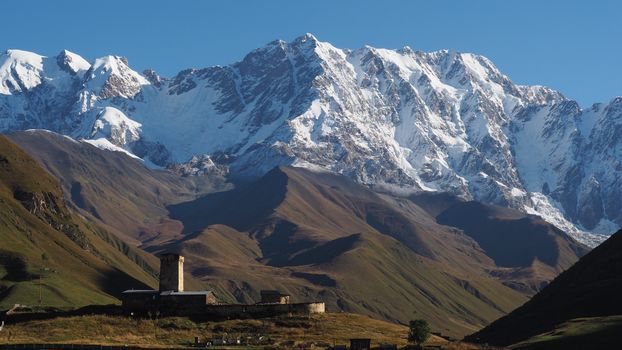
Approaching Khadi-Dze felt like walking through a portal. The village emerged from the mist-shrouded valley like an apparition. It wasn't just old; it was ancient. The houses were built of rough-hewn stone, their slate roofs blending seamlessly with the mountainside. Towering above them, unmistakable even from a distance, were the iconic Svan defensive towers – narrow, formidable structures that had stood guard for centuries, testaments to a history of fierce independence and resilience.
There were no paved roads, no power lines, no satellite dishes. Only a winding dirt path led into the village square, where a gurgling spring fed a simple stone trough. The air was thick with the scent of woodsmoke, damp earth, and something else – a subtle, indefinable aroma of time itself.
As I walked closer, a few figures stopped their work – tending to a small herd of cows, chopping firewood – and watched me. Their expressions were not hostile, but curious, perhaps a little wary. I offered a tentative "Gamarjoba!" (hello in Georgian), and a broad-faced man with kind eyes and a weathered smile returned the greeting. He gestured towards the spring, offering me a ladle of impossibly cold, clear water. It was the purest, most refreshing drink I had ever tasted.
This was it. I had arrived. And the silence, punctuated only by the distant bleating of sheep and the gentle murmur of the spring, was more profound than any I had ever experienced. It was the silence of a world untroubled by the modern clamor, a silence that invited you to listen not to external noise, but to the quiet stirrings within yourself.
### Stepping Back in Time: Life Unfolding in Khadi-Dze
My stay in Khadi-Dze was an immersion, not just a visit. I was welcomed into the home of the family who had offered me water – a multi-generational household where warmth and hospitality flowed as freely as the mountain streams. My "room" was a simple space, thick stone walls, a wooden bed, and a single window looking out onto a panorama that would put any five-star resort to shame. There was no electricity, save for a few solar-powered lights that flickered to life after dusk, casting long, dancing shadows.
Days in Khadi-Dze unfolded at a rhythm dictated by the sun, the seasons, and the needs of the land. Mornings began before dawn, with the lowing of cattle and the clatter of pots as breakfast was prepared over an open fire. I learned to help with chores: milking cows, gathering firewood, even attempting to knead dough for the family's daily bread, baked in a communal outdoor oven. The bread, hot and fragrant, served with homemade cheese and fresh honey, was a feast.
The villagers' lives were inextricably linked to their environment. They farmed small plots of potatoes and vegetables, herded sheep and cows on the high pastures, and meticulously preserved food for the harsh winters. Women sat by ancient looms, weaving intricate patterns into wool, while men mended fences or crafted tools with practiced hands. There were no smartphones, no televisions, no internet. Children played simple games with wooden toys, their laughter echoing off the stone walls. Evenings were spent gathered around the hearth, sharing stories, singing ancient folk songs, and drinking chacha (Georgian grape brandy) or homemade wine.
I spent hours observing, listening, and occasionally, with the help of a young boy who spoke a few words of English, conversing. I learned about their history, their deep respect for their ancestors, their close-knit community where everyone knew everyone and interdependence was not a choice, but a way of life. They were self-sufficient, resilient, and profoundly connected to their land and to each other. Their faces, weathered by sun and wind, held a quiet dignity, an inner peace that I rarely saw in the hurried faces of city dwellers.
### Lessons from the Simple Life: Rethinking Everything
The contrast between Khadi-Dze and my own modern life was stark, almost jarring. Back home, my days were a blur of meetings, deadlines, digital notifications, and the constant pressure to achieve, to consume, to keep up. Here, time stretched out, unhurried and unburdened. There was no "rush." The villagers worked hard, certainly, but their labor was directly connected to their survival and well-being. There was a clear purpose to every action.
Watching them, I began to question so much that I had taken for granted. What truly constitutes "progress"? Is it constant technological advancement, even if it leads to increased isolation and stress? Is "wealth" measured only in material possessions, or in the richness of community, the bounty of nature, and the freedom from external pressures?
I realized how much of my life was spent chasing things I didn't truly need, constantly distracted by the trivial, and disconnected from the fundamental rhythms of existence. The people of Khadi-Dze, with their simple lives, their strong bonds, and their deep connection to their traditions and their land, seemed to possess a contentment, a genuine happiness, that I rarely encountered in my own world. They didn't have much by modern standards, but they had everything that mattered: family, community, purpose, and a profound sense of belonging.
I found myself sitting for long periods, simply being. Watching the clouds drift across the mountain peaks, listening to the wind whisper through the valley, feeling the warmth of the sun on my face. It was a profound detox, a reset for my soul. I wasn't just observing a different way of life; I was experiencing a different way of being. And it made me question everything I thought I knew about happiness, success, and what it means to live a meaningful life. The external world seemed to shrink, and my internal world expanded, filled with a quiet clarity.
### Planning Your Own Time-Travel Adventure: Practical Tips
Inspired to find your own Khadi-Dze? While its exact location remains a cherished secret for me (and for its inhabitants), the spirit of such a journey is accessible to anyone willing to step off the beaten path. Here’s how you can plan your own transformative adventure:
1. Seek Out Remote Regions: Look for countries or areas known for their rugged geography and preserved cultures. The Himalayas (Nepal, Bhutan), the Andes (Peru, Bolivia), parts of the Caucasus (Georgia, Armenia), or even remote corners of Southeast Asia (Laos, parts of Indonesia) are good starting points. Research regions with limited infrastructure and strong local traditions.
2. Go Beyond the Guidebooks: Popular tourist trails rarely lead to "lost" villages. Talk to locals in regional towns, consult detailed topographical maps, and look for areas without roads. Local trekking agencies might offer specialized trips to lesser-known areas, often with experienced guides who know the terrain and the communities.
3. Embrace Responsible Tourism: This is paramount. When you visit remote communities, you are a guest in their home.
* Respect Local Culture: Learn a few phrases of the local language, dress modestly, and always ask permission before taking photos. Observe local customs and traditions.
* Support the Local Economy: Stay in homestays, eat local food, and buy handicrafts directly from the artisans. Negotiate fairly but don't haggle aggressively.
* Leave No Trace: Pack out everything you pack in. Do not litter. Respect the natural environment and wildlife.
* Be Mindful of Impact: Understand that your presence, however well-intentioned, can have an impact. Be sensitive and strive for minimal disruption.
4. Prepare Thoroughly:
* Physical Fitness: These hikes are often challenging. Train beforehand.
* Gear: Sturdy hiking boots, layered clothing (weather changes quickly in mountains), waterproof outer shell, a good backpack, navigation tools (compass, physical map, downloaded offline maps), headlamp, water filter/purification tablets.
* Safety: Inform someone of your detailed itinerary. Consider hiring a local guide, especially if trails are unmarked. Carry a basic first-aid kit. Be aware of local wildlife (e.g., shepherd dogs in the Caucasus).
* Cash: Remote areas are cash-only. Carry enough local currency.
* Communication: Don't expect cell service or Wi-Fi. Embrace the digital detox!
5. Be Open and Flexible: Things will go wrong. Plans will change. Embrace the unexpected, be patient, and approach every interaction with an open heart and mind. The most profound experiences often arise from unforeseen circumstances.
6. Budget: While getting to remote areas can be costly, once you're there, daily expenses (homestays, food) are often surprisingly low, especially if you're embracing the local way of life.
### My Unforgettable Takeaways & Your Next Adventure
Leaving Khadi-Dze was bittersweet. Part of me wanted to stay, to shed the layers of my modern identity and fully embrace the simplicity and depth I had found there. But I knew I couldn't, not permanently. What I could do, however, was carry a piece of Khadi-Dze with me.
The hike to that lost village didn't just show me a different place; it showed me a different way of living. It reminded me that true wealth isn't measured in possessions, but in connections – to nature, to community, to oneself. It taught me the profound value of presence, the beauty of simplicity, and the quiet strength of tradition. It reignited my appreciation for the fundamental things in life and made me question the relentless pursuit of "more" that often defines our modern existence.
This journey wasn't just a trip; it was a pilgrimage that stripped away the superficial and revealed the essential. It made me rethink everything.
So, I challenge you: What’s your lost village? What hidden corner of the world, or even your own backyard, holds the power to challenge your perceptions and redefine your priorities? Step away from the screens, embrace the unknown, and seek out the places where time seems to stand still. You might just find that the most profound discoveries are not about where you go, but about who you become.
Share your thoughts in the comments below! Have you found a place that changed your perspective? What's stopping you from embarking on your own transformative journey? Let's inspire each other to explore beyond the obvious!
---
Visual journey


Tags
Share this adventure
Join the travel community
New adventures, cultural insights and travel inspiration, straight to your inbox.
We may receive a commission if you click on a link and buy a product, service or policy, at no extra cost to you. How affiliate links work.
Other angles on this trip
These notes are written by AI to show how different kinds of traveller might see this destination. They are not comments from real readers.