

Feeling overwhelmed and disconnected? I was too, until I stumbled upon an ancient Japanese practice that completely transformed my perspective. Join me as I recount my profound forest bathing experience, a journey that didn't just soothe my senses, but profoundly reset my entire mind. Get ready to ditch the digital and embrace the quiet wisdom of the trees. ---
## This Forest Bathing Experience Reset My Mind
The constant hum of city life had become less of a soundtrack and more of a cacophony. Emails piled up, social media feeds buzzed with manufactured urgency, and my own thoughts felt like a tangled mess of to-do lists and anxieties. I was perpetually "on," yet utterly disconnected from myself. My usual travel remedies—bustling city breaks or adrenaline-fueled adventures—no longer hit the mark. I needed something deeper, something that promised not just escape, but a genuine reset.
That's when I first heard about Shinrin-Yoku, or "forest bathing." Hailing from Japan, it sounded intriguing, almost mystical. Was it just a fancy term for a walk in the woods? I was skeptical, but desperate. A friend who had recently returned from Japan, looking suspiciously serene, raved about her experience in the ancient forests of Kumano Kodo. "It's not just a walk," she insisted, "it's an immersion." Her calm conviction was contagious, and soon, I found myself booking a flight to Japan, not for the neon lights of Tokyo or the cherry blossoms of Kyoto, but for the quiet embrace of its sacred forests. I was ready to bathe.
### What Exactly IS Forest Bathing? (Beyond a Walk in the Woods)
Let's clear this up right away: Forest bathing, or Shinrin-Yoku (森林浴), is far more than a leisurely stroll. Coined in Japan in the 1980s, it's a therapeutic practice of mindfully immersing oneself in the atmosphere of the forest. It’s about engaging all your senses, slowing down, and connecting with nature in a profound way, rather than hiking or exercising.
The Japanese Ministry of Agriculture, Forestry, and Fisheries introduced the term to encourage people to get out into nature and has since supported extensive research into its physiological and psychological benefits. And the science is compelling: studies have shown that forest bathing can significantly lower cortisol levels (the stress hormone), reduce blood pressure, improve mood, boost the immune system (thanks to inhaling phytoncides, the airborne chemicals trees emit to protect themselves), and even enhance creativity and focus.
For me, it was less about the science initially and more about the promise of relief. I pictured myself wandering through ancient trees, breathing deeply, and somehow, miraculously, shedding the weight of the world. What I found was even more profound than I could have imagined.
### My Journey to the Sacred Forests of Kumano Kodo
My destination was the Kumano Kodo, a network of ancient pilgrimage routes winding through the Kii Peninsula, a UNESCO World Heritage site known for its spiritual significance and breathtaking natural beauty. This wasn't a quick day trip; it was an intentional journey into the heart of Japan's spiritual landscape.
I flew into Osaka (Kansai International Airport - KIX) and took a direct limited express train (Kuroshio line, covered by the JR Pass if you have one) to Kii-Tanabe, the western gateway to the Kumano Kodo. From there, a local bus wound its way through lush valleys and quaint villages, dropping me off at Hongu, a small town nestled amidst towering cedar and cypress trees.
I had booked a stay at a traditional ryokan (Japanese inn) called Minshuku Tsugizakura (though there are many excellent options like Wataze Onsen Ryokan if you prefer hot springs) near the Kumano Hongu Taisha shrine. It was simple, elegant, and perfectly integrated into its natural surroundings, offering delicious local meals and a quiet respite. The air here was different—crisp, clean, carrying the scent of damp earth and pine. The silence, punctuated only by the chirping of cicadas and the distant rush of a river, was a balm to my city-weary ears.
Finding a guide for my first forest bathing experience was crucial. While you can certainly walk through a forest mindfully on your own, a certified Shinrin-Yoku guide helps facilitate the experience, offering "invitations" that encourage deeper sensory engagement. I found my guide, a gentle woman named Akari, through the Tanabe City Kumano Tourism Bureau website (they have excellent resources and can help connect you with certified guides). She specialized in the Nakahechi route, one of the most popular and accessible Kumano Kodo trails, known for its ancient stone paths and sacred atmosphere. Her fee was approximately ¥15,000-¥20,000 JPY for a half-day session, which, considering the profound impact, felt like a steal.
### The Immersion: My First Shinrin-Yoku Session
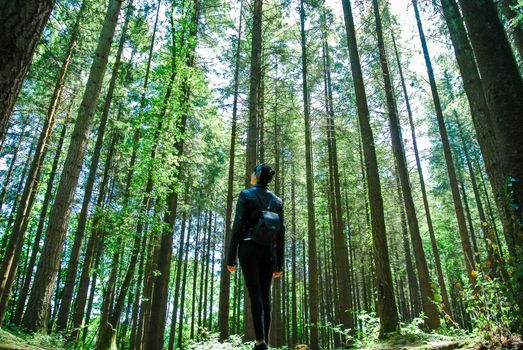
The morning began under a canopy of towering Japanese cedar trees, their trunks thick with moss and age. Akari-san, with a warm smile and a quiet demeanor, started with a simple instruction: "Leave your phones in your bags. This is a time for your senses, not your screens." Relief washed over me.
Our first "invitation" was to simply arrive. We stood still, eyes closed, taking three deep breaths, feeling the ground beneath our feet, listening to the symphony of the forest. I felt the cool air on my skin, smelled the rich, earthy scent of the forest floor, and heard the rustle of leaves and the distant murmur of water.
Next, we walked. But not like a hike. This was a slow walk, each step deliberate. Akari-san encouraged us to notice the texture of the path, the way the light dappled through the leaves, the subtle shifts in temperature. We stopped often.
One invitation was to "open our eyes as if seeing for the first time." I focused on a single moss-covered rock, noticing the intricate patterns of the moss, the tiny droplets of dew clinging to its surface, the way sunlight illuminated its contours. It was a rock, yes, but suddenly, it was a miniature ecosystem, a universe of its own.
Another invitation involved touch. I placed my palm flat against the rough bark of an ancient cedar. Its surface was surprisingly cool and textured, a living skin connecting me to centuries of growth. I felt a subtle vibration, a quiet energy. It was a moment of profound grounding. Later, we lay on our backs on a soft blanket of moss, gazing up at the canopy. The world became a kaleidoscope of green and gold, the rustling leaves a lullaby. It was here, watching a tiny spider weave its intricate web between two branches, that something shifted within me. The constant chatter in my mind began to quiet. Worries about deadlines, future plans, past regrets—they all receded, replaced by the simple, profound beauty of the present moment. A tear slipped down my temple, not of sadness, but of release.
Akari-san guided us through other sensory exercises: listening for specific bird calls, identifying different scents, observing the play of light and shadow. We paused for a mindful tea ceremony in the heart of the forest, sipping warm matcha, each sip a moment of quiet gratitude. It wasn't about "doing" anything, but about "being." It was about receiving the forest's gifts with an open heart.
### The Profound Reset: What I Gained and How it Lasted
When the session concluded, I felt like I had shed layers of accumulated stress. My mind, once a frantic swarm of bees, now felt like a calm, clear lake. My body felt lighter, my senses sharper. The colors of the forest seemed more vibrant, the sounds richer. I felt a deep sense of peace, a quiet joy that was entirely different from the fleeting highs of adrenaline or accomplishment.
The immediate effects were palpable: improved sleep quality, a general reduction in anxiety, and an enhanced ability to focus. But the lasting impact was even more significant. The forest bathing experience taught me the power of intentional presence. It wasn't just a one-off event; it was a lesson in how to reconnect with myself and the natural world, a skill I could carry back into my daily life.
I found myself noticing the trees in my local park, appreciating the scent of rain, and consciously taking deep breaths when I felt overwhelmed. The memory of the Kumano Kodo forest became my sanctuary, a mental escape button I could press whenever the city's demands became too much. It truly was a mind reset, a recalibration of my internal compass.
And yes, it's incredibly Instagram-worthy, but not in the performative way. The beauty of these ancient forests, the dappled light, the moss-covered stones, the intricate roots—they are undeniably stunning. But the real "picture" you take home is an internal one. If you do take photos, do it mindfully, capturing the essence rather than just snapping for likes. Focus on the details: the tiny mushrooms, the way the light filters through the leaves, the texture of the bark. These are the details that truly transport you.
### Planning Your Own Mind-Resetting Forest Bathing Adventure
Inspired to try it yourself? Here’s how you can plan your own transformative journey.
#### Choosing a Location
While Japan is the birthplace of Shinrin-Yoku, you don't necessarily have to fly halfway across the world. However, experiencing it in its homeland, especially in a culturally rich and ancient place like Kumano Kodo, adds an unparalleled depth.
* Kumano Kodo, Japan (Wakayama Prefecture): My top recommendation. The ancient pilgrimage routes offer an incredibly spiritual and immersive experience. The Nakahechi route is particularly accessible and rich in history.
* Yakushima Island, Japan: A UNESCO World Heritage site known for its ancient cedar forests (Yakusugi). It's more remote but offers a truly mystical experience, famous for inspiring Studio Ghibli's "Princess Mononoke."
* Arashiyama Bamboo Grove, Kyoto, Japan: While beautiful, it can be crowded. You can still practice mindful walking here early in the morning, but it's less of an immersive "forest bathing" experience compared to more secluded spots.
* Beyond Japan: Many countries now offer guided forest bathing experiences. Look for certified guides in national parks or nature reserves near you. Popular spots include Redwood National Park (USA), Black Forest (Germany), or even local botanical gardens and large city parks.
#### Finding a Guide
For your first experience, I cannot stress enough the value of a certified guide. They are trained to facilitate the process, helping you slow down, engage your senses, and truly let go.
* Japan: Start with local tourism bureaus like the Tanabe City Kumano Tourism Bureau or Yakushima Tourism Association. They often have lists of certified Shinrin-Yoku guides.
* Internationally: Organizations like the Association of Nature and Forest Therapy Guides and Programs (ANFT) or the Forest Therapy Institute (FTI) certify guides worldwide. Their websites often have directories to help you find one in your area.
* Cost: A guided session typically ranges from $50 - $200 USD for a half-day or full-day experience, depending on the location and guide's expertise. It's an investment in your well-being.
#### What to Bring
Keep it simple and comfortable.
* Comfortable Walking Shoes: Ideally waterproof, as forest paths can be damp.
* Layers of Clothing: Temperatures can change, and you'll be moving slowly, so warmth is important.
* Rain Gear: A light waterproof jacket is a must, especially in Japan's often humid climate.
* Water Bottle: Stay hydrated.
* Small Backpack: For your essentials.
* Insect Repellent: Depending on the season and location.
* Small Journal and Pen: For reflections after the session (not during, to minimize distraction).
* Optional: A small, lightweight mat or towel to sit or lie on the forest floor.
#### Budget Tips
Forest bathing doesn't have to break the bank, especially if you're willing to go a bit off the beaten path.
Accommodation: Instead of luxury resorts, opt for local minshuku (family-run guesthouses) or simple ryokan* like the one I chose. They offer authentic experiences and are generally more affordable.
* Transportation: In Japan, consider a JR Pass if you're covering multiple regions. For local travel, buses are efficient and cost-effective.
* Food: Enjoy local eateries. In Kumano Kodo, you'll find delicious, wholesome meals at reasonable prices. Pack some snacks for your time in the forest.
* Self-Guided vs. Guided: While a guide is recommended for a true Shinrin-Yoku experience, you can practice mindful walking in any public forest for free. Just remember to approach it with intention and presence.
#### Safety Tips
* Stay on Marked Trails: Especially in unfamiliar forests.
* Inform Someone: Let your accommodation or a friend know your plans and expected return time.
* Check Weather Forecasts: Be prepared for rain or sudden changes in temperature.
* Local Wildlife: Be aware of any local wildlife and follow guide instructions or posted warnings. In Japan, this might include wild boars or bears in very remote areas, though encounters are rare on popular trails.
* Hydration: Always carry enough water.
#### Best Time to Visit
Each season offers a unique forest bathing experience:
* Spring (March-May): New growth, vibrant greens, blooming wildflowers, and mild temperatures. A beautiful time for renewal.
* Summer (June-August): The forest offers a cool, shaded refuge from the heat. The lushness is incredible, and the sounds of cicadas are enchanting.
* Autumn (September-November): Spectacular fall foliage, crisp air, and a sense of calm. The changing colors are breathtaking.
* Winter (December-February): A serene, quiet beauty. Bare branches reveal new perspectives, and a light dusting of snow can create a magical, hushed atmosphere.
### Integrating Nature into Your Daily Life (Even Without a Forest)
The beauty of forest bathing is that its principles can be applied anywhere. You don't need a pristine ancient forest to reap the benefits of nature connection.
* Your Local Park: Find a quiet corner, sit on a bench, and simply observe. Listen to the birds, feel the breeze, watch the clouds.
* Your Backyard/Balcony: Engage your senses with your plants, the soil, the insects.
* Even Indoors: Bring nature inside with houseplants. Take a moment to really look at them, touch their leaves, appreciate their resilience.
* Mindful Walks: Turn your daily walk into a mini-Shinrin-Yoku session. Leave your phone behind, notice the trees, the sky, the textures, the smells.
Sensory Awareness: When you drink your morning coffee, really taste it. When you hear music, really listen*. This practice of presence translates directly from the forest into your everyday life.
The key is consistency and intention. Just like any practice, the more you engage with nature mindfully, the deeper and more lasting the benefits will be.
---
My forest bathing experience in Kumano Kodo was more than just a trip; it was a profound journey inward, facilitated by the ancient wisdom of the trees and the gentle guidance of a tradition that understands our inherent need for connection. It taught me that sometimes, the most revolutionary thing you can do for your mind is to simply stop, listen, and breathe in the wild, untamed beauty of the world.
Are you ready to embrace the quiet wisdom of the trees and experience your own profound reset? Don't just read about it, experience it. Find your nearest forest, or better yet, start planning your pilgrimage to the sacred woods of Japan. Your mind will thank you.
What's your favorite way to connect with nature? Share your stories and tips in the comments below!
---
Visual journey


Tags
Share this adventure
Join the travel community
New adventures, cultural insights and travel inspiration, straight to your inbox.
We may receive a commission if you click on a link and buy a product, service or policy, at no extra cost to you. How affiliate links work.
Been there?