

My travel photos used to be generic, and my trips felt rushed. Then, I discovered one simple photography rule that didn't just revolutionize my images, but profoundly changed the way I experience the world, transforming hurried sightseeing into deep, meaningful immersion. ---
The air in the bustling Jemaa el-Fnaa square in Marrakech was thick with the scent of mint tea, grilled meats, and exotic spices. Storytellers wove ancient tales, snake charmers hypnotized their cobras, and acrobats tumbled through the crowds. It was a sensory explosion, a photographer's dream. My camera was clutched in my hand, ready, eager. But something felt off. Every shot I took felt... superficial. Like I was just documenting, not experiencing. I’d snap a quick photo of a spice vendor, then immediately move on, checking it off my mental list, already thinking about the next 'must-see' shot.
I was seeing the world through my lens, but I wasn't feeling it. My hard drive was overflowing with technically decent photos, but they lacked soul. They didn't tell my story, or the story of the place. They were just... pictures. And honestly, my trips felt the same way – a blur of famous landmarks, rushed meals, and the constant pressure to 'capture' everything, rather than simply be everything.
That night, back in my riad, scrolling through the day's captures, I felt a pang of disappointment. I had been there, in one of the most vibrant squares on Earth, but I hadn't truly connected. It was a pivotal moment, leading to an epiphany that would change not just my photography, but the very essence of how I travel. I call it: The Rule of Immersive Photography: Shoot Less, See More.
### The Epiphany: Why My Photos (and Trips) Felt Flat
For years, I traveled like many modern tourists do. My itinerary was a tightly packed schedule, a checklist of attractions to conquer. Wake up early, hit the famous monument, grab a quick bite, move to the next landmark, repeat. My camera was an extension of this hurried approach – a tool to document my progress, to prove I was there.
I remember one particularly frustrating trip to Rome. I was sprinting between the Colosseum, the Pantheon, and the Trevi Fountain, camera practically glued to my face. I got the shots: the iconic angles, the picture-postcard views. But I barely tasted the cacio e pepe, I didn't linger to watch the light change on the ancient stones, and I certainly didn't strike up a conversation with a local. I returned home exhausted, with a memory card full of pretty pictures, but a heart that felt strangely empty. I had seen Rome, but I hadn't felt Rome. I realized my relentless pursuit of the perfect shot was actually preventing me from experiencing the very things I wanted to photograph – the authentic moments, the subtle beauty, the soul of a place. My photography was a barrier, not a bridge.
### Unveiling "The Rule of Immersive Photography: Shoot Less, See More"
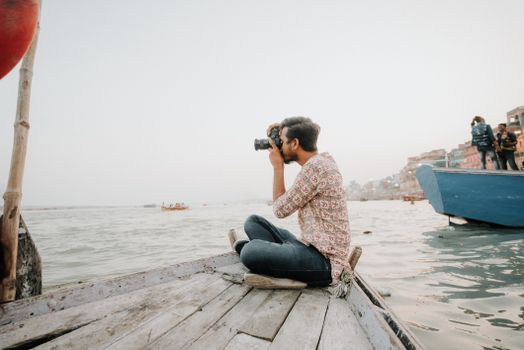
This rule isn't about not taking photos. Far from it. It's about how and when you take them. It’s a deliberate shift from being a passive observer clicking a shutter to an active participant deeply engaging with your surroundings.
The core principle is simple: Before you even think about lifting your camera, dedicate specific, intentional time to simply be present and observe. And crucially, after you’ve taken your shots, put the camera away again and continue to immerse yourself.
Here’s how it works: When you arrive at a new place, a bustling market, a serene temple, a breathtaking landscape, resist the immediate urge to frame a shot. Instead, consciously put your camera (or phone) down or keep it in your bag for at least 15-30 minutes. During this time, your mission is purely sensory:
* Look: Not just at the obvious, but at the details. The cracks in the pavement, the intricate carvings, the way light plays on a building, the expressions on people's faces.
* Listen: What are the dominant sounds? The chatter of a market? The chanting of monks? The rustle of leaves? The distant call to prayer?
* Smell: Is there incense? Fresh bread? Diesel fumes? Sea salt?
* Feel: The temperature, the breeze, the texture of a stone wall, the warmth of a mug of coffee.
* Engage: If appropriate, smile at someone, try a few local phrases, ask a question, buy something small.
This conscious pause, this act of intentional observation, fundamentally changes everything.
### How This Rule Transformed My Travel Experience
Implementing "Shoot Less, See More" wasn't just a photography hack; it was a complete travel paradigm shift.
1. Deeper Connections & Authentic Moments:
Remember that frustrating Marrakech trip? The next time I visited a bustling market, this time in Hoi An, Vietnam, I tried the rule. I spent 20 minutes just walking, smelling the pho, listening to the vendors call out, watching a woman meticulously arrange her fruit stall. I wasn't looking for a shot; I was just being. And then, it happened. A tiny old woman, her face a roadmap of life, caught my eye. We exchanged smiles. She offered me a sample of rambutan. We chatted (through gestures and broken English) for a few minutes. Then, and only then, did I ask if I could take her photo. The resulting portrait wasn't just a picture of a vendor; it was a portrait of connection, of shared humanity. Her eyes held a warmth that my previous rushed photos had always missed. These are the moments that truly stay with me, far more than any landmark.
2. Richer, More Storytelling Photos:
When you observe first, your photos become infinitely better. You’re not just snapping; you're composing with intention. You notice the way the morning light perfectly illuminates the ancient temple, or the subtle gesture that tells a whole story. You wait for the perfect moment – the child laughing, the bird taking flight, the local artisan absorbed in their craft. My compositions became stronger, my light more evocative, my storytelling more profound. My images stopped being mere documentation and started becoming evocative narratives. They began to capture the feeling of a place, not just its appearance.
3. Enhanced & Lasting Memories:
Perhaps the most profound change was how I remembered my trips. Instead of a blur of photos, I now have vivid, multi-sensory memories. I don't just remember seeing the floating markets of the Mekong Delta; I remember the rhythmic splash of paddles, the sweet scent of mangoes, the friendly waves from vendors, the warmth of the sun on my skin. The photos I take now serve as powerful anchors, instantly transporting me back to those fully experienced moments, rather than just reminding me of a place I once rushed through. I now truly know the places I visit, not just photograph them.
### Practical Application: Making "Shoot Less, See More" Your Own
Ready to transform your own travel photos and experiences? Here’s how you can actively integrate this rule:
A. Pre-Shoot Immersion: The Art of the Conscious Pause
1. The 15-Minute Pause (or more!): This is non-negotiable. Arrive at your destination, keep your camera in your bag, and just... be. Walk around, find a bench, order a drink, and simply observe. Let your senses be your guide. What colors dominate? What’s the rhythm of the place?
2. Engage with Locals: Learn a few basic phrases in the local language ("hello," "thank you," "please," "may I take a photo?"). A simple smile and a polite question can open doors to incredible interactions. These connections often lead to the most unique and authentic photo opportunities.
3. Find Your Angle (Without the Lens): As you observe, mentally frame shots. Walk around the subject. What’s the best light? What are the interesting foreground elements? What story do you want to tell? This pre-visualization allows you to be much more efficient and intentional when you do pick up your camera.
4. Simplify Your Gear: Sometimes, the best way to embrace "Shoot Less, See More" is to carry less. A single prime lens (like a 35mm or 50mm) forces you to move and think about composition rather than relying on zoom. Even just your smartphone can be incredibly powerful if you approach it with the right mindset. The gear matters far less than the intention behind the shot.
B. Post-Shoot Reflection: Solidifying the Experience
1. Journaling Your Observations: After a session of immersive photography, take a few minutes to jot down what you saw, felt, heard, and experienced. Who did you talk to? What surprised you? What story did that particular photo capture? This reinforces the memory and helps you articulate the narrative behind your images.
2. Mindful Editing: When you sit down to edit, don't just look at the technical aspects. Relive the moment. What was the mood? The atmosphere? Let your editing enhance the story and emotion you experienced on location. It's not just about fixing flaws; it's about amplifying the feeling.
### Destinations Where "Shoot Less, See More" Shines
While this rule can be applied anywhere, some places truly benefit from this deeper, more mindful approach:
1. Kyoto, Japan (Gion District):
The Experience: Instead of just rushing to snap a geisha (which is often disrespectful), spend an hour simply walking the quiet lantern-lit streets of Gion at dusk. Observe the meticulous architecture of the machiya houses, the rustle of silk kimonos, the hushed conversations from behind sliding doors. Find a quiet tea house, enjoy a matcha, and just be*.
* Cultural Insight: Geisha and maiko (apprentice geisha) are not tourist attractions to be aggressively photographed. Respect their privacy. If you are lucky enough to encounter one, a polite bow and a quick, discreet shot from a distance is acceptable, but never interrupt them. The true beauty of Gion lies in its atmosphere of serene elegance and ancient tradition.
* Best Time to Visit: Late afternoon into the evening, as the lanterns glow and the area comes alive with a gentle buzz.
* Safety Tip: Always be mindful of private property and local customs.
* Getting Around: Kyoto is easily navigated by bus and subway. Gion is best explored on foot.
2. Marrakech, Morocco (Jemaa el-Fnaa Square):
* The Experience: This is where my epiphany began! Don't just point and shoot at the snake charmers and acrobats. Find a spot on a rooftop cafe overlooking the square (many offer mint tea for 20-30 MAD, roughly $2-3 USD), and watch the square transform from day to night over an hour or two. Then, descend into the chaos. Try a snail soup (10 MAD), listen to a storyteller (give a small tip, 10-20 MAD), and engage with a spice vendor. Let the sensory overload wash over you.
* Cultural Sensitivity: Always ask for permission before photographing people, especially performers, and be prepared to offer a small tip. Bargaining is expected in the souks – start at about 50% of the asking price and negotiate politely.
* Best Time to Visit: Late afternoon to evening, when the square truly comes alive with food stalls and performers.
* Safety Tip: Pickpocketing can occur in crowded areas. Keep valuables secure and be aware of your surroundings. Dress modestly.
* Getting Around: The square itself is pedestrian. Taxis are plentiful but agree on a price beforehand.
3. Patagonia, Chile/Argentina (Torres del Paine National Park / El Chalten):
The Experience: When faced with the colossal beauty of Fitz Roy or the Torres del Paine massif, it's easy to just snap away. Instead, before lifting your camera, feel the biting Patagonian wind on your face, listen to the silence broken only by birdsong or a distant glacier calving. Smell the crisp, clean air. Spend time simply absorbing the scale, the colors, the ever-changing light. Wait for the clouds to part, or for the golden hour to paint the peaks. The photos will be monumental because your experience* was monumental.
* Best Time to Visit: Southern Hemisphere spring (October-November) or autumn (March-April) for milder weather and fewer crowds.
* Getting There: Fly into Punta Arenas (Chile) for Torres del Paine or El Calafate (Argentina) for El Chalten, then take long-distance buses. Hiking is the primary mode of transport within the parks.
* Budget Tip: Camping is significantly cheaper than staying in refugios (mountain lodges), but requires booking well in advance, especially in Torres del Paine. Bring your own food to save costs.
### Beyond the Lens: A Mindset Shift for All Travelers
Even if you’re not a dedicated photographer, "The Rule of Immersive Photography" offers a profound lesson for all travelers: mindful travel. It’s about being present, engaging deeply, and savoring the journey rather than just rushing to the destination.
Put Down the Phone: Resist the urge to constantly scroll or snap. Give yourself permission to simply be* in the moment.
* Engage Your Senses: Taste the street food, listen to the local music, feel the texture of ancient ruins.
* Talk to Strangers: You'd be amazed at the stories and insights you'll gain from a simple conversation with a local.
* Embrace Slow Travel: Instead of trying to see 10 cities in 10 days, pick one or two and truly explore them. Allow for serendipitous discoveries.
This shift in mindset reduces travel burnout, deepens your appreciation for other cultures, and leaves you with richer memories and more compelling stories to share. Your trips become less about what you did and more about who you became through the experience.
### Conclusion: Your Next Adventure Awaits – With a New Perspective
The "Shoot Less, See More" rule wasn't just a revelation for my photography; it was a revolution for my soul. My photos went from generic snapshots to vibrant storytelling, and my travels transformed from a hurried checklist to a profound journey of connection and discovery. It taught me that the best photographs aren't just seen through a lens; they're felt through the heart.
I challenge you, on your very next trip, to try it. Put your camera down for those crucial 15-30 minutes. Immerse yourself. Connect. And then, when you finally lift your lens, you'll find that the world, and your place within it, has become infinitely richer. You'll not only capture better photos; you'll capture more meaningful memories, and you'll find that you truly traveled.
What's one destination where you're excited to try "Shoot Less, See More"? Share your thoughts in the comments below, and let's inspire each other to travel deeper!
---
Visual journey



Tags
Share this adventure
Join the travel community
New adventures, cultural insights and travel inspiration, straight to your inbox.
We may receive a commission if you click on a link and buy a product, service or policy, at no extra cost to you. How affiliate links work.
Been there?