
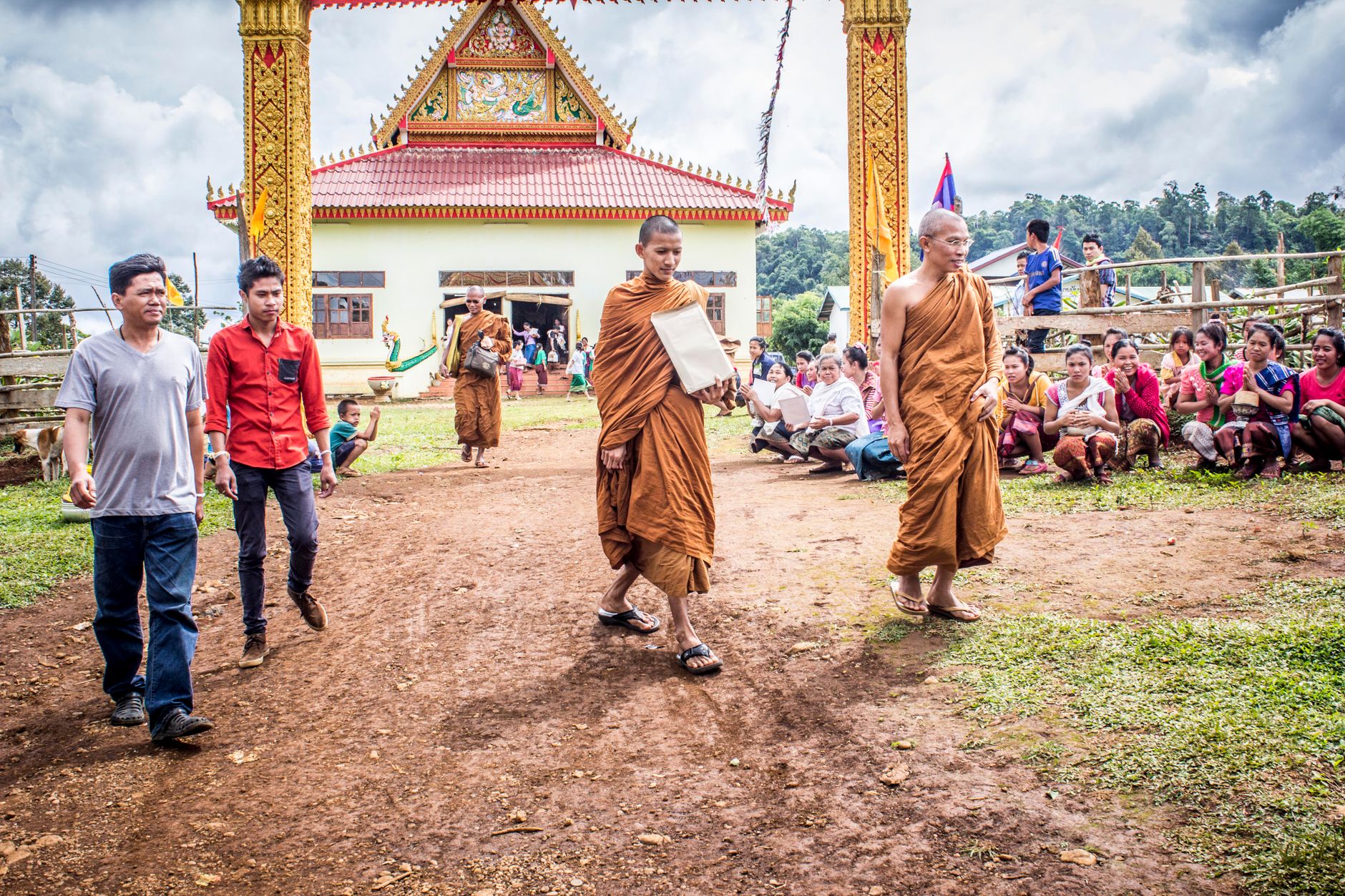
Forget crowded landmarks and curated tours. My journey took an unexpected turn in a remote Laotian village when locals taught me their ancient game, Batu Gajah. What started as a simple lesson transformed my entire outlook on travel and life itself, proving that the deepest connections are often found in the simplest moments. ---
## The Uncharted Playbook: How a Simple Laotian Game Rewrote My Travel Story
The air in Ban Na Klang always smells of woodsmoke, damp earth, and the faint, sweet perfume of frangipani. It's a smell that now, months later, can transport me instantly back to that dusty patch of ground under the ancient banyan tree, the soft click of river stones, and the infectious laughter of children. This wasn't a place on any "must-see" list, nor was it particularly easy to reach. And that, I've come to realize, was precisely its magic.
I arrived in Ban Na Klang, a tiny, unassuming village tucked away in the emerald folds of northern Laos, after a particularly exhausting stretch of travel. I’d seen temples, waterfalls, and bustling markets, ticking off sights like items on a grocery list. But somewhere between the 20th gilded Buddha and the 10th tourist-trap souvenir shop, a weariness had set in – not physical, but spiritual. I was craving something real, something beyond the curated experiences designed for the transient visitor. I wanted connection, not just observation.
My journey to Ban Na Klang started with a bumpy, hours-long bus ride from Luang Prabang to Nong Khiaw, followed by a local tuk-tuk that seemed to defy gravity on unpaved roads, and finally, a short, dusty walk. I was staying in a simple homestay, a bamboo hut on stilts overlooking rice paddies that shimmered gold in the late afternoon sun. My camera, usually glued to my hand, lay forgotten in my bag. I was tired of framing perfect shots; I just wanted to be.
### The Elephant's Invitation: A Game Unveiled
As dusk painted the sky in hues of orange and purple, a familiar scene unfolded in the village square – or rather, the village's central dirt patch. Children, their faces bright with grime and joy, were gathered, their high-pitched voices carrying on the breeze. They weren't glued to screens; they were playing. And as I watched from my porch, a small group of them, then an elderly woman with kind eyes and a knowing smile, caught my gaze. She gestured towards them, then to me, a silent invitation.
My initial instinct was to politely decline. I was an adult, a foreigner, surely I'd just get in the way. But the warmth in her smile, the genuine curiosity in the children's eyes, was disarming. "Sabaidee," I managed, offering a tentative smile back. The old woman, who I later learned was Mae Thong, beckoned again, more insistently this time. Something inside me, that quiet yearning for connection, nudged me forward. I descended the rickety steps and walked towards the banyan tree, leaving my self-consciousness behind like discarded baggage.
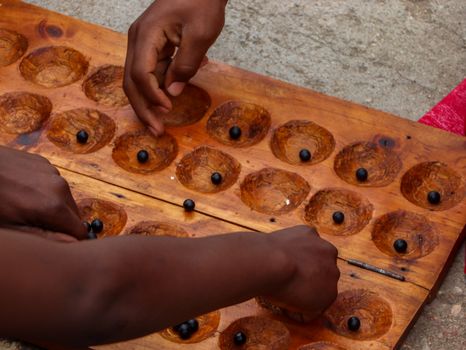
As I approached, the children parted, making space. Mae Thong knelt, her nimble fingers arranging five smooth river stones on the packed earth. "Batu Gajah," she pronounced, her voice raspy but gentle, pointing to the stones. "Elephant Stone." The name itself sounded ancient, steeped in the natural world around them. It was a game, she explained through a mix of gestures and the rudimentary English of one of the older boys, passed down through generations. And now, it was my turn to learn.
### Learning the Ropes: The Art of Batu Gajah
Batu Gajah, as I quickly discovered, is a game of dexterity, precision, and a surprising amount of strategy, played with five small, smooth river stones. The objective is to complete seven progressively challenging "stages" before your opponent. If you drop a stone or fail a stage, your turn ends, and you restart that stage on your next turn.
Here’s how the basic stages went:
1. "Khao Neung" (One Rice): Toss one stone into the air, quickly pick up one stone from the ground, then catch the tossed stone before it lands. Repeat until all four remaining stones are picked up individually.
2. "Khao Song" (Two Rice): Toss one stone, pick up two stones at once, catch. Repeat.
3. "Khao Sarm" (Three Rice): Toss one stone, pick up three stones, catch.
4. "Khao Si" (Four Rice): Toss one stone, pick up all four stones at once, catch.
5. "Chai Gajah" (Elephant's Hand): This was the first stage where the "Elephant" truly came into play. Toss one stone, place it on the ground, then sweep up all four remaining stones into your hand in one fluid, elephant-trunk-like motion before catching the tossed stone.
6. "Gajah Noi" (Little Elephant): Toss one stone, use one hand to create a small arch or "bridge" on the ground. With the other hand, guide the other three stones under the arch, then catch the tossed stone. This required incredible coordination!
7. "Gajah Yai" (Big Elephant): The grand finale. Toss all five stones into the air, quickly turn your hand palm down, and try to catch as many as possible on the back of your hand. Then, with a flick, toss those stones up again and catch them in your palm.
My first attempts were, to put it mildly, disastrous. Stones clattered to the ground, my hand-eye coordination seemed to have deserted me, and the concept of picking up stones while catching another felt like trying to pat my head and rub my belly simultaneously, but with far higher stakes. The children giggled, not unkindly, but with pure, unadulterated amusement. Mae Thong, however, was a picture of infinite patience. She would gently guide my hand, demonstrate the subtle flick of the wrist, and offer encouraging nods.
There was no language barrier in the game itself. It was a universal tongue of focus, failure, and eventual triumph. We communicated through smiles, gestures, shared groans of frustration, and exuberant cheers. I watched the children, their small fingers surprisingly agile, their faces etched with intense concentration one moment, then erupting in peals of laughter the next. They were masters, effortlessly gliding through stages that took me countless tries to even attempt.
### Beyond the Rules: A Language of Connection
What began as a simple lesson in a traditional game quickly blossomed into something far more profound. The game became our bridge. It stripped away the awkwardness of being a stranger in a foreign land. We weren't a tourist and locals; we were players, united by the challenge of Batu Gajah.
In the rhythmic click of stones and the shared focus, I found myself truly present. My phone remained in my bag, forgotten. My mind, usually buzzing with itineraries and future plans, quieted. All that mattered was the smooth feel of the river stones, the arc of the tossed pebble, the precise timing required to scoop up others. It was a digital detox I hadn't planned, but desperately needed.
Through Batu Gajah, I started to observe the subtle nuances of Laotian village life. There was no rush, no frantic energy. Everything moved with a deliberate, gentle pace. Patience wasn't just a virtue in the game; it was a way of life. Mae Thong’s unwavering calm, even when I fumbled for the tenth time, mirrored the gentle flow of the Nam Ou river nearby. The children, while competitive, were also incredibly supportive, offering tips and encouragement. It was a beautiful microcosm of community, where everyone had a role, and everyone was valued.
I learned that joy didn't require elaborate setups or expensive equipment. It could be found in five smooth stones, a patch of dirt, and shared laughter under a banyan tree. This was the kind of wealth that no currency could buy, the kind of connection that no guided tour could offer.
### The Unspoken Lessons of Ban Na Klang: My Perspective Shift
That simple game, played day after day under the watchful eyes of Mae Thong and the boisterous energy of the village children, slowly but fundamentally changed my perspective on travel, and indeed, on life itself.
1. The Power of Presence: In a world obsessed with documenting every moment, Batu Gajah forced me to live every moment. I wasn't thinking about the perfect Instagram shot; I was thinking about how to catch that stone. This complete immersion allowed me to truly absorb the atmosphere, the sounds, the smells, and the genuine interactions around me. It taught me that true travel happens when you put down the camera and pick up life.
2. Community Over Convenience: The game was a communal activity. Everyone played, from the youngest child to the oldest elder. There was no exclusion, only invitation. It highlighted the profound importance of community and how much we, in our individualistic societies, often miss by prioritizing convenience over connection.
3. Joy in Simplicity: These villagers had far fewer material possessions than I did, yet their capacity for joy seemed boundless. A simple game, a shared meal of sticky rice and laap, a sunset over the paddies – these were their treasures. It was a potent reminder that happiness isn't about accumulation, but about appreciation for what you have.
4. Patience as a Virtue: My initial frustration with the game quickly dissolved into a newfound appreciation for patience. Not just with the game, but with myself, with others, and with the slow rhythm of life. Travel, I realized, isn't always about moving fast; sometimes, it's about staying still and letting the world come to you.
5. The Universal Language of Play: You don't need to speak the same language to connect. A smile, a gesture, shared laughter, and the universal language of play can transcend any linguistic barrier. It opened my eyes to the incredible ease with which humans can bond when they simply engage with an open heart.
My perspective shifted from one of "collecting sights" to "collecting moments." I no longer sought out the biggest, most famous landmarks, but rather the small, intimate interactions that revealed the true heart of a place. Travel became less about escaping my everyday life and more about finding a deeper, more authentic way to live it.
### Practical Tips for Your Own Perspective Shift
You don't need to travel to a remote Laotian village to find your own "Batu Gajah" moment. These kinds of transformative experiences are everywhere if you know how to look.
1. Seek Out Local Stays: Opt for guesthouses, homestays, or locally-owned B&Bs over large hotels. These environments naturally foster more interaction with the community. In Ban Na Klang, my homestay cost around $10-15 USD per night, including a simple breakfast.
2. Eat Where the Locals Eat: Skip the tourist restaurants. Venture into local markets and street food stalls. Not only will the food be more authentic (and often cheaper, around $2-5 USD per meal), but it's a prime spot to observe and interact.
3. Learn Basic Phrases: Even a few words like "hello" (Sabaidee in Lao), "thank you" (Khop Jai), and "delicious" (Saap) can open doors and show respect.
4. Be Open and Curious: Say "yes" to invitations, even if they seem a little out of your comfort zone. That spontaneous offer to join a game or share a cup of tea could be your next perspective-changing moment.
5. Put Down Your Phone: This is crucial. Resist the urge to constantly document. Be present. Engage with your surroundings and the people in front of you. You can always take a few photos later, but prioritize being in the moment.
6. Observe and Participate Respectfully: Watch what locals do. How do they interact? What are their customs? If you're invited to join an activity, do so with an open mind and a respectful attitude. Don't be afraid to be a beginner; it often leads to endearing moments.
7. Budget for Experiences, Not Just Sights: Allocate some of your travel budget to local experiences – a cooking class, a traditional craft workshop, or simply contributing to a local family by buying goods or services directly from them.
8. Patience is a Virtue: Connections take time to build. Don't expect instant friendships. Allow moments to unfold naturally.
9. Trust Your Gut (and Common Sense): While being open is key, always prioritize your safety. Use common sense, especially when venturing into unfamiliar areas.
### The Lasting Impact & Your Next Adventure
I left Ban Na Klang with more than just memories; I left with a rewired brain and a recalibrated heart. The simple game of Batu Gajah, taught by Mae Thong and the children, had done what no amount of sightseeing ever could: it connected me to the soul of a place and its people. It taught me that the most profound travel experiences aren't found on a map or in a guidebook, but in the spontaneous, human interactions that unfold when you open yourself up to the unexpected.
Today, when I find myself getting caught up in the hustle and bustle, I often recall the click of those river stones, the laughter under the banyan tree, and Mae Thong's patient smile. It reminds me to slow down, to be present, and to seek out the quiet joys that often hide in plain sight.
So, I challenge you, fellow traveler: On your next adventure, put down your itinerary. Look beyond the famous landmarks. Seek out the local squares, the quiet corners, the places where everyday life unfolds. Say "yes" to an unexpected invitation. What local game will you learn? What unexpected connection awaits you? You might just find that a simple game, taught by a stranger, completely changes your perspective, too.
Share your own stories of unexpected connections and local games in the comments below! Let's inspire each other to travel deeper.
---
Visual journey

Tags
Share this adventure
Join the travel community
New adventures, cultural insights and travel inspiration, straight to your inbox.
We may receive a commission if you click on a link and buy a product, service or policy, at no extra cost to you. How affiliate links work.
Other angles on this trip
These notes are written by AI to show how different kinds of traveller might see this destination. They are not comments from real readers.