
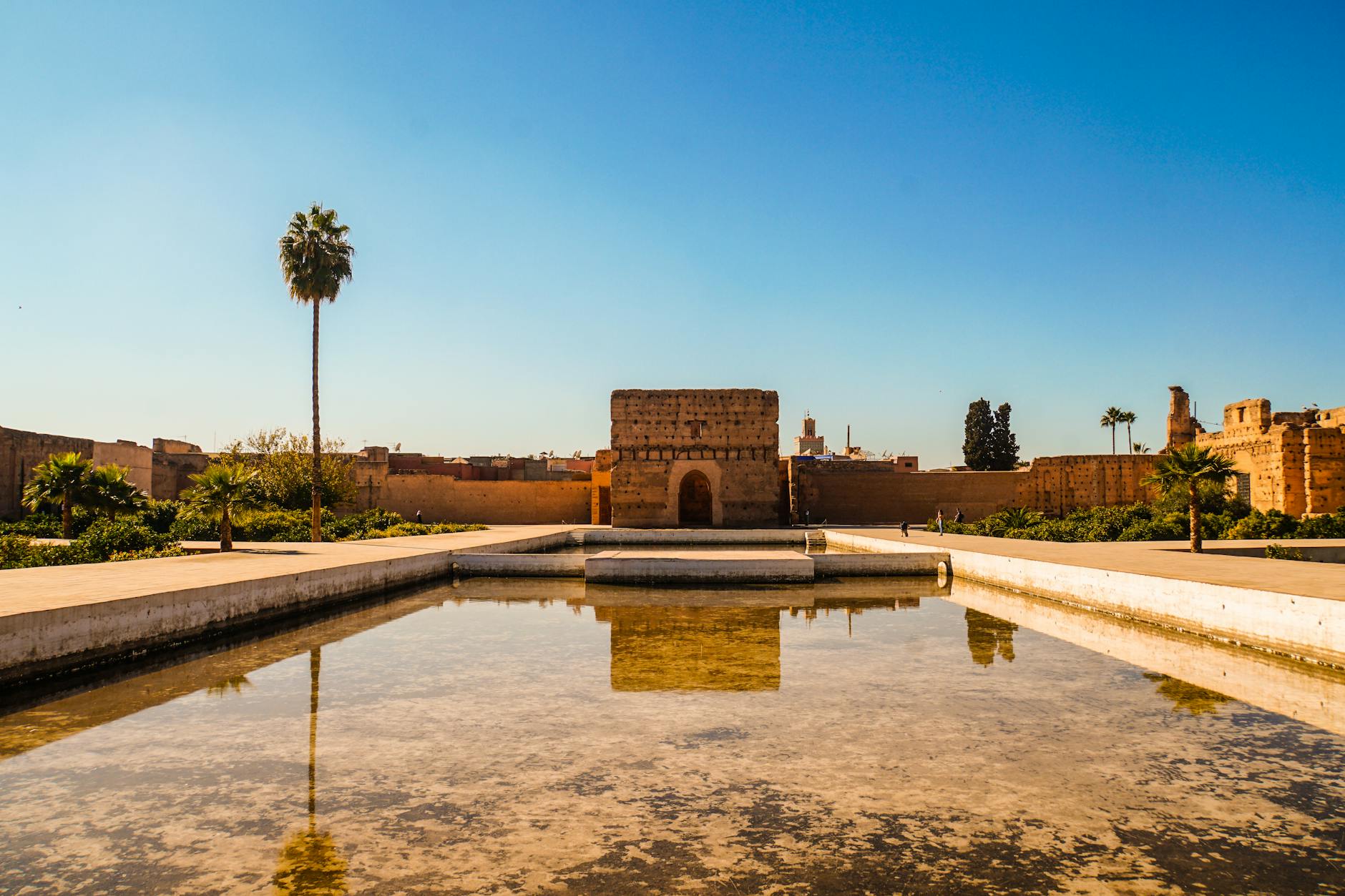
My Marrakech adventure began like a typical tourist trip, but a chance meeting with Omar transformed it into something profound. He didn't just show me the sights; he peeled back the layers of tourist veneer, revealing the authentic soul of Morocco and changing my perspective forever. Prepare to see Marrakech in a whole new light.
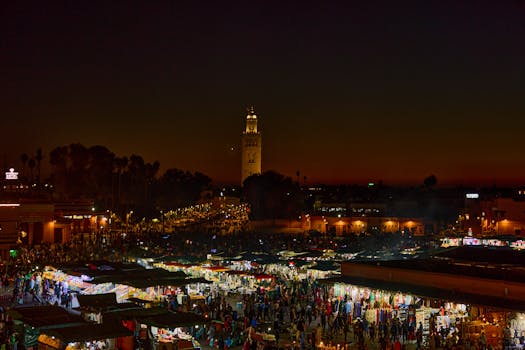
The symphony of Marrakech hit me the moment I stepped into Djemaa el-Fna. A dizzying ballet of snake charmers, acrobats, storytellers, and food stalls, all bathed in the warm glow of sunset. It was intoxicating, overwhelming, and precisely what every travel guide promised. Yet, as I navigated the frenetic energy, dodging mopeds and resisting the persistent calls of vendors, a subtle unease settled in. Was this truly Marrakech, or just a meticulously crafted stage for tourists? I longed for something more, a glimpse behind the curtain. Little did I know, that glimpse would come in the form of a genuine smile and a helping hand, forever changing my understanding of travel.
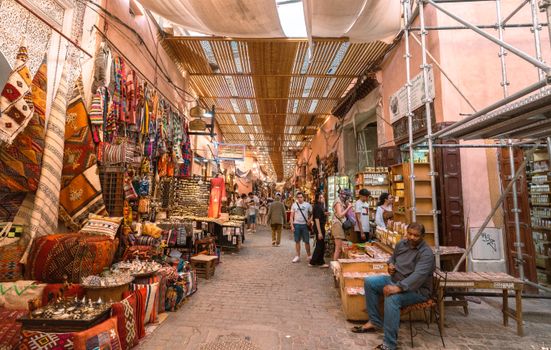
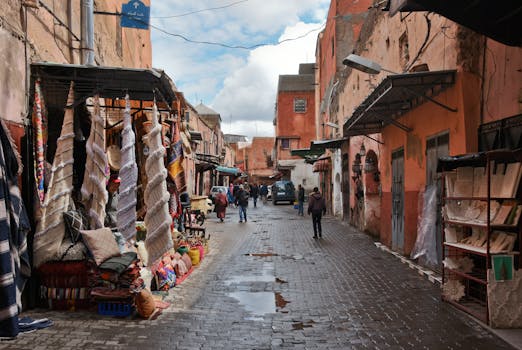
My solo journey through the labyrinthine souks had taken an unexpected turn. One moment I was admiring a vibrant display of spices, the next, I was hopelessly lost in a maze of identical alleys, the distant cries of the square fading into a murmur. Panic began to bubble, mixed with the usual solo traveler’s caution. It was then, amidst a stack of hand-dyed leather goods, that I saw him. A young man, perhaps in his late twenties, with kind eyes and a friendly demeanor. He wasn’t calling out to me, just observing the scene, a quiet presence in the chaos. When I finally, sheepishly, admitted my predicament in broken French, he simply smiled. “Salam alaikum,” he said, extending a hand not to lead, but to point. “Djemaa el-Fna is this way. Come, I will show you.”
The First Thread: A Hand Extended in the Labyrinth
His name was Omar. He worked in his uncle’s small leather shop, tucked away in a quiet corner of the souk, far from the main tourist arteries. My initial instinct, honed by years of travel and a healthy dose of skepticism in tourist-heavy areas, was to be wary. Was he a tout? Would he lead me to a 'friend's shop'? But Omar didn't push. He walked beside me, chatting casually about the history of the souks, pointing out details I would have missed – a hidden fountain, an ancient wooden door, the specific aroma of a spice vendor's stall. He didn't ask for money, nor did he lead me to any shops. When we finally emerged onto the familiar square, I offered to buy him a mint tea as a thank you. He hesitated, then agreed with a warm smile.
Over steaming glasses of atai (Moroccan mint tea) in a humble, bustling cafe overflowing with locals, Omar shared snippets of his life. He was a university student, studying economics, helping his family’s business. He loved his city but admitted that many tourists only saw the surface. "Marrakech has many faces," he told me, stirring his tea. "The one you see here, it is for everyone. But the real heart... it is deeper." That conversation, fueled by genuine curiosity and shared laughter, was the beginning of an extraordinary week. It was the moment I realized that sometimes, the most profound travel experiences aren't found in guidebooks, but in the unexpected kindness of strangers.
Beyond the Postcards: Marrakech's Hidden Pulse
The next day, Omar invited me to see "his Marrakech." We started not in the grand palaces or bustling gardens, but in the residential alleys just beyond the main souks. Here, the cacophony of Djemaa el-Fna faded, replaced by the gentle hum of daily life. We visited the local farnatchi, a communal oven where women brought their bread dough to be baked. The air was thick with the scent of warm yeast and woodsmoke, and the baker, a wizened man with flour-dusted hands, greeted Omar like a son. I watched, mesmerized, as he expertly slid loaves in and out of the fiery depths, a tradition dating back centuries. This wasn't a show; it was essential, everyday life.
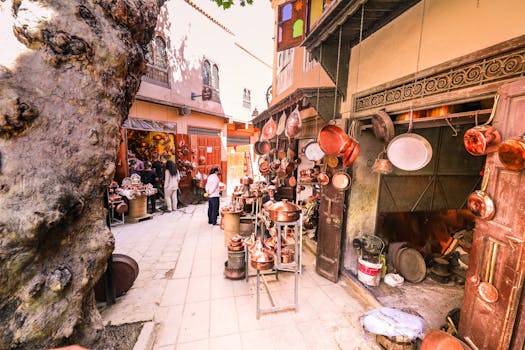
Later, Omar led me to a narrow, unassuming alley that hummed with a rhythmic clanging. Inside, skilled coppersmiths hammered intricate patterns onto trays and lamps, their faces smudged with soot, their hands moving with practiced grace. They worked not for the hordes of tourists, but for local families, for small guesthouses, for the love of their craft. The prices here were a fraction of what I'd seen in the main souks, reflecting the true cost of labor and materials, not inflated by tourist demand. I bought a small, hand-etched plate for 80 MAD (approx. $8 USD), a tangible piece of authentic Moroccan artistry, far more precious than any mass-produced souvenir. Omar also showed me a quiet, almost secret medersa (Islamic school) near his home, not the grand Ben Youssef Medersa, but a smaller, community-focused one, where children still learned and played in a sun-drenched courtyard. It was a serene escape, a stark contrast to the bustling city, yet entirely part of its pulse.
A Feast for the Senses: Unveiling Moroccan Cuisine
Food, Omar insisted, was the true language of Morocco. And he was right. He steered me away from the tourist trap restaurants with their inflated prices and watered-down flavors, leading me instead to unassuming stalls and hole-in-the-wall eateries that were bursting with locals. Our culinary adventure began with tanjia, Marrakech’s slow-cooked specialty, prepared in an urn and traditionally cooked overnight in the embers of a public hammam furnace. We found a small place serving it, a nondescript doorway leading to a tiny room with a few plastic tables. For just 30 MAD (approx. $3 USD), I savored the most tender, fall-off-the-bone lamb, infused with saffron, garlic, and preserved lemons, scooped up with crusty bread. It was an explosion of authentic flavor that put any restaurant tagine to shame.
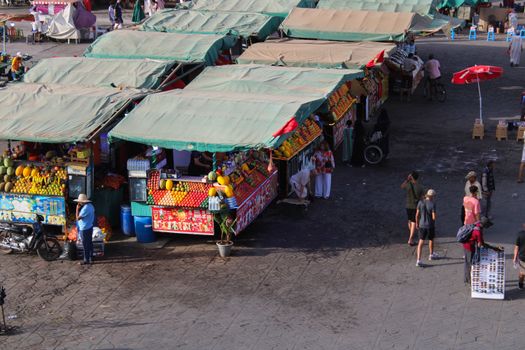
He introduced me to harira, a hearty lentil and tomato soup, often broken to fast with during Ramadan, served with sticky, sweet chebakia pastries – a perfect comfort food for a cool evening, costing no more than 15 MAD ($1.50 USD). One afternoon, we explored a local produce souk, a riot of colors and aromas. Piles of glistening olives, fragrant herbs, mountains of oranges, and stalls overflowing with exotic spices. Omar patiently explained the uses of cumin, turmeric, and Ras el Hanout, and how his mother used them in her cooking. Later, I was fortunate enough to be invited to his family home for a meal. His mother, a warm, smiling woman, prepared a feast: a chicken tagine with olives and preserved lemons, couscous, and an endless stream of mint tea. The conversation flowed easily, despite the language barrier, bridging cultures over shared plates of delicious food. This experience, sitting on floor cushions, surrounded by genuine Moroccan hospitality, was a highlight of my entire trip.
The Art of Living: Cultural Rhythms and Respect
Beyond food, Omar opened my eyes to the subtle rhythms of Moroccan life. We spent hours simply observing. In a small, shaded square, we watched old men sip tea and play chess, their faces etched with stories. Children kicked a football in a dusty alley, their laughter echoing off ancient walls. We discussed the significance of the call to prayer, the importance of family, the concept of baraka (blessing or spiritual energy), and the deep-seated respect for elders that permeates Moroccan society.
He took me to a local hammam, not the luxurious spa versions advertised to tourists, but a traditional public bathhouse. It was an intimidating, yet ultimately incredibly authentic experience. Stripped of pretenses (and most of my clothes!), I joined local women in a steamy, tiled room, scrubbing and socializing. It was raw, communal, and a profound insight into a daily ritual. (A word of advice: be prepared to be scrubbed by a robust local woman, and remember to bring your own soap, towel, and a small bucket! It usually costs around 10-20 MAD for entry, with an extra 50-100 MAD for a scrub). Through Omar, I learned the importance of small gestures – a polite greeting (Salam alaikum), accepting a cup of tea, a genuine smile. These weren't just courtesies; they were keys to understanding and connecting. I learned to ask permission before taking photos, especially of people, and to dress modestly, particularly when visiting religious sites or local neighborhoods, to show respect.
Bridging Worlds: The Language of Connection
What began as a chance encounter blossomed into a true friendship. Omar wasn't just my guide; he was a window into a world I would have otherwise skimmed past. We talked about our dreams, our families, the challenges of our respective societies. I shared stories of my life in a distant land, and he painted vivid pictures of growing up in the bustling medina, of his hopes for the future. He spoke of the importance of community, of sharing, of the simple joys of life. These conversations, often over another glass of mint tea or while watching the sunset from a quiet rooftop, were where the real magic happened.
He dispelled my preconceived notions and helped me see beyond the stereotypes. I realized that the initial skepticism I carried was a barrier, and that true travel often means allowing yourself to be vulnerable, to trust, and to connect on a human level. His presence made me feel not just safer navigating the bustling streets, but truly belonging, even if just for a short while. This experience taught me that while monuments and museums are fascinating, the richest treasures of travel are found in the hearts and stories of the people who call a place home.
Your Own Moroccan Odyssey: Finding Your Omar
So, how can you replicate this incredible experience and find your own "Omar" in Marrakech or any other destination? It requires an open heart, a dash of courage, and a commitment to responsible travel.
Practical Tips for Connecting with Locals:
1. Be Approachable and Open: Smile, make eye contact, and be genuinely curious. Start conversations with simple greetings like Salam alaikum (peace be upon you) in Arabic, or Bonjour in French.
2. Learn Basic Phrases: Even a few words in the local language (like Shukran - thank you, La shukran - no thank you, Afak - please) can open doors and show respect.
3. Stay Local: Opt for a locally-owned riad or guesthouse rather than a large chain hotel. The staff are often a goldmine of local information and connections.
4. Eat Where Locals Eat: Venture away from the main tourist squares and seek out small, bustling eateries where you see Moroccan families dining. The food is almost always more authentic and significantly cheaper (expect to pay 10-50 MAD for a hearty meal).
5. Support Local Businesses: Buy your souvenirs from small artisans in the souks, or purchase goods directly from the producers. This ensures your money directly benefits the local community.
6. Be Patient and Respectful: Moroccan culture values patience and hospitality. Don't rush interactions. Take time to sit, chat, and drink tea. Always ask permission before taking photos, especially of people. Dress modestly, particularly women, out of respect for local customs.
Safety Tips (A Balanced Approach):
While my experience was overwhelmingly positive, it's wise to maintain a healthy level of awareness.
* Trust Your Gut: If an interaction feels off, politely decline and move on.
* Be Aware of Your Surroundings: Especially in crowded areas like Djemaa el-Fna, keep an eye on your belongings.
* Don't Follow into Secluded Areas: Always stay in well-lit, populated areas, especially after dark.
* Decline Firmly: If someone is overly persistent, a firm but polite "La shukran" and walking away is usually effective.
* Modest Dress: For women, covering shoulders and knees is advisable, especially outside of tourist resorts, to show respect and avoid unwanted attention.
Best Time to Visit Marrakech:
Spring (March-May) and Autumn (September-November) offer the most pleasant weather, with warm days and cooler evenings, perfect for exploring. Summers are intensely hot, and winters can be chilly, especially at night.
Getting Around Marrakech:
The Medina is best explored on foot. For longer distances, petits taxis are readily available. Always insist on the meter (le compteur) or agree on a price before getting in. A short ride within the city should be around 20-30 MAD. Horse-drawn carriages (caleches) offer a charming, if slower, way to see parts of the city, but negotiate the price beforehand (expect 150-200 MAD for an hour).
Budgeting for Authentic Marrakech:
Marrakech can be incredibly budget-friendly if you embrace local life. Stay in a riad (500-1000 MAD/night for a charming mid-range option), eat street food or local eateries (10-50 MAD/meal), and use local transport. Your biggest expense will likely be flights and accommodation, but daily costs can be very low if you avoid tourist traps.
Instagram-Worthy Moments:
The vibrant spice markets, the intricate tile work of a hidden riad, the golden glow of mint tea being poured, the bustling energy of Djemaa el-Fna at sunset, colorful artisan workshops, and of course, the genuine smiles of the people you meet.
My journey to Marrakech wasn't just a trip; it was a transformation. Omar didn't just show me the sights; he showed me the very heart of his home, a heart beating with tradition, warmth, and resilience. He taught me that the most profound souvenirs we bring home are not trinkets, but stories, connections, and a broadened perspective of humanity. So, next time you travel, dare to step off the well-worn path. Be open, be curious, and you might just find a local friend who shows you the real life you never knew existed.
---
What’s your story of a local friend who showed you a new side of a destination? Share your experiences in the comments below! And if this post inspired you, don't forget to share it with your fellow adventurers!
Visual journey
Tags
Share this adventure
Join the travel community
New adventures, cultural insights and travel inspiration, straight to your inbox.
We may receive a commission if you click on a link and buy a product, service or policy, at no extra cost to you. How affiliate links work.
Been there?