

You've scrolled past countless stunning photos of Fes, Morocco – its vibrant souks, intricate doorways, and iconic tanneries. But here's the secret: Fes el-Bali is the ultimate "Instagram vs. Reality" destination, where reality not only wins but absolutely blows your mind. Prepare for an experience that transcends every pixel. ---
## Fes Medina: The Instagram Spot That's Even Better in Person (And It's Not What You'd Expect)
Let's be honest. In the age of perfectly curated feeds and hyper-filtered travel shots, it's easy to grow a little cynical. We see a stunning picture, bookmark the location, and mentally prepare for the inevitable disappointment when the "real thing" doesn't quite live up to the digital fantasy. I’ve been there, snapping away, trying to recreate that perfect angle, only to find myself missing the actual experience.
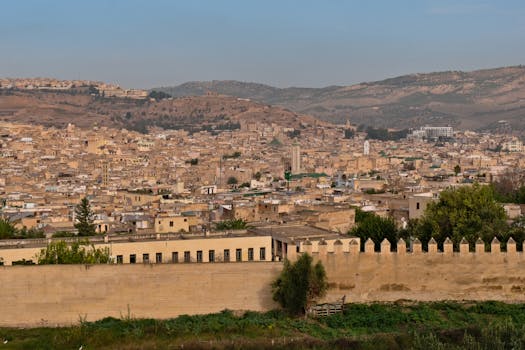
But then there's Fes. Or, more accurately, Fes el-Bali, the ancient, walled medina that forms the heart of Morocco's cultural capital. For years, I’d seen the Instagram shots: the kaleidoscopic dyes of the Chouara Tannery, the labyrinthine alleys, the ornate doors, the piles of spices. They were beautiful, yes, but they felt… static. Like a postcard. I expected a picturesque but perhaps slightly sanitized historical site, polished for tourists.
Boy, was I wrong.
Stepping through the grand Bab Bou Jeloud (the iconic Blue Gate) into Fes el-Bali wasn't just walking into an old city; it was plunging headfirst into a living, breathing time capsule, a chaotic symphony of senses that Instagram could never, ever, hope to capture. This isn't just an Instagram spot; it's an entire universe that demands to be experienced with every fiber of your being. And trust me, it’s not what you’d expect. It’s wilder, grittier, more overwhelming, and infinitely more profound.
### The Labyrinth Unveiled: More Than Just Pretty Alleys
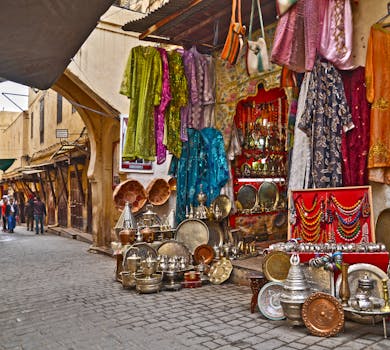
My first few minutes in Fes el-Bali were a blur of sensory overload. The air, thick with a thousand scents – spices, leather, mint tea, woodsmoke, and an undeniable undercurrent of something… earthy (read: donkeys). The sounds were a cacophony: the insistent braying of donkeys laden with goods, the rhythmic clang of metalworkers, the distant call to prayer, the chatter of vendors, and the constant murmur of a city that has been alive for over a thousand years. My eyes, initially trying to pinpoint the "perfect shot," quickly surrendered to the sheer volume of visual information: vibrant textiles spilling from stalls, intricate zellige tiles adorning hidden doorways, the mesmerizing dance of light and shadow in the narrow, winding alleys.
This isn't a quaint old town; it's an organic, sprawling masterpiece of urban planning that evolved without a single car in mind. Imagine a spiderweb of over 9,000 alleys, some barely wide enough for one person, others opening into bustling squares. It's almost entirely pedestrian – save for the ubiquitous donkeys and mules, the original delivery service, whose patient plodding and occasional stubbornness are a constant presence.
What Instagram photos often fail to convey is the sheer scale and immediacy of this place. You're not just observing; you're immersed. You're dodging donkey carts, squeezing past locals, getting pleasantly lost, and discovering unexpected courtyards and artisan workshops around every blind corner. It’s a living, breathing museum, where history isn't behind velvet ropes but unfolds right before your eyes in the everyday rhythm of life. Forget posed selfies; here, the moment is the picture, and it’s happening all around you, all the time.
### A Symphony of Senses: What the Camera Misses
To truly appreciate Fes el-Bali, you have to put down your phone (at least for a while) and open all your senses. This is where the magic happens, and where the "better in person" promise is truly delivered.
* The Scentscape: My nose was constantly working overtime. One moment, it was the sweet, heady aroma of orange blossom water or rose petals in a perfume shop. The next, the sharp, pungent tang of raw hides near the tanneries, followed by the comforting warmth of freshly baked bread wafting from a communal oven. Then, the invigorating burst of fresh mint from a tea seller, or the earthy richness of cumin and turmeric from a spice stall. Each alley has its own unique olfactory signature, a map you navigate as much by smell as by sight.
The Soundscape: Close your eyes for a moment (but not for too long, you might get run over by a donkey!). What do you hear? The relentless clink-clink-clink* of a coppersmith shaping his wares, the distant, haunting melody of the Adhan (call to prayer) echoing from multiple minarets, the insistent calls of vendors ("Balak! Balak!" – "Watch out!" – warning of an approaching donkey), the rhythmic thud of a loom, the laughter of children playing. It's a symphony of human endeavor and ancient tradition, a constant hum that is both overwhelming and utterly captivating.
* The Taste of Tradition: While Instagram might show you a beautifully plated tagine, it can't convey the explosion of flavors: the tender lamb slow-cooked with prunes and almonds, the warmth of harira soup on a cool evening, the sticky sweetness of chebakia pastries, or the refreshing burst of a freshly squeezed orange juice. And of course, the ubiquitous Moroccan mint tea – poured with theatrical flair from a height, offering a sweet, comforting warmth that becomes the soundtrack to every negotiation and moment of rest.
* The Feel of History: Run your hand along the rough, ancient stone walls. Feel the smooth, cool tiles of a madrasa courtyard. Experience the surprisingly soft texture of a hand-woven carpet or the supple give of a freshly dyed leather bag. The heat of the midday sun on your skin, the cool relief of shade in a narrow alley, the warmth of a glass of mint tea in your hands – these tactile sensations ground you firmly in the present moment, connecting you to centuries of craftsmanship and daily life.
* The Sight Beyond the Frame: Beyond the picturesque, framed shots, there's the constant movement, the sheer density of detail. A woman carrying a basket of bread on her head, a group of men gathered around a chessboard, a child chasing a cat, a craftsman meticulously chiseling wood. These are the fleeting, unposed moments that make Fes truly alive, moments that happen too quickly for a camera, but embed themselves in your memory.
### The Chouara Tannery: A Visceral Spectacle (and its Reality)
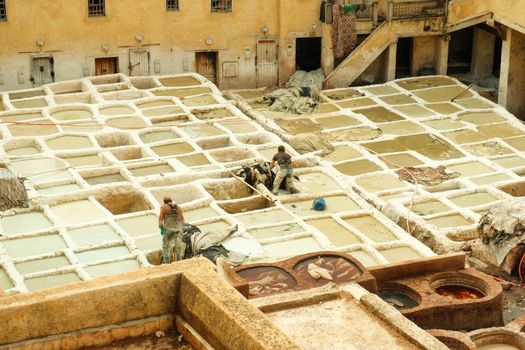
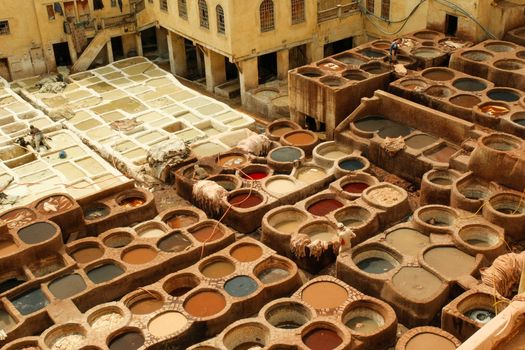
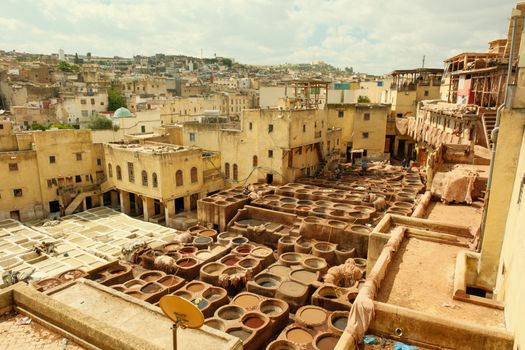
Ah, the Chouara Tannery. This is arguably Fes's most iconic Instagram spot. You've seen the photos: the circular stone vats brimming with vibrant dyes – red, yellow, green, brown – laid out like an artist's palette, with men working tirelessly amidst them. It's undeniably photogenic, a scene straight out of an ancient painting.
But here’s the reality: The Chouara Tannery is an assault on the senses in the most magnificent way.
First, the smell. Oh, the smell. Before you even see the vats, your nose will confirm your proximity. It's a powerful, almost overwhelming aroma of raw animal hides, pigeon excrement (used to soften the leather), and various chemicals. No filter, no amount of 'sassy travel pose' can prepare you for it. This is why, as you approach, you'll inevitably be handed a sprig of fresh mint to hold under your nose. Embrace it. It's part of the experience.
Once you’re on one of the viewing terraces (typically from a leather shop overlooking the pits), the sight is truly mesmerizing. The scale is immense, the colors more vivid, the activity more intense than any photo suggests. You see the sheer physical labor involved, men wading barefoot in the vats, soaking, cleaning, and dyeing the hides by hand, just as their ancestors have for centuries. It’s hot, arduous work, a testament to traditional craftsmanship that has resisted mechanization.
Practical Tips for Visiting Chouara:
* Getting There: It's deep within the medina. Many "guides" (some official, some not) will offer to take you. If you don't have an official guide, be firm but polite. You'll likely be led to a leather shop with a terrace.
* The Mint Sprig: Accept it graciously. It genuinely helps.
* The View: Enjoy the panoramic view. The shop owners are usually happy for you to take photos from their terrace.
* The Expectation: There will be an expectation to browse their leather goods afterward. There's no obligation to buy, but a polite "La, shukran" (No, thank you) and perhaps a small purchase (even just a keyring) if you enjoyed the experience, goes a long way. Prices are negotiable, so haggle good-naturedly!
* Cultural Insight: Remember, this isn't just a tourist attraction; it's a functioning, ancient industry. Appreciate the dedication to traditional methods and the living history unfolding before you.
### Beyond the Souks: Hidden Gems and Local Life
While the main arteries of the medina are bustling and vibrant, some of Fes's deepest charms lie just off the beaten path. These are the places that truly reveal the soul of the city, often missed by those rushing from one Instagram-famous spot to another.
* Al-Attarine Madrasa: Tucked away amidst the chaos, this 14th-century Koranic school is an oasis of calm and exquisite beauty. Its intricate zellige tilework, carved cedarwood, and delicate stucco are breathtaking. Here, the silence is profound, allowing you to truly appreciate the craftsmanship without the constant hum of the medina. It’s a perfect spot for quiet contemplation and stunning, respectful photography. Entrance fee: ~20 MAD.
* Bab Bou Jeloud (The Blue Gate): While it's often your entry point, don't just rush through it. The area just outside the gate, and the gate itself with its iconic blue (medina-facing) and green (city-facing) tiles, is a fantastic spot for people-watching. Grab a glass of mint tea at one of the cafes and simply observe the endless flow of life.
* Riad Life: One of the most unexpected joys of Fes is the tranquil sanctuary of its traditional guesthouses, known as Riads. Behind unassuming doors in the medina's winding alleys, you'll find serene courtyards, often with fountains, lush plants, and comfortable seating areas. Staying in a Riad is an experience in itself, offering a peaceful contrast to the outside world and a chance to truly unwind. Many also offer cooking classes, giving you a deeper dive into Moroccan cuisine.
* Local Interactions: Don’t be afraid to strike up a conversation. Learn a few basic Arabic phrases (Salam Alaikum – hello, Shukran – thank you, La – no, Aywa – yes). Share a glass of tea with a shopkeeper, watch an artisan at work, or simply observe families going about their daily lives. These unscripted moments, far from any Instagram feed, are the true treasures of travel in Fes.
### Navigating the Medina: Tips for a Seamless (and Safe) Experience
Fes el-Bali is an adventure, but a little preparation goes a long way in making it an unforgettable one.
* Getting There:
Airport: Fes-Saïs Airport (FEZ) is well-connected. A grand taxi from the airport to the medina (Bab Bou Jeloud or your Riad's closest accessible gate) should cost around 120-150 MAD (day) or 150-200 MAD (night). Agree on the price before* getting in.
* Train/Bus: Fes has a modern train station and a CTM bus station outside the medina. Taxis are readily available from both to take you to the medina gates.
* Getting Around:
* Walking is Key: This is the only way to truly explore the medina. Wear comfortable, sturdy shoes.
Maps: Download offline maps like Google Maps or Maps.me before* you arrive. While they can be a bit confusing in the narrow alleys, they are invaluable for getting your bearings or finding your Riad. Many Riads provide excellent paper maps.
* Guides: For your first day, consider hiring an official guide (ask your Riad for recommendations). They can help you navigate, explain the history, and lead you to key sights without getting lost. Negotiate the price beforehand (expect 250-400 MAD for a half-day, 400-600 MAD for a full-day). Be wary of unofficial "faux guides" who might try to lead you to shops for commission. A polite but firm "La, shukran" is usually enough.
* Accommodation:
* Riads: Highly recommended for an authentic and atmospheric stay. They range from budget-friendly to luxurious. Book well in advance, especially during peak season.
* Best Time to Visit:
* Spring (April-May) and Autumn (September-October): Offer the most pleasant weather, with warm days and cooler evenings.
* Avoid Summer (June-August): Fes can get extremely hot, making exploration less enjoyable.
* Winter (November-March): Can be chilly, especially at night, but usually fewer tourists.
* Budgeting:
Food: Eating at local "hole-in-the-wall" restaurants (known as snack* shops) or street food stalls is incredibly affordable (20-50 MAD for a meal). Riads often offer delicious, slightly pricier dinners (~150-250 MAD).
* Souvenirs: Expect to haggle! It's part of the culture. Start at 1/3 to 1/2 of the asking price and work your way up. It's a friendly negotiation, not a fight.
* Safety & Cultural Sensitivity:
* Dress Code: Morocco is a conservative Muslim country. Dress modestly – shoulders and knees covered – especially when exploring the medina. This shows respect and helps you blend in.
* Photography: Always ask permission before taking photos of people, especially women and children. A polite gesture and a "mumkin soura?" (May I take a picture?) goes a long way.
* Awareness: While generally safe, stay aware of your surroundings, especially in crowded souks. Keep valuables secure.
* Touts: You will encounter people offering to guide you, show you shops, or simply ask for money. A polite but firm "No, thank you" (La, shukran) and continuing to walk is the best approach. Avoid engaging in long conversations if you're not interested.
* Learn a Few Phrases: "Salam Alaikum" (peace be upon you - a universal greeting), "Shukran" (thank you), "Afak" (please), "La" (no), "Aywa" (yes) will be greatly appreciated by locals.
### Conclusion: Beyond the Filter, Into the Soul
Fes el-Bali challenged my preconceived notions of what an "Instagrammable" destination could be. It's not just about the pretty facade; it's about the raw, unfiltered, deeply human experience that happens when you allow yourself to be truly present. It’s a place that demands you engage all your senses, embrace the chaos, and surrender to its ancient rhythms.
So, yes, take your photos. Capture the vibrant colors, the intricate details, the iconic views. But more importantly, put down your phone, breathe in the spices, listen to the artisans, taste the mint tea, and feel the ancient stones beneath your feet. Let yourself get wonderfully, completely lost.
Fes el-Bali isn't just better than its Instagram portrayal; it's an entirely different dimension of travel. It's a place that doesn't just look good in pictures; it feels good in your soul. And that, my friends, is something no filter can ever replicate.
Are you ready to discover the Fes that Instagram can't show you?
Book your trip to Fes today and prepare to be utterly, magnificently surprised! Share your own Fes experiences with us using #TripsoraFes.
---
Visual journey
Tags
Share this adventure
Join the travel community
New adventures, cultural insights and travel inspiration, straight to your inbox.
We may receive a commission if you click on a link and buy a product, service or policy, at no extra cost to you. How affiliate links work.
Been there?