

As a self-proclaimed German Christmas market purist, I thought I'd seen it all. But then, a trip to Colmar, France, shattered my preconceived notions, revealing a festive wonderland that wasn't just beautiful – it was transformative. Prepare to have your holiday expectations completely redefined. ---
## Colmar: The Christmas Market That Dethroned Germany's Best and Completely Changed My Perspective
For years, my December pilgrimage was sacred: Germany. Nuremberg, Dresden, Munich – I’d ticked them all off, each adorned with the comforting familiarity of Glühwein, Bratwurst, and handmade wooden ornaments. I was a German Christmas market purist, convinced that nowhere else could capture the authentic spirit of the season quite like the land of its most famous traditions. My Instagram feed was a curated gallery of twinkling lights, bustling crowds, and steam rising from countless mugs of spiced wine. I was, in short, smug in my festive expertise.
Then came Colmar.
A friend, knowing my unwavering loyalty, dared me. "You think you know Christmas markets? Go to Colmar. Just once." I scoffed. France? Charming, yes, but for Christmas? Surely, it would be a pale imitation, a French attempt at German efficiency and coziness. Oh, how gloriously, magnificently wrong I was. What I found in this Alsatian jewel wasn't just a market; it was an immersive fairytale, a sensory symphony that didn't just meet my expectations – it obliterated them, leaving me with a new, profound understanding of holiday magic. It wasn't just different; it was better. And it completely changed my perspective on what a Christmas market could be.
### The German Market Devotee's Revelation: A Journey to Colmar
My journey began with skepticism. I flew into Basel-Mulhouse-Freiburg (EuroAirport), a convenient hub serving France, Germany, and Switzerland. From there, a short bus ride and a quick train journey had me pulling into Colmar. Even the train ride felt different – the landscape slowly transforming into a storybook illustration of half-timbered houses and rolling vineyards, dusted with a fresh, light snow.
Stepping out of the train station and walking towards the old town, the air began to shift. It wasn't just colder; it was sweeter, carrying hints of cinnamon, roasted chestnuts, and something else – a subtle, sophisticated aroma of gingerbread and local pastries I couldn't quite place. As I rounded the corner into the pedestrianized heart of Colmar, my jaw, quite literally, dropped.
The German markets I adored were grand, often centered around a magnificent church or a vast town square. Colmar, however, was an intricate tapestry of smaller, more intimate markets, each nestled within a labyrinth of cobblestone streets and canals. The famous "Petite Venise" district, with its brightly painted, medieval half-timbered buildings, looked like it had been hand-painted by a whimsical artist and then dusted with icing sugar. Every window glowed, every doorway was adorned, and the sheer density of festive decoration was overwhelming in the most delightful way possible. It wasn't just a market; it was the entire town that had transformed into a living, breathing Christmas card. This wasn't just a place to buy things; it was a place to experience pure, unadulterated joy.
### Colmar: A Fairytale Unveiled – Where Every Corner Tells a Story
What struck me immediately about Colmar's markets – there are five distinct ones, each with its own character, all within easy walking distance – was their seamless integration into the town's stunning architecture. Unlike the often temporary-feeling stalls of larger markets, Colmar’s wooden chalets felt like they belonged, an extension of the already picturesque surroundings.
The market at Place des Dominicains, overlooked by the majestic Eglise des Dominicains, offered a more traditional feel, while the one at Place Jeanne d’Arc focused on local produce and gastronomy. But it was the market in the Petite Venise area, along the Lauch River, that truly stole my heart. Here, the stalls lined the canals, their reflections shimmering in the water, creating a double vision of festive splendor. Small boats, festooned with lights, drifted past, adding to the surreal beauty. It felt less like a commercial enterprise and more like a carefully curated art installation, designed to evoke pure wonder.
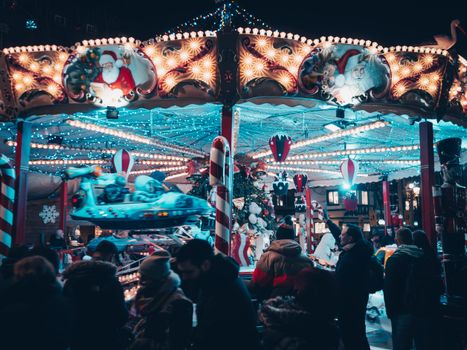
The lighting was a masterpiece in itself. Instead of harsh, bright lights, Colmar used warm, golden hues that bathed the entire town in a soft, ethereal glow. Every archway, every bridge, every gabled roof was outlined with tiny, twinkling bulbs. It felt like walking through a dream, a place where time slowed down, and the worries of the world melted away with each snowflake that gently drifted from the sky. This wasn't just pretty; it was genuinely magical, a feeling I hadn't experienced with such intensity since childhood.
### Beyond Glühwein: A Culinary Journey for the Senses
My German market routine always involved a Glühwein and a Bratwurst. Delicious, yes, but predictable. Colmar opened up a whole new world of Alsatian Christmas gastronomy that elevated the experience from mere sustenance to a true culinary adventure.
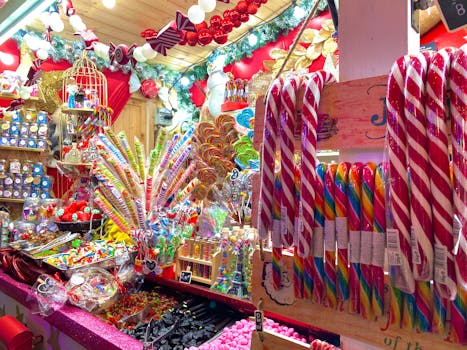
First, the vin chaud. While similar to Glühwein, the Alsatian version often uses local wines and unique spice blends, sometimes with a splash of local fruit liqueur. I tried a white vin chaud that was incredibly aromatic and lighter than its red counterpart, a revelation! But the real star for me was the Bredeles – an exquisite array of traditional Alsatian Christmas cookies. From delicate aniseed biscuits to buttery star-shaped delights, each one was a tiny piece of edible art, perfect with a hot chocolate or a coffee. I spent a happy hour at a stall near the Koïfhus, sampling different varieties and learning about their centuries-old recipes from the proud baker.
Then there was the food. Forget just Bratwurst. I indulged in choucroute garnie (sauerkraut with various smoked meats) served in a cozy market stall, a hearty and warming dish perfect for the chilly air. The Flammekueche (tarte flambée) – a thin, crispy crust topped with crème fraîche, onions, and bacon – was cooked fresh in wood-fired ovens, its smoky aroma drawing me in repeatedly. And for a sweet treat, the Mannele, a small brioche bread man, was both adorable and delicious, a simple pleasure that brought a huge smile to my face.
One evening, I stumbled upon a stall offering raclette – melted cheese scraped directly from a wheel onto potatoes, charcuterie, and pickles. The rich, savory aroma was irresistible, and sharing a plate with fellow market-goers, huddled around a small standing table, felt like a true communal celebration. The prices were surprisingly reasonable, too, with most savory dishes ranging from €8-€15 and drinks around €3-€5. This wasn't just market food; it was a taste of authentic Alsatian culture, prepared with passion and served with a smile.
### Craftsmanship & Charms: Souvenirs with Soul
The shopping experience in Colmar was another departure from my usual market haunts. While there were certainly mass-produced trinkets, the overwhelming majority of stalls showcased genuine craftsmanship. This felt less like a gift shop and more like an open-air gallery of local artistry.
I found exquisite hand-blown glass ornaments, each one unique and reflecting the light in mesmerizing ways. There were intricate wooden toys, not the factory-made variety, but carved and painted by local artisans, their stories proudly displayed. One stall specialized in beautifully embroidered linens, perfect for adding a touch of Alsatian charm to my home. I even found a small, independent chocolatier selling artisanal chocolates shaped like miniature Alsatian houses – almost too beautiful to eat!
What made it truly special was the interaction with the vendors. Many were the artists themselves, happy to chat about their craft, their inspiration, and the history behind their products. I bought a hand-painted ceramic mug from a woman who explained the traditional motifs, and a bottle of local Gewürztraminer wine from a vintner who passionately described his vineyard just outside of town. This personal connection transformed the act of shopping into a meaningful exchange, giving each souvenir a story and a soul. Prices for crafts varied widely, from small ornaments at €5-€10 to more elaborate pieces or local wines starting at €15-€30.
### The Magic in the Details: What Made It Shine So Brightly
Beyond the obvious beauty, it was the subtle nuances that truly elevated Colmar above its German counterparts in my eyes.
1. Intimacy and Flow: Instead of one vast, often overwhelming market, Colmar's multiple, smaller markets felt more manageable and personal. You could wander from one to another, discovering new delights around every corner, without feeling lost in a massive crowd. The town's layout, with its narrow streets and canals, naturally created these cozy, intimate spaces.
2. Architectural Integration: The markets didn't just exist in Colmar; they were part of Colmar. The stalls blended seamlessly with the half-timbered houses, the bridges, and the canals, creating a cohesive, living scene rather than a temporary installation.
3. Sensory Harmony: The music was traditional but understated, never intrusive. The aromas were a sophisticated blend of sweet and savory, never just one overpowering scent. The visual spectacle was breathtaking but balanced, with warm lighting that enhanced rather than overwhelmed the ancient architecture.
4. Authenticity Over Commercialism: While clearly a tourist destination, Colmar managed to retain a strong sense of local identity. The emphasis on Alsatian crafts, food, and traditions felt genuine, not just a generic "Christmas market experience." It felt like I was visiting Colmar's Christmas market, not just a Christmas market.
5. The Fairytale Factor: This is subjective, of course, but for me, Colmar truly embodied the spirit of a storybook Christmas. The sheer beauty of the town, combined with the thoughtful decorations and the gentle hum of festive cheer, transported me to another world. It was less about ticking boxes and more about soaking in the atmosphere, letting the magic wash over me.
### Planning Your Own Colmar Christmas Dream: Practical Tips
If my experience has piqued your interest (and I sincerely hope it has!), here’s how you can plan your own unforgettable trip to Colmar:
* When to Go: The Colmar Christmas markets typically run from late November to late December. To avoid the absolute peak crowds, consider visiting during the first two weeks of December, or on a weekday. Weekends closer to Christmas can be very busy, but even then, the spread-out nature of the markets helps.
* How to Get There:
* By Air: Fly into EuroAirport Basel-Mulhouse-Freiburg (BSL/MLH/EAP). From there, take a shuttle bus to Saint-Louis train station, then a direct train to Colmar (approx. 20-30 min). Alternatively, fly into Strasbourg (SXB) or Zurich (ZRH) and take a train.
* By Train: Colmar is well-connected by train to major European cities like Strasbourg, Basel, and Paris (via TGV).
* By Car: While charming, parking in Colmar’s old town during the markets can be challenging. Consider parking slightly outside and walking in, or using public transport.
* Where to Stay: Book accommodation well in advance, as hotels and guesthouses fill up quickly. Staying within the old town allows you to fully immerse yourself in the atmosphere, but options just outside are often more affordable and still within easy walking distance. I stayed at a charming boutique hotel called Le Colombier Suites in Petite Venise, which was perfectly located and offered incredible views (€150-€250/night, depending on season).
* Budgeting: Colmar is not overly expensive for Western Europe.
* Food & Drink: Expect to spend €20-€40 per person per day for market food and drinks.
* Accommodation: €80-€250+ per night, depending on luxury and location.
* Shopping: Highly variable, but plan €50-€150+ if you're looking for quality souvenirs and gifts.
* What to Bring: Comfortable walking shoes are a must for cobblestone streets. Layers of warm clothing, including a good hat, gloves, and scarf, are essential. Don't forget your camera – every corner is a photo opportunity!
* Must-Trys:
* Food: Flammekueche, Choucroute Garnie, Mannele, Bredeles, Raclette.
* Drinks: White Vin Chaud, local Gewürztraminer wine, artisanal hot chocolate.
* Experiences: Take a canal boat ride (if available and weather permits), visit the Unterlinden Museum, simply wander and get lost in the magic.
* Language: French is the official language, but German is also widely spoken given the region's history. English is generally understood in tourist areas. A few basic French phrases (Bonjour, Merci, S'il vous plaît) go a long way!
### My Perspective, Forever Changed
Leaving Colmar, I felt a profound sense of gratitude and wonder. My loyalty to German Christmas markets had been steadfast, almost dogmatic. But Colmar, this enchanting Alsatian town, didn't just win me over; it redefined what a Christmas market could be. It taught me that true magic lies not just in tradition, but in intimacy, authenticity, and the breathtaking beauty of a place that wholeheartedly embraces the festive spirit.
This wasn't just a trip; it was a revelation. It wasn't just a market; it was an experience that touched my soul and reminded me of the pure, unadulterated joy of the holiday season. So, if you, like me, thought you knew Christmas markets, I challenge you. Go to Colmar. Let its fairytale charm work its magic on you. I promise, your perspective will be changed forever, and you’ll find yourself dreaming of those twinkling lights and the sweet scent of Bredeles long after the snow has melted.
Now it's your turn! Have you been to a Christmas market that defied your expectations? Share your stories and tips in the comments below! And if Colmar has captured your imagination, be sure to share this post with your fellow travel enthusiasts and start planning your own magical Alsatian adventure!
---
Visual journey


Tags
Share this adventure
Join the travel community
New adventures, cultural insights and travel inspiration, straight to your inbox.
We may receive a commission if you click on a link and buy a product, service or policy, at no extra cost to you. How affiliate links work.
Other angles on this trip
These notes are written by AI to show how different kinds of traveller might see this destination. They are not comments from real readers.