

Imagine plunging into the sub-zero waters of Antarctica, surrounded by surreal ice formations and curious marine life. I did it, and it was the most exhilarating, terrifying, and utterly unforgettable experience of my life. Prepare to be transported to a world few ever see, and discover why I'm still recovering from this epic polar plunge! ---
### The Chill That Changed Everything: My Antarctic Ice Diving Saga
The moment I signed up for an expedition to Antarctica, I knew it wouldn't be just another trip. This was the trip – the continent of extremes, the ultimate wilderness. But tucked away in the itinerary, almost a casual footnote for the truly insane, was an optional activity: ice diving. My heart did a little flutter-kick of fear and exhilaration. Could I, a seasoned but admittedly warm-water diver, really plunge into the sub-zero depths of the Antarctic Ocean? The answer, as I would soon discover, was a resounding, shivering YES. And honestly, I’m still recovering from the sheer audacity of it.
For years, Antarctica had been a silent whisper on my travel wish list, a remote dream reserved for documentaries and intrepid explorers. But there I was, crossing the infamous Drake Passage on a purpose-built expedition vessel, the air growing crisper with every nautical mile, icebergs appearing like ghostly sentinels on the horizon. My fellow passengers were a mix of seasoned adventurers and wide-eyed first-timers, all buzzing with anticipation. But for me, a unique kind of dread-excitement was building. The ice dive. It felt like signing up for an Olympic sport you'd only just learned the rules to.
This isn't just a story about a dive; it's about pushing boundaries, facing fears, and witnessing a part of our planet so pristine and powerful it leaves an indelible mark on your soul. If you've ever dreamt of an adventure that truly stands apart, buckle up – because I'm about to take you beneath the ice.
### The Call of the Wild South: Journeying to the White Continent
Getting to Antarctica is an adventure in itself. There are no direct flights for tourists, no bustling airports (unless you count the scientific research stations). The vast majority of expeditions depart from Ushuaia, Argentina, the self-proclaimed "End of the World." My journey began with flights to Buenos Aires, then a domestic hop down to Ushuaia – a charming, windswept town nestled between mountains and the Beagle Channel.
From Ushuaia, the expedition ships embark on the two-day crossing of the Drake Passage. This notorious stretch of water, where the Atlantic, Pacific, and Southern Oceans converge, is legendary for its rough seas. We were lucky; our "Drake Lake" crossing was relatively calm, but even then, the ship swayed and pitched, a constant reminder of the raw power of nature we were heading into. The first iceberg sighting was met with gasps and cheers, a collective realization that we had truly arrived in the polar realm.
Our ship, a comfortable and well-equipped ice-strengthened vessel, became our home for the next 10 days. Life onboard was a blend of expert lectures on Antarctic history, geology, and wildlife, delicious meals, and endless hours gazing at the surreal landscapes unfolding outside. Every day brought new wonders: colossal icebergs sculpted by wind and sea, towering snow-capped mountains plunging into the ocean, and the unmistakable scent of the sea mixed with crisp, clean air. It was a sensory overload, and we hadn't even dipped a toe in the water yet.
Practical Tip:
Most Antarctic expeditions range from 10 to 20 days. Prices vary dramatically based on ship luxury, cabin type, and duration, starting from around $8,000 USD for a basic 10-day trip to upwards of $25,000+ for luxury options. Book well in advance (1-2 years) for the best rates and availability, especially for specific activities like ice diving, which has limited spots.
### Gearing Up for the Great Chill: Dry Suits, Dive Masters, and Doubt
The decision to ice dive isn't taken lightly by the expedition operators, nor should it be by the diver. This is extreme environment diving, requiring specialized equipment and skills. Before even thinking about signing up, you need to be an experienced dry suit diver with a minimum of 20-30 logged dives. They will check your certifications rigorously.
Our dive team on board was comprised of highly experienced polar dive masters. Their first priority was safety, second was making sure we had an unforgettable experience. Over several days, we had extensive briefings:
* Dry Suit Review: Even experienced dry suit divers need a refresher on buoyancy control in extreme cold. My rental suit, a heavy-duty neoprene behemoth, felt more like a space suit than a wetsuit.
* Equipment Checks: We used specialized cold-water regulators, thick gloves, full-face masks (optional but highly recommended for warmth), and a hefty weight belt. Every piece of gear was double-checked.
* Safety Protocols: We learned about line-handling, communication signals, and emergency procedures. Each diver would be tethered to a surface support line, meticulously managed by a dive master. This was no free-swimming recreational dive.
* Mental Preparation: The dive masters emphasized the cold, the limited visibility (sometimes), and the unique physiological challenges. They were honest, not trying to sugarcoat the intensity.
I spent evenings practicing my dry suit skills in my cabin (minus the water, obviously), trying to visualize buoyancy control and regulator clearing in my mind. There was a knot of anxiety in my stomach, but also an undeniable thrill. This was it. This was the moment I’d face the ultimate test of my diving courage.
Gear Up Like a Pro:
* Dry Suit: Essential. Most expeditions provide rentals, but ensure it fits perfectly.
* Thermal Underlayers: Wool or synthetic base layers are crucial. Don't skimp here.
* Cold Water Regulators: Designed to resist freezing. Your standard regs might not cut it.
* Thick Gloves/Mittens: Protect your hands from the extreme cold.
* Hood: Integrated with the dry suit or a separate thick neoprene one.
* Full-Face Mask (Optional): Offers superior warmth and communication, but requires training.
* Heavy Fins: For propulsion through dense cold water.
### Beneath the Blue: My First Plunge into the Antarctic Underworld
The day finally arrived. We were anchored in a sheltered bay near the Antarctic Peninsula, surrounded by towering icebergs glistening under a pale sun. The surface temperature was a balmy 0°C (32°F), but the water temperature was a chilling -1.8°C (28.8°F) – saltwater freezes at a lower temperature than fresh water. A team had already cut a triangular hole in a thick shelf of sea ice, our portal to another world.
My heart hammered against my dry-suited chest as I waddled to the edge, looking down into the inky blackness. This wasn't a giant stride off a boat; it was a deliberate, controlled entry into an alien environment. My buddy for the dive, another brave soul from the expedition, gave me a nervous thumbs-up.
"Three, two, one... go!"
I slid into the water. The initial shock was instantaneous and profound, even through the layers of thermal underwear and dry suit. It wasn't just cold; it was an all-encompassing, bone-deep chill that seemed to seep into every pore. My face, exposed around the mask, burned. I took a deep breath, equalized, and descended.
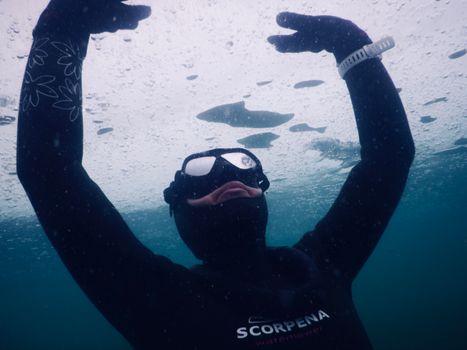
The world beneath the ice was nothing short of surreal. The surface of the ice, viewed from below, was an intricate tapestry of whites, blues, and greens, refracting the sunlight filtering through like stained glass. Below us, the ice stretched down into impossible shapes, forming caves, arches, and sheer walls. It was like diving into a crystal palace sculpted by nature.
Visibility was incredible, easily 20-30 meters. We followed the dive master along a safety line, our exhaled bubbles rising like shimmering silver pearls towards the ice ceiling. The silence was absolute, broken only by the sound of my own breathing.
Then, the life. Despite the extreme conditions, the Antarctic ecosystem thrives. We saw delicate, translucent jellyfish pulsing gently, their tentacles trailing like silken threads. Bright orange and red starfish clung to the undersides of the ice. But the true stars were the curious creatures that seemed to emerge from the blue depths: Antarctic krill, the foundation of the food chain, swarming in dense clouds; and then, a glimpse of a sleek, dark shape – a curious Weddell seal, observing us with large, intelligent eyes before gracefully disappearing into the abyss. It was a fleeting, magical encounter that left me breathless.
Each dive was limited to about 20-25 minutes, primarily due to the cold and the potential for gear freezing. As we ascended back towards the triangular opening, the contrast between the dark blue depths and the bright light of the surface was stark. Breaking the surface, peeling off the mask, and feeling the frigid air on my face was a moment of pure, unadulterated triumph. I had done it. I had faced the ice, and it had shown me wonders.
My Most Vivid Memory:
It wasn't the cold, or even the seals, as amazing as they were. It was the moment I looked up at the underside of the ice, seeing the sunlight diffuse through its ancient, fractured layers. It felt like looking at the ceiling of the world, a truly unique perspective that no other dive can offer.
### Life After the Plunge: Recovery, Reflection, and More Antarctic Wonders
Emerging from the water, the first thing you want is a hot drink and to shed those layers. The crew was ready with warm towels and a debriefing, where our numb fingers struggled to write notes in our logbooks. The warmth of the ship's lounge and a steaming cup of tea never felt so good.
The recovery wasn't just physical. It was mental. The sheer intensity of the experience lingers. You feel an immense sense of accomplishment, a quiet pride. It’s a badge of honor, a story you'll tell for the rest of your life. My body slowly warmed, but my mind was still buzzing, replaying every moment of that alien, beautiful world.
Beyond the ice diving, Antarctica offers an unparalleled array of experiences. Our expedition included daily Zodiac cruises, navigating through iceberg alleys and past immense glaciers. We kayaked among playful penguins and watched humpback whales breach in the distance. We hiked on snow-covered islands, observing vast colonies of Gentoo, Chinstrap, and Adélie penguins, their squawking and antics providing endless entertainment. Each landing felt like stepping onto another planet, pristine and untouched. The sheer abundance of wildlife – from seals basking on ice floes to majestic albatross soaring overhead – is breathtaking.
Budget Tip:
While ice diving is a premium activity, you can save on the overall trip by choosing an shoulder season departure (late November/early December or March). These periods often offer slightly lower prices and unique advantages like more pristine ice earlier in the season or incredible sunsets later. Look for last-minute deals if you have flexible travel dates, but note these are rare for highly sought-after expeditions.
### Planning Your Own Polar Plunge: Practicalities and Precautions
Thinking of adding an Antarctic ice dive to your bucket list? Here’s what you need to know:
1. Experience is Key:
As mentioned, you need to be a certified dry suit diver with significant cold water experience. Most operators require 20-30+ logged dry suit dives. This isn't for beginners.
2. Choose the Right Operator: Not all Antarctic expeditions offer ice diving. Research reputable operators like Quark Expeditions, Poseidon Expeditions, or Oceanwide Expeditions, who specialize in polar diving. Their dive teams are experienced and prioritize safety.
3. Cost: The ice diving add-on typically costs an additional $1,000-$2,000 USD on top of your expedition fare. This usually covers specialized gear rental, dive master services, and safety support.
4. Best Time to Go: The Antarctic summer (November to March) is the only time expeditions run.
* November/Early December: More pristine ice, fewer crowds, but colder.
* Mid-December to February: Peak season, warmest temperatures, most wildlife activity (chicks hatching, seals pupping).
* March: Fewer crowds, incredible sunsets, whales are abundant as they feed before migration.
* For ice diving, any of these periods work, but early season offers the most dramatic ice formations.
5. Safety First, Always: This cannot be stressed enough. Listen to your dive masters. Follow all protocols. Be honest about your comfort level. The environment is unforgiving.
6. Physical & Mental Fitness: You'll need to be in good health and have the mental fortitude to handle extreme cold and a unique dive environment.
7. Photography: Underwater cameras are a must! Just ensure your housing is rated for cold water and you have adequate battery life (cold drains batteries quickly). My GoPro with a red filter captured some incredible footage.
Getting There & Around:
* Flights: Fly to Ushuaia, Argentina (USH) via Buenos Aires (EZE).
* Ship: Your expedition vessel is your transport and accommodation.
* Zodiacs: Small inflatable boats are used for shore landings and close-up wildlife viewing.
### Beyond the Blue: Other Antarctic Adventures to Ignite Your Wanderlust
Even if ice diving isn’t your cup of (hot) tea, Antarctica offers a plethora of other incredible ways to immerse yourself in its magic:
* Kayaking: Glide silently through glassy waters, weaving between icebergs and observing seals and penguins at eye level. It’s a profound connection to the environment.
* Zodiac Cruises: These are daily occurrences, taking you closer to wildlife, icebergs, and shorelines. Expect incredible photo opportunities.
* Shore Landings: Step onto the continent itself! Hike to panoramic viewpoints, walk among penguin colonies, and visit historic research huts.
* Camping: Some expeditions offer an optional night of camping on the snow – truly an unparalleled experience under the polar stars (or twilight).
* Polar Plunge (Surface): A quick, exhilarating dip in the frigid waters (usually tethered, of course) for bragging rights. Much less involved than ice diving, but still a thrill!
* Photography Workshops: Many ships have onboard photographers who offer tips and workshops to help you capture the stunning landscapes and wildlife.
Antarctica is not just a destination; it’s an experience that recalibrates your sense of wonder. It’s a journey that reminds you of the immense power and fragile beauty of our planet.
### The Verdict: Is Ice Diving Worth the Chill? Absolutely.
As I write this, weeks after returning from the White Continent, I still feel a phantom chill, a lingering sense of awe. The recovery wasn't just about warming up; it was about processing an experience so profound it changed my perspective on adventure itself.
Was it terrifying? Yes. Was it cold? Beyond anything I’ve ever felt. But was it worth it? A thousand times over, yes. Plunging beneath the ice in Antarctica was more than just a dive; it was a communion with a pristine world, a challenge conquered, and a memory etched deep into my soul. It proved that sometimes, the most extraordinary experiences lie just beyond the edge of our comfort zone, in the places where fear and wonder collide.
If you have the experience, the courage, and the opportunity, do it. Don't hesitate. Antarctica will call to you, and when it does, answer that call. Whether it's through ice diving, kayaking, or simply marveling at a breaching whale, this continent will leave you forever changed.
So, tell me, fellow adventurers: Would you dare to take the plunge? Share your dream polar adventure in the comments below!
---
Visual journey


Tags
Share this adventure
Join the travel community
New adventures, cultural insights and travel inspiration, straight to your inbox.
We may receive a commission if you click on a link and buy a product, service or policy, at no extra cost to you. How affiliate links work.
Been there?