

The ground beneath my feet was hot, the air thick with sulfur, and the distant rumble was the pulse of the Earth itself. I stood on an active volcano, a primal dance of creation and destruction unfolding before me, and it was an experience that fundamentally shifted my perspective on life and adventure. This isn't just a story; it's an invitation to confront the magnificent, terrifying beauty of our planet. ---
The air crackled with an energy I’d never felt before. Not electricity, but something far more ancient, more profound. Beneath my worn hiking boots, the ground was warm, almost alive, a stark contrast to the cool evening breeze whipping around my face. A plume of white smoke snaked lazily from a distant vent, carrying with it the unmistakable scent of sulfur – the Earth’s own pungent breath. Then, a low rumble, deep in my chest, a reminder that this wasn't just a mountain; it was a living, breathing entity. I was standing on an active volcano, Mount Pacaya in Guatemala, and in that moment, a shiver of fear and exhilaration ran through me.
"Just a little further," our guide, Carlos, gestured with a seasoned hand, his silhouette framed against the darkening sky. And there it was. Not a gushing river of fire, but a slow, steady ooze, a vibrant orange-red against the charcoal-black rock. Molten rock, born from the very core of our planet, creeping forward, consuming everything in its path. My heart hammered against my ribs. I had walked on an active volcano, and in the grand scheme of things, I had survived. But "survived" felt like an understatement. I had lived. And I haven't stopped thinking about it since.
This wasn't just another item checked off a bucket list; it was a visceral, transformative encounter with the raw, untamed power of nature. If you've ever dreamt of pushing your boundaries, of feeling truly alive, then let me tell you, trekking an active volcano is an experience that will etch itself into your soul. And I’m here to tell you exactly how you can do it too.
### The Call of the Fiery Mountain: Why Pacaya?
My journey to Pacaya wasn't born from a singular, sudden whim. It was a slow burn, a growing fascination with the Earth's geological might. I'd seen volcanoes in pictures, read about their destructive power, but I craved the tangible experience, the sensory overload of being in the presence of such raw force.
Guatemala's Pacaya volcano emerged as the perfect candidate for my fiery baptism. Located just an hour and a half south of the charming colonial city of Antigua, Pacaya is one of Central America's most active volcanoes. But unlike its more explosive neighbors, Pacaya is known for its effusive eruptions – meaning it often produces slow-moving lava flows and constant gas emissions, making it relatively safe for guided treks to its flanks. It offers that elusive blend of accessibility and thrilling, undeniable activity.
The allure wasn't just the lava (though, let's be honest, that was a huge draw!). It was the promise of witnessing the Earth's creation in real-time, walking on landscapes forged in fire, and feeling utterly insignificant yet profoundly connected to something ancient and powerful. This wasn't just a hike; it was a pilgrimage to the heart of our planet.
Booking my tour was surprisingly simple. Antigua is a hub for adventure tourism, and countless agencies offer daily treks to Pacaya. I opted for a reputable local operator, 'Bigfoot Tours', known for their experienced guides and safety protocols. The cost was incredibly reasonable – around $20-30 USD for round-trip transport from my hostel in Antigua and a knowledgeable, English-speaking guide. This doesn't include the park entrance fee, which is an additional 100 Guatemalan Quetzales (approx $13 USD) paid directly at the park entrance. I chose a late afternoon tour, hoping to catch the sunset and, more importantly, see the lava glow in the encroaching darkness – a truly Instagram-worthy moment waiting to happen!
### Gearing Up for the Inferno: Preparation is Key
While trekking Pacaya isn't like scaling Everest, it's not a walk in the park either. Proper preparation is essential for both safety and enjoyment.
1. Physical Fitness:
I'd describe the hike as moderate. It's a steady, uphill climb for about 1.5 to 2 hours, covering roughly 2.5 miles (4 km) with an elevation gain of around 1,500 feet (450 meters). If you're reasonably active and can handle a few hours of uphill walking, you'll be fine. Don't underestimate it, though – the volcanic ash and loose scree can make footing tricky in places.
2. What to Pack:
This is crucial.
* Sturdy Hiking Boots: Non-negotiable. The terrain is rocky, uneven, and hot. Sneakers just won't cut it and could lead to injury.
* Layers of Clothing: The weather can change dramatically. It starts warm, but as you gain elevation, and especially after sunset, it gets surprisingly chilly and windy. I wore a t-shirt, a fleece, and a lightweight windbreaker.
* Water: At least 2 liters per person. You'll sweat, and there are no shops on the volcano.
* Snacks: Energy bars, fruit, nuts – anything to keep your energy up.
* Headlamp or Flashlight: Absolutely essential for the descent if you do a sunset tour.
* Sunscreen and Hat: Even on a cloudy day, the sun at altitude is intense.
* Camera/Phone: You'll want to capture every fiery moment! Make sure it's charged.
* Small Backpack: To carry all your essentials.
* Cash: For the park entrance fee and optionally, for renting a horse (more on that below) or buying snacks from local vendors at the base.
3. Choosing Your Guide:
Stick with organized tours. The guides know the current activity levels, the safest routes, and local geology. Our guide, Carlos, was a local from a village near Pacaya. His knowledge of the mountain, its moods, and its history was invaluable. He pointed out different types of volcanic rock, explained the local flora, and shared fascinating stories about the volcano's past eruptions. This local insight truly enriched the experience.
4. Horse Rentals:
If you're not up for the full trek, local villagers offer horse rentals for a portion of the ascent (around $20-25 USD). It's a good option for those with mobility issues or younger children, but be aware that the horses don't go all the way to the active areas, and you'll still need to walk the final, most interesting stretch.
### The Ascent: A Symphony of Senses
Our minivan rumbled away from Antigua in the late afternoon, carrying a diverse group of adventurers from around the globe. As we approached the trailhead, the air grew noticeably cooler, the lush green landscape slowly giving way to more sparse, volcanic vegetation.
The hike began through a dense forest path, the air humid and filled with the chirping of unseen birds. It was a gentle introduction, a chance to warm up the legs before the real climb began. Soon, the forest thinned, replaced by a landscape of black volcanic sand and ancient, solidified lava flows. The ground crunched underfoot, a satisfying sound that was quickly joined by the rhythmic thud of my own heart.
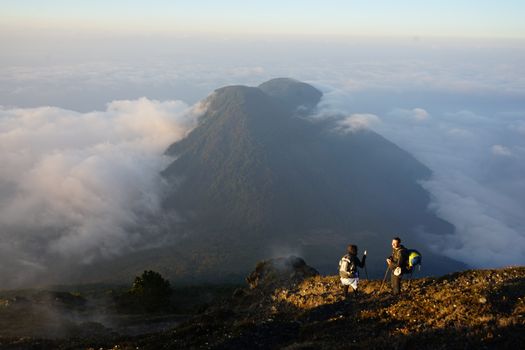
As we gained altitude, the views began to unfold. Below us, the patchwork of agricultural fields stretched out, dotted with tiny villages. To our left, the majestic cones of Agua, Fuego, and Acatenango volcanoes stood sentinel against the horizon, Fuego often puffing smoke in the distance. It was a breathtaking panorama, a powerful reminder of Guatemala's volcanic spine.
The ascent was challenging but manageable. There were moments when my lungs burned, and my legs felt heavy, especially on the steeper, ash-covered sections where every step felt like sliding back half a step. But the camaraderie of the group, the encouraging words from Carlos, and the sheer anticipation kept me pushing forward.
Then, the first hint of sulfur hit me. Not overpowering, but a distinct, metallic tang in the air. It was a sign. We were getting closer. Soon after, wisps of steam began to rise from cracks in the ground, a visible manifestation of the heat beneath. The landscape transformed again, becoming starker, more alien. The trees disappeared entirely, replaced by jagged black rock and sparse, hardy shrubs clinging to life in the harsh environment. This was the Earth's raw, untamed face.
### Standing on the Edge: My Active Volcano Experience
And then, we were there. Not at the very summit – that's often too dangerous – but on a vast, relatively flat expanse of solidified lava fields near the active vents. The ground was noticeably hotter here, radiating a deep, pervasive warmth that permeated my boots. Cracks in the rock hissed with escaping gases, some vents emitting a faint glow.
My eyes scanned the horizon, searching, hoping. Carlos led us carefully across the uneven, razor-sharp black rock, pointing out areas where previous lava flows had cooled into bizarre, rope-like formations (Pahoehoe lava) or sharp, angular chunks (A'a lava). It was like walking on the surface of another planet.
And then I saw it. A dark, sluggish river of black rock, slowly, inexorably moving. And from beneath its crust, a vibrant, incandescent orange glow. Lava. Actual, molten lava. It wasn't a dramatic explosion, but a quiet, powerful display of Earth's ceaseless internal churn. The air shimmered above it, distorting the view, and the heat radiating from it was intense, even from a safe distance.
Carlos, with a mischievous grin, produced a bag of marshmallows and long sticks. "Who wants to roast some?" he asked. Roasting marshmallows over the volcanic heat was a surreal and utterly delightful experience. The sugary scent mingled with the sulfur, a bizarre juxtaposition of comfort and primal power. It was a moment of pure, unadulterated joy amidst the grandeur of nature.
I found a spot on a warm rock, watching the lava, mesmerized. The sun was beginning its descent, painting the sky in fiery oranges, purples, and deep blues – a celestial echo of the spectacle below. As twilight deepened, the lava's glow intensified, becoming a beacon in the encroaching darkness. It wasn't just a sight; it was a feeling. A deep sense of awe, of insignificance in the face of such raw power, yet also an incredible feeling of being alive, of witnessing something truly extraordinary. My "survival" wasn't about escaping danger; it was about confronting the sublime, embracing the controlled risk, and emerging with a profound new appreciation for the planet we call home. Every cell in my body vibrated with the memory of that heat, that smell, that primal rumble.
### The Descent and Reflection: Earth's Enduring Power
The descent was quicker, but no less challenging, especially in the dark. Our headlamps cast dancing beams on the uneven terrain, highlighting every loose rock and slippery patch of ash. It was a testament to Carlos's expertise that we navigated it safely and efficiently. The cool night air was a welcome contrast to the volcanic heat, and the stars above, far from any city lights, sparkled with an intensity I rarely see.
Back at the trailhead, tired but exhilarated, I looked back at the silhouette of Pacaya, its summit now shrouded in darkness, but its presence still palpable. The experience had been more than just a hike; it was a profound encounter. I felt a renewed connection to the planet, a deeper understanding of its dynamic nature. The world wasn't just a static backdrop; it was a living, breathing, ever-changing entity. This feeling, this perspective shift, is why I can't stop thinking about it. It wasn't just a trip; it was a transformation.
### Your Turn to Conquer: Practical Tips for Trekking Pacaya
Inspired to chase your own fiery adventure? Here's my actionable advice to make your Pacaya trek unforgettable:
1. Best Time to Go: The dry season (November to May) offers clearer skies and less slippery trails. Sunset tours are highly recommended for the dramatic views and the intensified glow of the lava. Sunrise tours also offer incredible views, but lava viewing might be less pronounced if the activity isn't strong.
2. Booking Your Tour: You can easily book a tour from any hotel or agency in Antigua. Shop around for prices and ask about what's included (transport, guide, entrance fee sometimes included, sometimes separate). Reputable agencies like Bigfoot Tours, Old Town Outfitters, or Wicho & Charlie's are good starting points.
3. What to Bring (Reiterated & Expanded):
* Footwear: Seriously, hiking boots. No sneakers, no open-toed shoes.
* Layers: A base layer, a fleece or sweater, and a wind/rain jacket.
* Water: 2-3 liters per person. Dehydration is a real risk.
* Snacks: High-energy bars, nuts, chocolate.
* Headlamp/Flashlight: With extra batteries.
* Sun Protection: Hat, sunglasses, high-SPF sunscreen.
* Camera Gear: A sturdy strap, extra battery, and maybe a protective case for volcanic dust.
* Small First-Aid Kit: Blister plasters, pain relievers.
* Cash: For park entrance (Q100), optional horse rental (Q150-200), and any last-minute snacks or drinks.
4. Fitness Level: Moderate. If you can walk for a few hours uphill, you'll manage. Take your time, listen to your body, and don't be afraid to ask for breaks.
5. Safety First:
* Listen to your guide: They are experts on the volcano's current conditions and safest routes.
* Stay on marked paths: Volcanic terrain can be unstable, and gas vents can be dangerous.
* Respect the environment: Don't litter, don't take souvenirs (volcanic rock belongs to the volcano!).
* Be aware of your surroundings: The ground can be hot, and sharp rocks are everywhere.
6. Beyond the Volcano: While in Guatemala, don't miss exploring the charming colonial streets of Antigua, visiting Lake Atitlán, or delving into the ancient Mayan ruins of Tikal. Guatemala is a country rich in culture, natural beauty, and adventure.
### Don't Just Dream It, Live It!
Standing on Mount Pacaya, feeling the heat of the Earth beneath my feet, watching molten rock flow, was more than an adventure; it was a profound lesson in humility and wonder. It was a reminder of the incredible forces that shape our world and the fleeting, precious nature of our own existence. I came away with a deeper appreciation for life, a renewed sense of courage, and a story that will undoubtedly be told for years to come.
If you're seeking an experience that will challenge you, inspire you, and leave an indelible mark on your soul, then trekking an active volcano like Pacaya is calling your name. Don't just bookmark this post; start planning your trip! The Earth is waiting to show you its fiery heart.
Have you ever trekked an active volcano? What was your most unforgettable adventure? Share your stories in the comments below! And don't forget to share this post with your fellow adventurers – let's inspire more people to embrace the wild!
---
Visual journey


Tags
Share this adventure
Join the travel community
New adventures, cultural insights and travel inspiration, straight to your inbox.
We may receive a commission if you click on a link and buy a product, service or policy, at no extra cost to you. How affiliate links work.
Other angles on this trip
These notes are written by AI to show how different kinds of traveller might see this destination. They are not comments from real readers.