
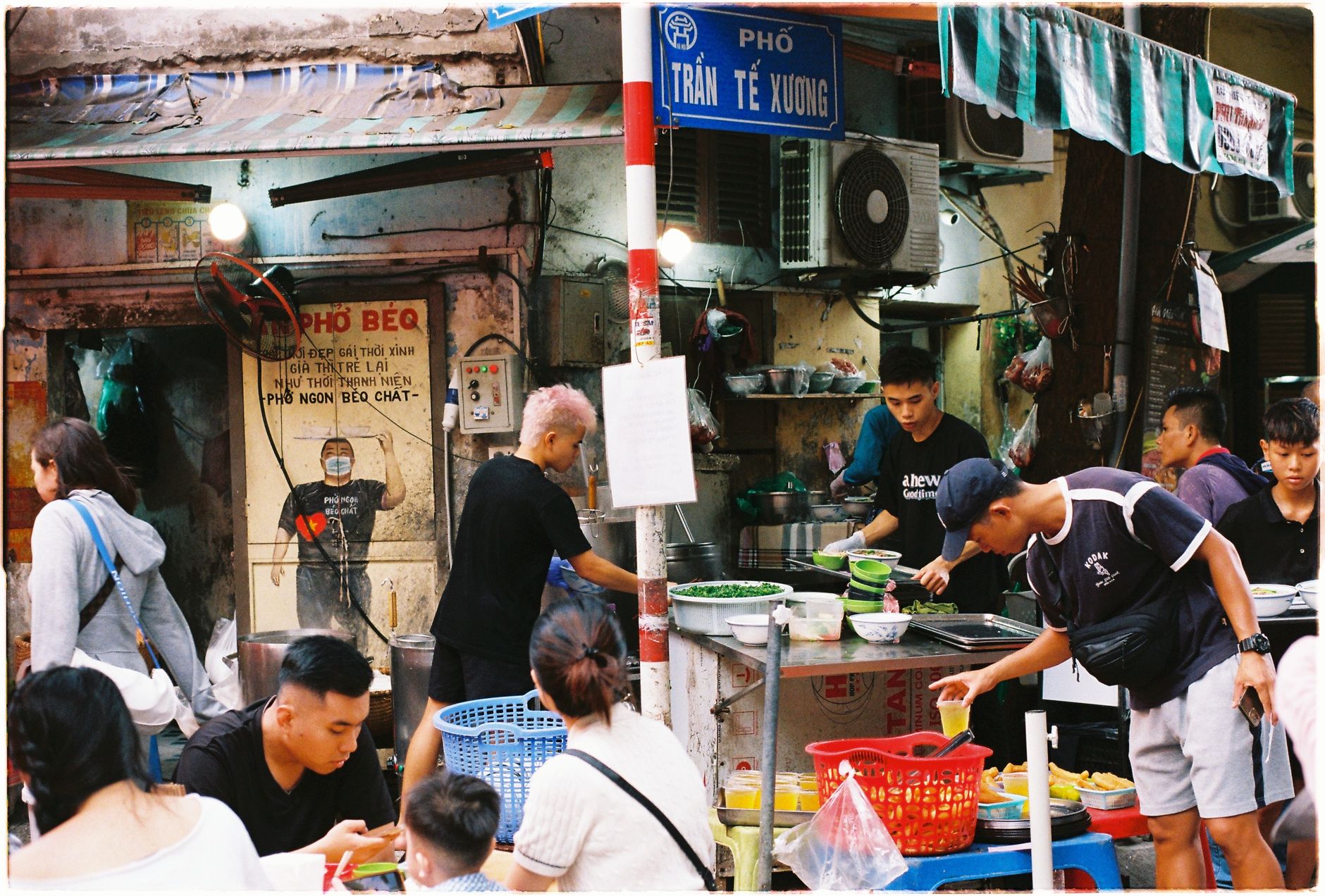
Tired of generic tourist traps? I embarked on a one-of-a-kind food tour through Hanoi, guided by the incredible Bà Liên – a local grandmother whose wisdom and warmth unveiled the city's true culinary soul. Prepare for a sensory journey that goes far beyond taste, connecting you to Vietnam's heart. ---
The aroma hit me first – a complex symphony of lemongrass, star anise, sizzling garlic, and something sweet, like caramelized sugar. It wasn't the sterile, air-conditioned scent of a fancy restaurant, but the living, breathing perfume of Hanoi's Old Quarter waking up. I'd arrived in Vietnam eager for an authentic culinary adventure, but what I found transcended all expectations: a food tour led not by a polished guide, but by a grandmother.
My journey began with a recommendation from a tiny guesthouse owner, a wizened woman named Auntie Mai. "You want real Hanoi food?" she'd whispered, leaning conspiratorially across the counter. "You need to meet Bà Liên." Bà Liên, I learned, was a local legend, a grandmother with a mischievous twinkle in her eye and a lifetime of culinary secrets etched into her hands. Forget Michelin stars or trendy fusion spots; Auntie Mai promised an immersion into the very soul of Vietnamese cooking, guided by someone who had lived and breathed it for over seven decades.
Slightly skeptical, yet undeniably intrigued, I booked the "Grandmother's Kitchen Tour" through a small, ethical company called "Hanoi Hidden Flavors Tours" that specialized in connecting travelers with local elders. And so, on a humid Tuesday morning, I found myself standing nervously on a bustling street corner, watching the city awaken, waiting for my guide. Then, a small, elegant woman in a traditional áo dài and conical nón lá hat approached, her smile radiating warmth. "Chào con!" she greeted me, her eyes crinkling with genuine kindness. "I am Bà Liên. Are you ready to eat?"
From that moment, I knew this wasn't just a food tour; it was an invitation into a family, a culture, a lifetime.
### The Invitation to Authenticity: Meeting Bà Liên and Unlocking Hanoi's Heart
My initial nervousness evaporated the moment Bà Liên took my hand, her grip surprisingly firm yet comforting. She spoke in gentle, melodic Vietnamese, punctuated by bursts of laughter, with a young translator named Linh dutifully relaying her words. It wasn't just about the food; it was about the stories. Bà Liên’s presence was a living bridge to Hanoi's past, a testament to resilience, tradition, and the enduring power of food as a cultural anchor.
She explained that her family had lived in the Old Quarter for generations, running a small eatery that had served her parents, grandparents, and now, her grandchildren. "Food is not just to fill the stomach," she said, her eyes serious for a moment. "It is to nourish the heart, to remember our ancestors, to share our love." This profound philosophy permeated every stop, every bite, transforming what could have been a simple tasting into a spiritual journey.
We started our tour not with a plate, but with a philosophy: understanding the balance of flavors – sweet, sour, salty, spicy, and umami – that defines Vietnamese cuisine. Bà Liên emphasized the importance of fresh, seasonal ingredients, a concept we were about to experience firsthand.
Budget Tip:
While my tour was a specific booking, you can often find similar, less formalized experiences by asking your guesthouse owner for recommendations or looking for small, locally-run tour operators. These often offer a more authentic, intimate experience than larger, commercial tours. Expect to pay anywhere from $30-$60 USD for a half-day, small-group food tour like this, which is excellent value for the experience and food included.
### Market Magic: A Sensory Overload at Đồng Xuân Market
Bà Liên led me through the maze-like alleys of the Old Quarter, her petite frame weaving expertly through the chaos of motorbikes, street vendors, and pedestrians. Our first stop was Đồng Xuân Market, a bustling, multi-story labyrinth that assaulted my senses in the most delightful way possible.
The air was thick with the scent of spices, durian, fresh herbs, and damp earth. Vendors called out their wares, their voices a melodic chorus. Bà Liên, however, moved with the ease of a queen in her kingdom. Every vendor greeted her with respect, a warm smile, or a quick exchange of local gossip. It was clear she wasn't just a customer; she was part of the fabric of this vibrant community.
She introduced me to the vibrant greens of rau thơm (aromatic herbs), explaining how each one played a crucial role in different dishes. We touched plump, glistening fish, inspected mountains of chili peppers, and marveled at exotic fruits I'd never seen before. "Taste this," she urged, handing me a segment of a vibrant pink dragon fruit, its subtle sweetness a refreshing burst.
Her knowledge wasn't academic; it was lived. She taught me how to spot the freshest ingredients, how to discern good quality fish sauce by its aroma, and even a few basic Vietnamese phrases for bargaining ("Bao nhiêu tiền?" - How much money? "Mắc quá!" - Too expensive!). I watched, mesmerized, as she haggled playfully for a bunch of lemongrass, her laughter echoing through the stalls.
Amidst the market's hustle, she pointed out a tiny stall selling chè, a traditional Vietnamese sweet dessert soup. "For energy!" she declared, handing me a small bowl filled with colorful beans, jellies, and coconut milk. It was a sweet, cooling antidote to the humid morning, a perfect taste of local life.
Instagram-worthy moment:
The vibrant colors of fresh produce, the animated faces of vendors, and Bà Liên's radiant smile amidst the market's controlled chaos. Capture the energy!
### Street Food Symphony: Culinary Gems on Pavement Stalls
Leaving the market, we plunged deeper into the Old Quarter's street food scene, a world where tiny plastic stools and makeshift tables hosted some of the most extraordinary culinary experiences. Bà Liên didn't just point to dishes; she told their stories, their history, and their place in the Vietnamese heart.
Our first official street food stop was for Phở Gà (chicken pho) at a nondescript stall on Hàng Bông Street. "Many tourists go for beef pho," Bà Liên explained, "but chicken pho, especially in Hanoi, is an art. The broth must be clear, yet deep with flavor." And it was. The broth, simmered for hours, was light yet incredibly complex, fragrant with ginger, star anise, and cinnamon. Tender slices of chicken, springy rice noodles, and a generous scattering of fresh herbs made it a bowl of pure comfort. She showed me how to add a squeeze of lime and a dash of chili sauce, customizing it to perfection.
Next, a quick stop for Bánh Mì from a tiny cart on Hàng Buồm. This wasn't just any sandwich; it was a symphony of textures and flavors – crisp baguette, savory pâté, rich pork belly, fresh cilantro, pickled carrots and daikon, and a fiery kick of chili. "Everyone has their favorite bánh mì place," Bà Liên confided, "but this one, the bread is always perfect." She was right; the baguette crackled with every bite, a testament to its freshness.
Then came the legendary Bún Chả, a dish famously enjoyed by President Obama. We sat on miniature plastic stools on the pavement, the air thick with the smell of charcoal-grilled pork patties. The dish arrived: tender grilled pork patties and slices of pork belly, served in a sweet-sour dipping sauce with vermicelli noodles, a mountain of fresh herbs, and pickled green papaya. Bà Liên demonstrated the proper technique: dip the noodles and herbs into the sauce, then add the grilled pork. Each bite was a explosion of smoky, sweet, tangy, and fresh flavors. This, she explained, was a true Hanoian specialty, a dish for communal enjoyment.
No food tour in Hanoi is complete without Cà Phê Trứng (egg coffee). We ducked into a small, unassuming cafe near Hoàn Kiếm Lake. The rich, robust Vietnamese coffee, topped with a creamy, sweet egg foam, was like a liquid tiramisu. "My mother used to make this," Bà Liên reminisced, her eyes distant, "when milk was scarce. It is a taste of our ingenuity." It was surprisingly delicious, a decadent treat that perfectly rounded off our savory adventure.
Practical Tips for Street Food:
* Hygiene: Look for stalls with high turnover, where food is cooked fresh in front of you. Observe locals; if they're eating there, it's usually a good sign.
* Ordering: Many street food vendors have limited English, but pointing and smiling usually works! Or, if on a tour, your guide will handle it.
* Chopsticks: Don't stick your chopsticks upright in your bowl (it resembles incense at a shrine).
* Road Safety: Crossing streets in Hanoi is an art form. Walk slowly and predictably, letting the motorbikes flow around you. Don't make sudden movements.
### Beyond the Plate: Stories from a Life Well-Lived
As we savored our egg coffee, the conversation shifted from food to life. Bà Liên, through Linh's translation, shared stories of her childhood during wartime, the challenges of raising a family in difficult times, and the simple joys of everyday life. She spoke of how food brought people together, how a shared meal could mend fences, and how family recipes were passed down like precious heirlooms.
She told me about her own grandmother, who taught her to pound spices by hand and distinguish fresh herbs from wild weeds. Her anecdotes painted a vivid picture of Hanoi through the decades – a city that had endured, adapted, and always, always found solace and celebration in its cuisine. Her resilience, her wisdom, and her quiet strength were palpable. This wasn't just a guide; it was a living history lesson, served with a side of heartfelt connection.
We took a brief, reflective stroll through a quieter alley, past a small, ornate temple where the scent of burning incense mingled with the street food aromas. Bà Liên explained the significance of ancestor worship and the role of food offerings in Vietnamese culture. It was a moment of profound cultural insight, reminding me that every dish had a deeper meaning, a connection to family, tradition, and spirituality.
### A Taste of Home: My Hands-On Moment
Toward the end of our tour, Bà Liên led me to a small, unassuming kitchen tucked behind a flower shop – a space she sometimes used for small cooking demonstrations. It wasn't her own home kitchen, but it felt incredibly intimate. Here, she taught me to make fresh Gỏi Cuốn (fresh spring rolls).
She demonstrated the delicate art of rolling, her experienced hands moving with grace and precision. We used translucent rice paper wrappers, filled with fresh shrimp, vermicelli noodles, pork, and a riot of fresh herbs. "The secret," she whispered, "is the dipping sauce. It must have all five flavors." She then showed me how to prepare a perfect nước chấm – a balance of fish sauce, lime juice, sugar, water, and finely minced chili and garlic.
Making the rolls alongside her, my clumsy attempts contrasting with her effortless skill, was a truly special moment. It wasn't just about the recipe; it was about the shared experience, the gentle guidance, and the feeling of creating something traditional with someone who embodied that tradition. We sat and ate our fresh spring rolls, dipping them into the perfectly balanced sauce, and I felt a profound sense of accomplishment and connection.
Recipe Insight:
For a perfect nước chấm, remember the 1:1:1:1:1 ratio (roughly): 1 part fish sauce, 1 part sugar, 1 part lime juice, 1 part water, and then add minced garlic and chili to taste. Adjust to your preference!
### Navigating Hanoi: Practicalities for Your Own Culinary Quest
My day with Bà Liên was a masterclass in local living. If you're inspired to embark on your own authentic culinary journey in Hanoi, here are some practical tips:
* Getting There: Fly into Noi Bai International Airport (HAN). From there, you can take a Grab (ride-hailing app, highly recommended), a taxi, or a shuttle bus to the city center (around 45 minutes to an hour).
* Getting Around: The Old Quarter is best explored on foot, allowing you to soak in the atmosphere and discover hidden gems. For longer distances, Grab is your best friend – either a Grab car or, for the adventurous, a Grab bike (much cheaper and faster through traffic). Just remember to wear a helmet!
* Best Time to Visit: The dry season, from October to April, offers the most pleasant weather (cooler and less humid). March-April and October-November are particularly lovely. Avoid summer (May-September) if you're sensitive to heat and humidity.
* Accommodation: Staying in the Old Quarter puts you right in the heart of the food scene and within walking distance of many attractions. There are options for every budget, from charming boutique hotels to budget-friendly guesthouses.
* Safety Tips: Hanoi is generally safe, but be aware of pickpockets in crowded areas like markets. Always keep an eye on your belongings. Be cautious when crossing streets – look both ways, and remember the flow of traffic is often constant. It’s also wise to have travel insurance.
* Finding Your Own Bà Liên: How do you replicate such a magical experience?
* Ask Locals: The best advice comes from your guesthouse owner, local shopkeepers, or even fellow travelers who've been off the beaten path.
* Small Tour Operators: Seek out small, independent tour companies that emphasize cultural immersion and local guides. Look for tours with names like "Authentic Hanoi Food Tours" or "Hidden Gems of Hanoi." Read reviews carefully to ensure they align with your values.
* Cooking Classes: Many cooking classes in Hanoi involve a market visit, which is a great way to learn about ingredients and culture from local chefs.
* Be Open: The most important tip is to approach your travels with an open heart and mind. Be willing to step out of your comfort zone, try new things, and engage with the people you meet. Sometimes, the most memorable experiences are serendipitous.
### The Unforgettable Flavor of Connection: A Lasting Impression
As the day drew to a close, and I said my farewells to Bà Liên and Linh, I felt a profound sense of gratitude. This wasn't just a food tour; it was a journey into the soul of a city, guided by the wisdom and warmth of a true local legend. I had tasted incredible food, yes, but more importantly, I had connected with a culture, a history, and a person in a way that no guidebook or online review could ever capture.
Bà Liên taught me that the best food isn't found in a fancy restaurant, but in the bustling markets, on the tiny plastic stools of a street vendor, and in the family stories whispered over a shared meal. It's in the love and tradition that goes into every dish, passed down through generations.
If you're planning a trip to Hanoi, do yourself a favor: forget the generic tourist traps. Seek out your own Bà Liên, your own authentic connection. Let a local guide you, not just through the streets, but through the heart of their culture. Prepare for a journey that nourishes not just your stomach, but your spirit, leaving you with flavors and memories that will last a lifetime.
What's your most memorable local food experience? Share your stories in the comments below! And if this inspires you to seek out your own Bà Liên, don't forget to share your adventures using #TripsoraFoodAdventures!
---
Visual journey


Tags
Share this adventure
Join the travel community
New adventures, cultural insights and travel inspiration, straight to your inbox.
We may receive a commission if you click on a link and buy a product, service or policy, at no extra cost to you. How affiliate links work.
Been there?