

We all dream of Santorini's iconic caldera, but what if the true magic of the Greek Isles lies just a ferry ride away, untouched by mass tourism? I swapped the famous white-washed cliffs for an alternative, and the experience not only exceeded my expectations but completely redefined what a perfect island escape could be. Get ready to fall in love with Milos. ---
## I Skipped the Famous Spot for This Alternative and It Completely Changed My Perspective
The year was 2022. Like countless others, my Instagram feed was a relentless slideshow of Santorini: those iconic blue-domed churches, infinity pools overlooking the caldera, and couples toasting champagne against a fiery Aegean sunset. It was the quintessential Greek island dream, a bucket-list staple, and frankly, I was obsessed. I’d spent months planning, meticulously noting down the best viewpoints, the most romantic restaurants, and even the exact shade of white I’d need to wear to blend in with the picturesque architecture.
Then, I saw the price tag. And the photos. Not the curated, filtered ones, but the candid shots from friends who’d returned, slightly jaded, talking about shoulder-to-shoulder crowds, booked-out restaurants, and a distinct feeling of being on a beautiful, but rather commercialized, conveyor belt. "It's stunning," one friend admitted, "but it didn't feel... real."
That phrase stuck with me: "didn't feel real." My heart sank a little. I craved authenticity, connection, the thrill of discovery – not just a checklist of photo opportunities. Could I really justify the expense and the jostle for a picture that thousands of others already had? My travel philosophy has always been about immersing myself, feeling the pulse of a place, and finding those serendipitous moments that define a truly unforgettable journey. Santorini, it seemed, might not deliver that for me.
So, armed with a newfound resolve and a deep dive into obscure travel forums, I made a radical decision. I would skip Santorini. And in its place, I would seek out an alternative. An island that whispered, not shouted. An island where beauty wasn’t just a backdrop for influencers but a lived reality.
And that, my friends, is how I found Milos, and how Milos found me. It wasn't just a destination; it was a revelation that completely changed my perspective on travel itself.
### The Santorini Dream vs. My Reality Check
Let's be clear: Santorini is undeniably beautiful. Its dramatic volcanic landscape, the dazzling white villages clinging to cliffs, and those world-famous sunsets are legendary for a reason. But its immense popularity has come at a cost. During peak season, the narrow pathways of Oia and Fira become human traffic jams. Restaurants require reservations weeks in advance, often at premium prices. And the sense of serene escape? It can be hard to find amidst the constant buzz of tour groups and selfie sticks.
My friends' stories of feeling rushed, overwhelmed, and a bit like a transaction rather than a valued visitor resonated deeply. I wanted to wake up to the sound of waves, not the chatter of a hundred other tourists. I wanted to wander aimlessly, stumble upon hidden coves, and share a meal with locals, not just other tourists. I wanted to feel the true heart of the Cyclades.
My research pointed me towards Milos, the southwesternmost island of the Cyclades. It was often described as "Santorini's quieter, wilder sister" or "the island for those who thought they'd seen it all." It boasted a unique volcanic geology, over 70 beaches, charming fishing villages, and a history stretching back millennia (the Venus de Milo was discovered here!). Crucially, it promised fewer crowds and a more authentic Greek experience. It felt like a gamble, trading a guaranteed iconic view for an unknown adventure. But oh, what a gamble it turned out to be.
### Hello, Milos! My First Impressions of a Volcanic Gem
Stepping off the ferry in Adamas, Milos's main port, I felt an immediate shift in atmosphere. Gone was the bustling, almost frantic energy of the more popular islands. Instead, a gentle hum of activity welcomed me. The port was lively but laid-back, lined with tavernas, shops, and a handful of rental car agencies. The air smelled of salt and wild herbs.
My first impression of Milos was its incredibly diverse landscape. Unlike the uniformly whitewashed villages of Santorini, Milos presented a kaleidoscope of colors. The volcanic origins mean the island is a geological wonderland, with rocks painted in shades of red, orange, white, and grey, sculpted by wind and sea into incredible formations. It felt ancient, raw, and utterly captivating.
I picked up my pre-booked scooter (a non-negotiable for exploring Milos!) and set off for my accommodation in Pollonia, a charming fishing village on the northeast tip of the island. The drive itself was an introduction to Milos's understated beauty: olive groves, rolling hills, and glimpses of the sparkling Aegean. Pollonia instantly charmed me with its waterfront tavernas, small sandy beach, and a relaxed, family-friendly vibe. It felt like a secret I was privileged to be let in on.
### Unveiling Milos's Magic: Beaches and Beyond
Milos is renowned for its beaches, and for good reason. Forget generic stretches of sand; Milos offers an unparalleled variety, each with its own distinct personality. This is where the island truly shines and where I spent most of my days, utterly spellbound.
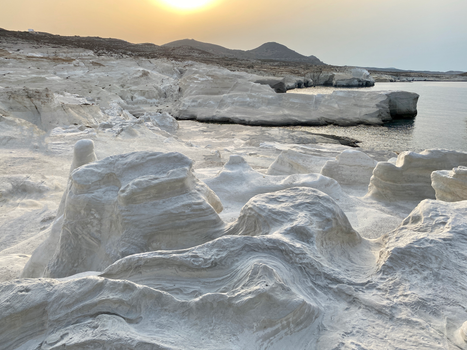
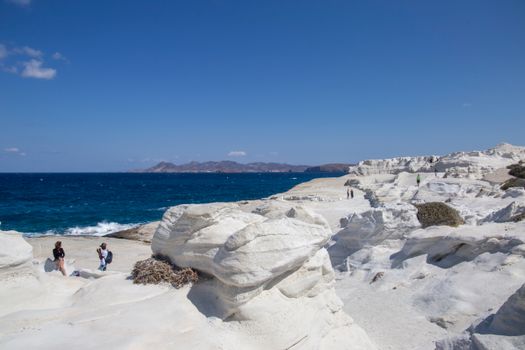
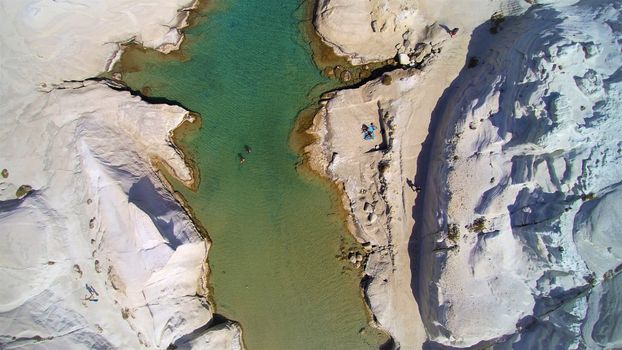
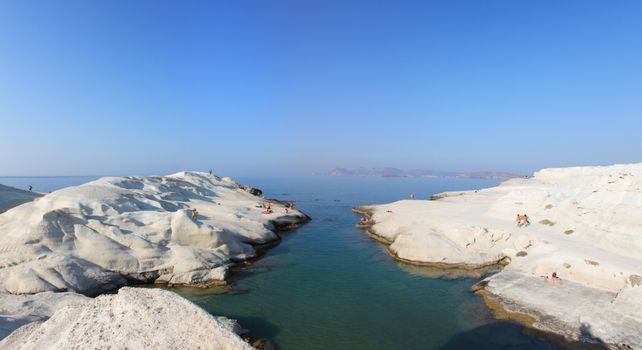
* Sarakiniko (The Moonscape Beach): This was my absolute favorite and a place that truly transported me. Imagine walking on the moon, but with the Aegean Sea kissing your feet. Sarakiniko is a landscape of brilliant white volcanic rock, sculpted by wind and waves into smooth, undulating formations, caves, and natural bridges. There's no sand here, just pure, dazzling white rock contrasting with the turquoise water. I spent hours exploring, climbing, and simply marveling at its otherworldly beauty. It's incredibly Instagrammable, but more importantly, it's an experience that feels truly unique. Go early in the morning for incredible light and fewer people, or at sunset for a magical glow.
* Kleftiko (The Pirate Lair): Accessible only by boat, Kleftiko is a cluster of towering white rock formations, sea caves, and crystal-clear emerald waters. Historically a pirate hideout, it now offers an unforgettable swimming and snorkeling experience. I booked a full-day catamaran tour (around €70-€100, including lunch and drinks) that circumnavigated the island, stopping at Kleftiko and other remote beaches like Gerakas. Swimming through the caves, feeling the ancient rock beneath my fingertips, was an exhilarating adventure. This is a must-do experience that felt truly epic.
Firiplaka & Tsigrado: These two adjacent beaches on the south coast are postcard-perfect. Firiplaka is a long, sandy beach backed by dramatic multi-colored cliffs, with some basic sunbeds and a small beach bar. Tsigrado, however, is the real adventure. To reach it, you have to descend a series of ropes and wooden ladders carved into the cliff face. It sounds daunting, but it's an exhilarating challenge that rewards you with a secluded, pristine cove of white sand and impossibly clear water. The sense of accomplishment reaching Tsigrado made the swim even more refreshing. Safety tip: Wear sturdy shoes for the descent to Tsigrado and only attempt it if you're comfortable with heights and a bit of scrambling.*
* Paliochori: Known for its volcanic hot springs and a unique "beach restaurant" where food is cooked in the sand, Paliochori offers warm, mineral-rich waters and striking red and orange cliffs. It's a great spot for a relaxing afternoon.
Mytakas, Mandrakia, Firopotamos: These aren't beaches in the traditional sense, but tiny, picturesque fishing villages with "syrmata" – colorful boathouses carved into the cliffs, where fishermen store their boats. They are incredibly charming, offering perfect photo opportunities and a glimpse into authentic island life. Mandrakia, in particular, with its small taverna Medusa*, became a favorite spot for a fresh seafood lunch with an unbeatable view.
### Beyond the Sand: Culture, Cuisine & Charm
While Milos’s beaches are rightfully famous, the island offers so much more. Its rich history, authentic villages, and delicious cuisine provided endless opportunities for cultural immersion.
* Plaka (The Capital): Perched high on a hill, Plaka is Milos’s charming capital. It’s a labyrinth of narrow, whitewashed alleyways, boutique shops, traditional tavernas, and stunning panoramic views. I loved getting lost in its winding streets, discovering hidden cafes, and admiring the bougainvillea-draped houses. The Venetian Kastro (castle) at the very top offers the best sunset views on the island (a quieter, more intimate alternative to Oia). Don't miss the Archaeological Museum, home to a plaster replica of the Venus de Milo and fascinating artifacts.
* Trypiti & Klima: Just below Plaka, Trypiti is another traditional village known for its windmills and the ancient Roman theatre, which still hosts performances today. Nearby, the catacombs of Milos offer a glimpse into early Christian history. Below Trypiti lies Klima, one of the most iconic "syrmata" villages, its colorful boathouses reflected in the calm waters. It’s a magical spot for sunset photos and a delicious seafood dinner at one of the tiny waterfront tavernas.
* Food, Glorious Food! Milos’s culinary scene is a delight, focused on fresh, local ingredients and traditional Cycladic flavors. Forget fancy fusion; this is honest, soulful cooking. I feasted on:
Fresh Seafood: Grilled octopus, barbouni (red mullet), and calamari were staples. Medusa in Mandrakia and Astakas* in Klima were my go-to's.
* Pitarakia: Small, fried cheese pies, a local specialty. Addictive!
* Watermelon Pie (Karpouzopita): A surprisingly delicious, sweet treat made with watermelon, flour, honey, and sesame seeds. A must-try!
Local Cheeses: Like xynomyzithra*, a sour, creamy cheese perfect with bread and olive oil.
* Olive Oil and Wine: Milos produces excellent olive oil and some surprisingly good local wines.
The best part? These authentic culinary experiences came without the inflated prices often found in more tourist-heavy destinations. A fantastic, multi-course meal with wine for two often cost around €40-€60, a fraction of what I'd expected to pay in Santorini.
* Local Perspective: One evening, after a particularly delicious meal at a small taverna in Pollonia, the owner, an elderly man named Nikos, brought out a complimentary dessert wine and sat with us. He spoke of Milos's mining history, its resilience, and the pride he felt in his island. He wasn't trying to sell us anything; he was simply sharing his home. This genuine "philoxenia" (hospitality) was a recurring theme throughout my trip, making me feel less like a tourist and more like a welcome guest. It's these unscripted moments of connection that truly enrich travel.
### Practicalities for Your Milos Adventure
Ready to swap the crowds for Milos's charm? Here’s everything you need to know to plan your trip:
* Getting There:
* Ferries from Athens (Piraeus port): This is the most common way. High-speed ferries take about 3-4 hours (€60-€85 one way), while conventional ferries take 5-7 hours (€40-€60 one way). Book in advance, especially during peak season. Companies like Seajets and Aegean Speedlines operate regularly.
* Flights: Milos has a small domestic airport (MLO) with daily flights from Athens (ATH) operated by Aegean Airlines/Olympic Air. Flights are quick (around 40 minutes) but can be more expensive (€80-€150+ one way).
* Island Hopping: Milos is well-connected to other Cycladic islands like Santorini, Mykonos, Paros, and Naxos, making it a perfect stop on a longer island-hopping itinerary.
* Getting Around:
Scooter/ATV Rental: Absolutely essential for exploring Milos’s hidden corners and beaches. Rental prices range from €20-€40 per day depending on the season and vehicle. Book in advance, especially for ATVs. Safety tip: Always wear a helmet, drive cautiously on winding roads, and be aware of loose gravel. Greek roads can be unpredictable.*
* Car Rental: A car offers more comfort and is ideal for families or those less comfortable on two wheels. Prices typically range from €30-€60 per day.
* Bus System: Milos has a decent bus network connecting Adamas to Plaka, Pollonia, and some popular beaches, but schedules can be infrequent, especially to more remote spots.
* Boat Tours: Don't miss a boat tour (full-day or half-day) to Kleftiko and other inaccessible beaches. It's a highlight of any Milos trip. Prices around €60-€100 per person.
* Accommodation: Milos offers a wide range of options, from budget-friendly guesthouses to charming boutique hotels.
* Adamas: Convenient for the port, restaurants, and shops.
* Pollonia: Charming fishing village with excellent tavernas, popular with families.
* Plaka/Trypiti: More traditional, picturesque, and great for sunsets, but a bit further from the port.
* Firopotamos/Mandrakia: For a truly unique, secluded experience in a syrmata (boathouse) rental.
Budget Tip:* Look for rooms to let (domatia) or small family-run guesthouses outside the main villages for better value. Booking in the shoulder season also significantly reduces prices. I stayed at a lovely guesthouse in Pollonia for €70 a night, including breakfast, which would have been double or triple in Santorini for a similar standard.
* Best Time to Visit:
* Shoulder Seasons (May-June & September-October): This is the sweet spot! The weather is fantastic (warm but not scorching), the sea is perfect for swimming, and the crowds are significantly thinner than in July/August. Prices for accommodation and ferries are also more reasonable.
* Peak Season (July-August): Expect hot weather, higher prices, and more crowds, but still manageable compared to Santorini.
* Off-Season (November-April): Many businesses close, and ferry schedules are reduced, but you'll experience a very quiet, local Milos.
* Budget Breakdown (Approximate daily costs for a moderate traveler):
* Accommodation: €50-€100 (guesthouse/mid-range hotel)
* Food: €30-€50 (mix of tavernas and quick bites)
* Transportation: €25-€40 (scooter rental + fuel)
* Activities: €0-€50 (depending on boat tours, museum entries)
* Total: €105-€240 per day (excluding ferry/flight to Milos) – significantly less than a comparable Santorini experience.
### Why Milos Changed My Perspective (and Why You Should Go!)
My decision to skip the famous, bucket-list destination for an alternative wasn't just about avoiding crowds or saving money, though those were certainly benefits. It was about choosing an experience that resonated more deeply with my travel philosophy. Milos offered something Santorini, in its current state, simply couldn't: a profound sense of discovery, genuine connection, and an unvarnished beauty that felt entirely its own.
I didn't leave Milos with a perfectly curated grid of photos that looked exactly like everyone else's. Instead, I left with sand between my toes, the taste of fresh octopus on my tongue, the memory of navigating winding roads on a scooter, and the warmth of conversations with locals. I left feeling refreshed, inspired, and deeply connected to the raw, untamed spirit of the Cyclades.
Milos taught me that sometimes, the most rewarding journeys are found not by following the well-trodden path, but by daring to venture off it. It taught me that authenticity is a more precious commodity than Instagram fame, and that true luxury lies in space, peace, and genuine human connection. It completely changed my perspective, proving that sometimes, the best experiences are the ones you seek out for yourself, the ones that aren't plastered across every travel magazine, but whisper their magic to those willing to listen.
So, if you’re dreaming of the Greek islands, but also craving something a little more real, a little more wild, and a lot more you, then dare to skip the famous spot. Dare to discover Milos. You might just find your own unforgettable odyssey.
---
Visual journey

Tags
Share this adventure
Join the travel community
New adventures, cultural insights and travel inspiration, straight to your inbox.
We may receive a commission if you click on a link and buy a product, service or policy, at no extra cost to you. How affiliate links work.
Been there?