
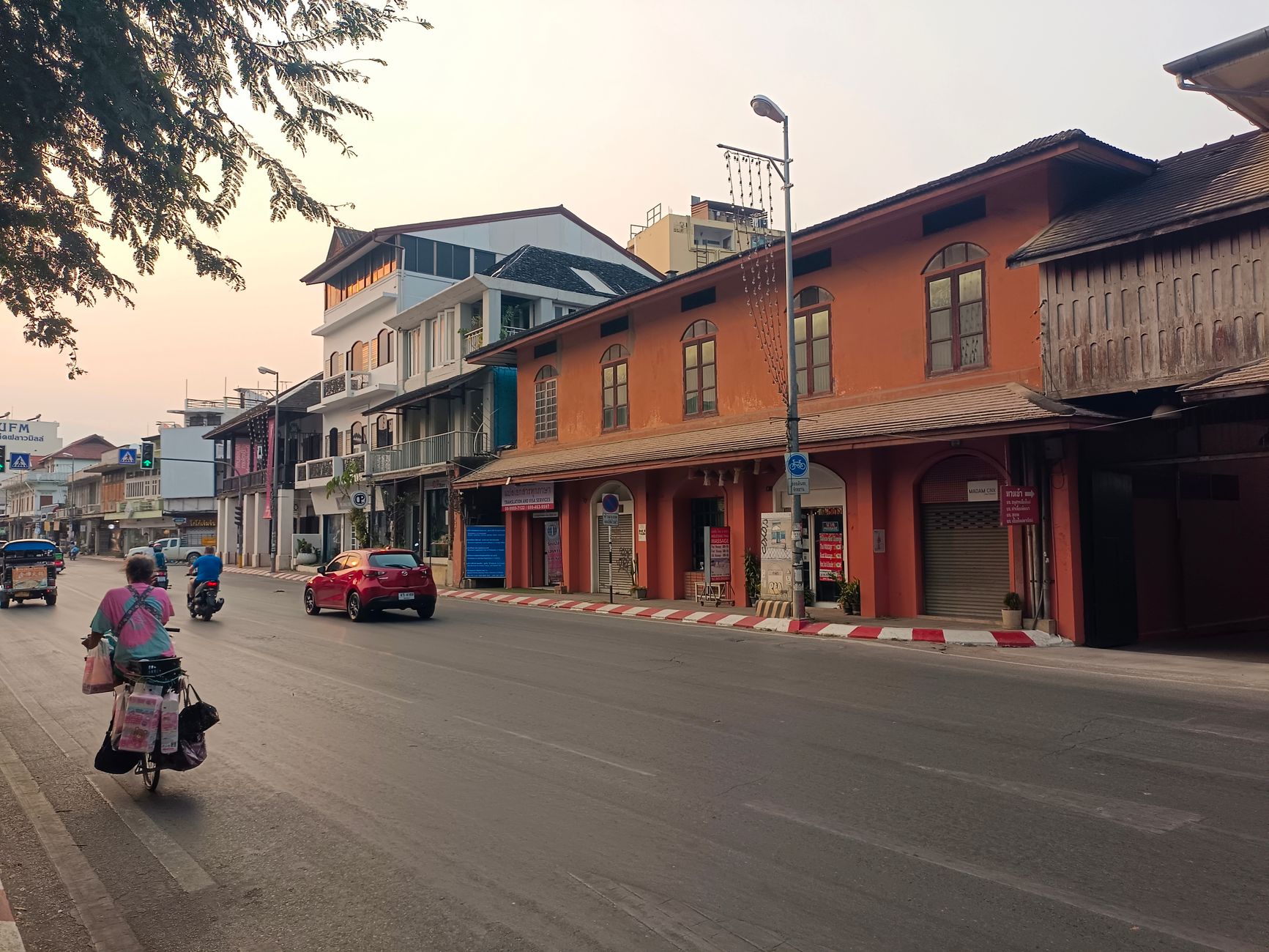
Ever dreamt of ditching the tourist trail and truly living like a local? I did, for three intense months in Chiang Mai, Thailand. From navigating chaotic markets to finding my own rhythm, it was a journey that challenged everything I thought I knew – and I’m still piecing myself back together. ---
## I Lived Like a Local for 3 Months in Chiang Mai and I'm Still Recovering
The plane touched down in Chiang Mai, Thailand, and I felt a familiar thrill. But this wasn’t just another two-week holiday. This time, I had a one-way ticket, a backpack brimming with hopeful intentions, and a naive dream: I was going to live like a local for three months. No resorts, no curated tours, just me, a rented apartment, and the sprawling, ancient city of Chiang Mai. What I didn’t know then was that this adventure would rattle my foundations, ignite a passion I didn’t know I had, and leave me in a perpetual state of "recovery" long after I left.
Three months. That’s enough time to peel back the layers of a destination, to move beyond the glossy brochure shots and Instagram-perfect moments, and to truly feel a place. It’s also enough time for the novelty to wear off, for the challenges to mount, and for you to question every decision that led you there. But oh, what a ride it was.
### The Initial Plunge: A Symphony of Chaos and Charm
My first few days were a blur of sensory overload. Chiang Mai, even for a seasoned traveler, hits you with an intoxicating mix. The air, thick with the scent of jasmine, exhaust fumes, and sizzling street food, was a constant perfume. The streets were a living, breathing organism – a chaotic ballet of scooters, tuk-tuks, red trucks (songthaews), and pedestrians, all seemingly moving with a rhythm only they understood.
Finding My Home Away From Home:
My first task was finding a place to live, not just stay. I started in a guesthouse in the Old City, but quickly realized that if I wanted to escape the tourist bubble, I needed to venture out. I spent days on a rented scooter (more on that terror later!), exploring neighborhoods like Santitham, Jed Yod, and even the slightly more upscale Nimmanhaemin.
I ended up settling in a small, furnished apartment in Santitham, just outside the Old City walls. It was a simple studio: a bed, a desk, a tiny kitchenette, and a bathroom with a hose shower – no separate shower stall, just a drain in the floor. My rent? A princely 7,000 Thai Baht (roughly $200 USD) a month, including utilities. It was basic, functional, and perfectly local. My neighbors were Thai families, students, and a handful of long-term expats. The sounds of their daily lives – children playing, the clatter of woks, distant temple chants – became my new soundtrack.
Culture Shock, Thai Style:
While I wasn't new to Asia, the immersion brought its own brand of culture shock. The language barrier was significant. My initial "hello" and "thank you" quickly proved insufficient for negotiating prices at Warorot Market or explaining a specific ingredient. I found myself relying heavily on Google Translate and exaggerated hand gestures, often leading to hilarious misunderstandings (and occasionally, the wrong dish!).
The heat was relentless. Even in the "cool season" (November-February, the best time to visit, by the way), midday temperatures hovered around 30°C (86°F), coupled with high humidity. I learned to schedule my errands for early mornings or late afternoons, and the concept of a cold shower became a daily blessing, not a compromise. And the food… oh, the food! While incredibly delicious, the spice level was a constant negotiation. My first bite of a "medium spicy" Khao Soi nearly blew my head off. My stomach definitely needed its own recovery period!
### Mastering the Everyday: From Tourist to Temporary Resident
The initial novelty eventually settled into a rhythm. My days began to take on a familiar pattern, a far cry from my life back home.
The Daily Grind (Thai Edition):
My mornings often started with a walk to a local 'rotary market' (small, rotating morning markets) or a more permanent outdoor market near my apartment. Here, I'd navigate stalls overflowing with exotic fruits, fresh vegetables, fragrant herbs, and unidentifiable cuts of meat. I learned to recognize a good mango, to haggle gently for a bunch of basil, and to choose chili pastes based on their color (brighter usually means hotter!). For breakfast, it was often a hearty bowl of Jok (rice porridge) from a street vendor for about 30 Baht ($0.85).
Scooter Life: My Two-Wheeled Freedom (and Fear):
Getting around Chiang Mai without a scooter is possible with Grab (Asia's Uber) or songthaews, but to truly explore, a scooter is king. I rented a reliable 125cc Honda Click for 3,000 Baht ($85 USD) a month. The first week was terrifying. The left-hand traffic, the sheer volume of vehicles, and the unwritten rules of the road (honking means "I'm here," not "move!") were a steep learning curve. But soon, I was zipping through traffic, helmet firmly strapped, feeling an exhilarating sense of freedom. Safety Tip: Always wear a helmet, drive defensively, and make sure your travel insurance covers scooter accidents. An international driving permit is also essential for legality.
Food, Glorious Food (Beyond the Pad Thai):
If there’s one thing that truly defines living in Thailand, it’s the food. I ate out for almost every meal. A typical street food meal cost me between 40-70 Baht ($1.15-$2 USD). My staples became:
* Khao Soi: Northern Thai coconut curry noodle soup. My absolute favorite, found at countless local eateries. Seek out Khao Soi Mae Sai or Khao Soi Khun Yai for authentic, non-touristy bowls.
* Pad See Ew: Wide rice noodles stir-fried with Chinese broccoli and egg.
* Gaeng Keow Wan Gai: Green curry with chicken.
* Som Tum: Spicy green papaya salad, customized to my spice tolerance (usually "mai phet" – not spicy).
* Mango Sticky Rice: An essential dessert, especially during mango season.
I also took a Thai cooking class at Thai Farm Cooking School (around 1,200 Baht / $35 USD) to learn the secrets behind some of my favorite dishes. It was an incredible way to understand the local ingredients and techniques, making me appreciate every bite even more.
### Beyond the Temples: Unearthing Hidden Gems & Local Rhythms
While Chiang Mai boasts stunning temples like Wat Phra Singh and Wat Chedi Luang, living there allowed me to delve deeper than the usual tourist circuit.
Finding My Tribe:
One of the biggest challenges of long-term travel is loneliness. I joined a local Muay Thai gym (Santai Muay Thai – 250 Baht / $7 USD per session, or monthly packages) where I trained with locals and other expats. It was an intense, sweaty, and incredibly rewarding way to connect. I also frequented local cafes and coworking spaces like Rise and Camp at Maya Mall, where I met digital nomads and long-term travelers, sharing stories and tips.
Cultural Immersions:
I had the privilege of experiencing Loi Krathong and Yi Peng festivals, not as a spectator, but as someone who felt part of the community. Releasing a lantern into the night sky alongside hundreds of locals, feeling the collective awe, was profoundly moving. I also spent time volunteering at the Elephant Nature Park (a truly ethical elephant sanctuary, book well in advance for around 2,500 Baht / $70 USD for a day trip), learning about conservation and the importance of responsible tourism.
Day Trips Off the Beaten Path:
Instead of just taking a tour to Doi Suthep, I rented a scooter and explored the winding back roads, stopping at small villages and lesser-known viewpoints. I discovered the "Sticky Waterfalls" (Bua Tong Waterfall), where you can actually climb the limestone formations without slipping – an incredibly unique and exhilarating experience. These were the moments where I felt truly immersed, where the lines between "traveler" and "local" blurred.
### The Bumps in the Road: Challenges & Realizations
Living like a local isn’t always idyllic. There were plenty of moments that tested my resolve.
Homesickness and Loneliness:
Despite connecting with people, there were days when the cultural differences felt immense, the language barrier frustrating, and the comfort of familiarity a distant dream. I missed easy conversations, my favorite coffee shop, and simply understanding everything around me. These moments were tough, requiring a good dose of self-compassion and a video call home.
Health Hiccups:
Let’s just say my stomach had a steep learning curve. A minor food poisoning incident taught me the importance of choosing busy street food stalls (high turnover means fresh ingredients!) and carrying rehydration salts. The constant heat also meant battling dehydration. Safety Tip: Drink plenty of bottled water, avoid ice unless you’re sure it’s filtered, and carry hand sanitizer.
The "Burning Season":
One aspect of Chiang Mai that visitors should be aware of, especially if planning a longer stay, is the "burning season" from late February to April. Farmers burn agricultural waste, leading to significant air pollution (PM2.5). I experienced the tail end of this, and it was a stark reminder that even paradise has its environmental challenges. If air quality is a concern, plan your visit for November to February.
The Emotional Toll of Constant Adjustment:
Every day was a mini-adventure, but it also required constant mental energy. Adapting to new customs, navigating unfamiliar situations, and solving unexpected problems (like a flat tire in a remote village) was exhausting. There’s a resilience that builds, but it comes with a cost. I learned to embrace the "mai pen rai" (no worries) philosophy, but sometimes, I just wanted things to be easy.
### The Recovery Phase: What I Gained & What I'm Still Processing
As my three months drew to a close, a strange mix of relief and profound sadness washed over me. Relief that I had survived, thrived, and learned so much. Sadness to leave a place that had truly become a second home.
My Personal Transformation:
I returned a different person. I was more resilient, more adaptable, and infinitely more patient. My understanding of the world, and my place in it, had expanded exponentially. I learned basic Thai, could expertly navigate a scooter through any traffic, and could confidently order a bespoke spicy meal. I also gained a deeper appreciation for the simple things: a hot shower, clean air, and familiar faces.
The Lingering Effects:
The "recovery" isn't about physical ailments; it's about the mental and emotional recalibration. I still crave the vibrant chaos of the markets, the sweet-spicy tang of Khao Soi, the sound of temple bells at dusk, and the genuine warmth of the Thai people. My senses are heightened, and my perspective on "normal" has been permanently shifted.
Back home, I found myself instinctively looking left before crossing the street, making excuses for minor inconveniences with a "mai pen rai," and searching for authentic Thai ingredients in obscure Asian supermarkets. The quiet efficiency of Western life sometimes felt sterile after the vibrant, unpredictable energy of Chiang Mai. I miss the constant hum of life, the unexpected encounters, and the feeling of truly being present in every moment.
Was it worth it? Absolutely.
Would I do it again? In a heartbeat. But I’d go in with eyes wider open, ready for both the sublime and the challenging.
### Practical Tips for Your Own Immersion Adventure:
* Choose Wisely: Pick a destination that genuinely interests you and has an established expat/digital nomad community for support, if needed. Chiang Mai is excellent for this.
* Start Small: Book a guesthouse for the first week to scout apartments and get your bearings.
* Learn the Basics: Even a few phrases in the local language (hello, thank you, how much, delicious) go a long way.
* Embrace Local Transport: It’s often the cheapest and most authentic way to get around.
* Eat Local: Don't be afraid of street food! Look for busy stalls.
* Be Open, Be Patient, Be Respectful: Cultures are different. Your way isn't the only way. A smile and a "wai" (Thai greeting) can open many doors.
* Budget Smart: Living like a local is often cheaper than being a tourist. My monthly expenses (rent, food, scooter, some activities) rarely exceeded $800 USD in Chiang Mai.
* Stay Flexible: Things won't always go to plan. That's part of the adventure.
* Connect: Seek out local communities, join classes, or volunteer.
* Pack Light & Smart: You don't need much. Good walking shoes, lightweight clothing, and a universal adapter are key.
Living like a local for three months was the most profound travel experience of my life. It wasn't always easy, often messy, and sometimes lonely, but it was real. It pushed me, changed me, and gave me stories that will last a lifetime. And while I’m back in my comfort zone, a part of my heart will forever be cruising those chaotic, beautiful streets of Chiang Mai.
Have you ever tried living like a local? What was your experience? Share your stories and tips in the comments below! And if you're feeling inspired, perhaps it's time to book that one-way ticket and start your own recovery journey.
---
Visual journey


Tags
Share this adventure
Join the travel community
New adventures, cultural insights and travel inspiration, straight to your inbox.
We may receive a commission if you click on a link and buy a product, service or policy, at no extra cost to you. How affiliate links work.
Been there?