

Before my last trip, I thought learning a new language meant years of struggle. But in just one transformative week, I unlocked the power of functional language skills, diving deeper into local culture than ever before. This isn't about fluency, it's about connection – and it changed my entire travel game. ---
## I Learned This Language in Just One Week of Travel and I Wish I'd Known Sooner
I used to be that traveler. The one who’d meticulously plan every itinerary, research every hidden gem, and bookmark every highly-rated restaurant. I’d pack my bags, arrive in a new country, and confidently pull out my trusty phrasebook, ready to point and smile my way through another adventure. And for years, it worked. Or so I thought.
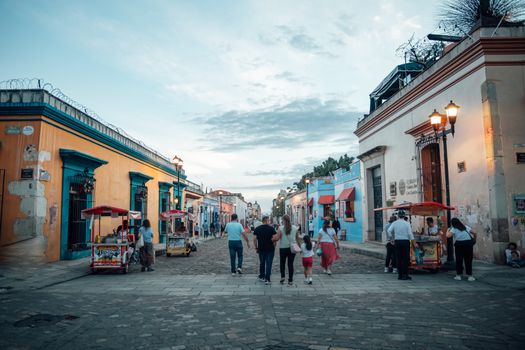
Then came Oaxaca.
It was my third time visiting Mexico, a country I adore for its vibrant culture, incredible food, and warm-hearted people. But on my previous trips, despite my love for the country, I’d always felt a slight disconnect. Conversations were polite but superficial, directions often involved a lot of gesturing, and the richness of local life felt just out of reach, like watching a beautiful film without subtitles. I missed the nuances, the jokes, the real stories.
This time, something felt different. I was craving more than just seeing the sights; I wanted to feel the place, to truly connect. So, on a whim, fueled by a mixture of curiosity and a stubborn desire to break my old habits, I decided to try something radical: I would dedicate my first week in Oaxaca to learning Spanish. Not fluency, mind you – that’s a marathon, not a sprint. But enough to genuinely engage. Enough to go beyond "Hola" and "Gracias."
And let me tell you, it was the single most transformative decision I've ever made on my travels. I wish I’d known it sooner. Like, years sooner.
### The "Why": Beyond Tourist Phrases – Unlocking Authentic Travel
Before we dive into the "how," let's talk about the "why." You might be thinking, "But I get by just fine with English!" And yes, you probably do. But "getting by" is not the same as "thriving."
My epiphany came during a previous trip to Vietnam. I was at a bustling market, trying to buy some fresh fruit. The vendor, an elderly woman with kind eyes, was trying to tell me something, gesturing emphatically. I smiled, nodded, and pointed to the mangoes. She laughed, a gentle, knowing laugh, and handed me the fruit. It was a perfectly pleasant interaction, but as I walked away, I felt a pang of regret. What was she trying to say? Was it a local tip? A joke? A story about her day? I’d never know. That moment, multiplied across countless interactions, left me feeling like an observer, not a participant.
Learning even a handful of functional phrases changes everything. It’s not just about ordering food or asking for directions; it’s about:
* Deeper Connections: A simple "Hola, ¿cómo estás?" (Hello, how are you?) can open up a genuine smile, a brief chat, and a feeling of mutual respect. It signals that you value their culture enough to try.
* Authentic Experiences: Suddenly, you’re not just a tourist. You can ask a street vendor about their craft, understand the local gossip at a cafe, or get recommendations for hidden gems that aren't in any guidebook.
* Problem-Solving Power: Lost? Need help? A few key phrases can turn a stressful situation into a manageable one, often with the help of a friendly local.
* Increased Confidence: Navigating a new place with even basic language skills is incredibly empowering. It makes you feel more capable, more independent.
* Unlocking Culture: Language is the gateway to culture. Understanding the rhythm of conversations, the nuances of humor, and the local expressions gives you a far richer appreciation for the place you’re visiting.
That’s why I committed to my one-week challenge in Oaxaca. I wanted to stop just "seeing" and start truly "experiencing."
### My One-Week Language Immersion Blueprint: From Zero to Functional
My goal wasn't fluency. It was functional communication. I wanted to be able to:
1. Order food confidently.
2. Ask for and understand directions.
3. Have basic conversations (introductions, preferences).
4. Bargain politely in markets.
5. Express gratitude and apologies.
Here’s the blueprint I followed, which you can adapt for any language and any destination:
#### Pre-Trip Prep (Minimal, but Mighty)
I dedicated about 2-3 hours in the week before my flight to Oaxaca.
* Duolingo/Babbel: I refreshed my absolute beginner Spanish, focusing on core vocabulary like numbers, common greetings, and basic verbs (to be, to have, to want). I spent about 30 minutes a day.
* Survival Phrase List: I made a list of 20-30 essential phrases (e.g., "Hello," "Thank you," "How much does this cost?", "Where is the bathroom?", "I want this," "I don't understand," "Can you speak slower?"). I wrote them down phonetically in a small notebook.
* Research Local Schools: I looked up language schools in Oaxaca City and booked a one-week intensive course. This was the single most important step. I chose a school with small group classes and a focus on conversational Spanish. (I went with "Oaxaca Spanish Immersion," which cost around $180 for 20 hours of group lessons).
#### On-the-Ground Strategies: My Daily Immersion Routine
My week in Oaxaca was a beautiful blur of learning and living.
Morning (8:00 AM - 1:00 PM): Formal Learning
* Language School: Every morning, I was in a small class (3-4 students) with a fantastic local teacher named Elena. We focused heavily on practical conversations, role-playing market scenarios, ordering food, and asking for directions. The emphasis was on speaking, not just grammar. We learned phrases like "Me gustaría probar..." (I would like to try...) or "Estoy buscando..." (I am looking for...).
Afternoon (2:00 PM - 6:00 PM): Active Immersion
* No English Zone: I committed to trying to speak only Spanish, even if it was broken. This meant:
Lunch: Eating at local comedores (small, informal eateries) where English was rare. I’d point, use my new vocabulary, and often have the owner patiently help me. A delicious tlayuda* (Oaxacan pizza) suddenly became a language lesson!
* Market Visits: The Mercado Benito Juárez became my classroom. I’d practice "Cuánto cuesta?" (How much does it cost?), "Es muy bonito" (It's very beautiful), and "Gracias, muy amable" (Thank you, very kind). I learned that a simple "Un kilo de mangos, por favor" (A kilo of mangoes, please) could lead to a friendly chat about the best season for mangoes.
Coffee Shops: Ordering a café con leche* and striking up a tiny conversation with the barista. "El café es delicioso" (The coffee is delicious) was an easy win.
* Walking: Asking for directions, even if I knew where I was going. "Disculpe, ¿dónde está el Zócalo?" (Excuse me, where is the main square?) was a great way to practice listening to responses.
Evening (7:00 PM onwards): Reinforcement & Review
* Review: I’d spend 30 minutes reviewing what I learned in class and during my afternoon adventures. What words did I struggle with? What phrases did I hear repeatedly?
* Local Interactions: I stayed at a small guesthouse where the owner and other guests were mostly Spanish speakers. Evening chats on the patio were invaluable. I'd stumble through sentences, make mistakes, and laugh with them.
* Netflix/YouTube: I watched some Mexican shows with Spanish subtitles to get used to the sounds and rhythms.
### My Oaxaca Experiment: A Day-by-Day Diary (Highlights)
Day 1: The Stumble and the Smile
Arrived in Oaxaca, excited but nervous. My first real Spanish interaction was at the airport taxi stand. "Hola, al centro, por favor." (Hello, to the center, please.) The driver responded, and I understood maybe 50%. My teacher Elena was incredibly encouraging. By the end of the day, I could confidently order "Una horchata, por favor" (A rice drink, please) at a street stall near the Templo de Santo Domingo. Small win, big confidence boost!
Day 3: Market Master (Sort Of)
Today was all about the markets. Elena taught us phrases for bargaining and asking about products. I bravely ventured into Mercado 20 de Noviembre, a foodie paradise. I pointed to some chapulines (fried grasshoppers – yes, I tried them!) and asked, "¿Cuánto cuesta un poco?" (How much for a little?). The vendor, an older woman, smiled and patiently told me the price. I even managed to ask, "¿Son picantes?" (Are they spicy?) and understood her "Un poquito" (A little bit). It felt like a superpower! I bought some mole paste, asking about the different types.
Day 5: Deeper Dives and New Friends
The conversations started flowing a little more naturally. During class, we discussed our favorite Oaxacan foods. I could articulate that "Me encanta el mole negro y las tlayudas" (I love black mole and tlayudas). In the afternoon, I joined a mezcal tasting tour. While the guide often switched to English for the group, I made an effort to ask questions in Spanish to the distillery workers. "Cómo se hace el mezcal?" (How is mezcal made?) led to a fascinating (albeit simplified) explanation. I even managed to chat with a fellow traveler from Argentina, exchanging basic travel stories. It was exhilarating!
Day 7: The Lingua Franca Confidence
On my last day of formal lessons, I felt a genuine shift. I was able to order a complex meal at a restaurant without hesitation, asking for recommendations and understanding the descriptions. "Me gustaría el chile relleno, ¿qué tal es?" (I would like the chile relleno, how is it?). I could understand local chatter around me, piece together snippets of conversations, and even catch a few jokes. My confidence soared. I wasn't fluent, not by a long shot, but I was no longer just a spectator. I was a participant. The sense of accomplishment was immense. I even managed to thank Elena, my teacher, in heartfelt Spanish, expressing my gratitude for her patience and guidance. "Muchas gracias, Elena, ¡tu ayuda fue invaluable!" (Thank you very much, Elena, your help was invaluable!).
### Tools & Tactics That Actually Work (Practical Tips for Your One-Week Challenge)
This isn't just about Spanish in Oaxaca; these strategies are universal.
1. Embrace a Local Language School: This is your secret weapon. Even a few hours a day in a small group class provides structured learning, immediate practice, and a safe space to make mistakes. Look for schools that emphasize conversation. Expect to pay anywhere from $100-$300 USD for a week of intensive group classes, depending on the country and school.
2. Download Offline Dictionaries/Translators: Google Translate’s offline functionality is a lifesaver. You can even use its camera feature to translate menus or signs. But don't rely on it as a crutch; use it to learn, not just to avoid speaking.
3. Flashcards (Digital or Physical): Before you go, create flashcards for your survival phrases and essential vocabulary. Anki is a great app for spaced repetition. Review them daily.
4. "No English" Rule (Mostly): Push yourself! Try to engage with locals in their language as much as possible. Even if they switch to English, try to respond in their language. They'll appreciate the effort.
5. Focus on High-Frequency Words & Phrases: You don't need to know every verb conjugation. Focus on the 500 most common words and phrases that will allow you to navigate daily life. Think: greetings, numbers, directions, food items, common verbs (go, want, eat, drink, ask, understand).
6. Immersion Activities:
* Cooking Classes: Learn food vocabulary and interact with the chef.
* Market Visits: The ultimate classroom for practical vocabulary and bargaining skills.
* Local Cafes/Restaurants: Order directly, ask questions about the menu.
* Homestay: If possible, staying with a local family is immersion on steroids.
* Local Tours (in the target language): If you're slightly more confident, this is excellent listening practice.
7. Be Brave, Make Mistakes, Laugh: You will sound silly. You will make mistakes. Embrace it! Locals are almost always delighted that you're trying. A laugh can bridge more gaps than perfect grammar.
8. Listen Actively: Pay attention to how people speak. What words do they use? What are the common expressions? Mimic their intonation.
9. Set Realistic Goals: You won't be fluent in a week. Your goal is functional communication, a foundation upon which you can build. Celebrate small victories!
### The Unforgettable Rewards: Why It's Worth Every Effort
The week transformed my Oaxaca experience from a pleasant trip into an unforgettable journey.
I wasn't just eating mole; I was asking the vendor in Mercado Benito Juárez about the family recipe, learning that her grandmother had passed it down for generations. I wasn't just visiting Monte Albán; I was chatting with the local guide (in broken Spanish, but still) about the Zapotec history and seeing his passion firsthand.
One evening, while enjoying a mezcal at a small local bar, I overheard a group of locals discussing a traditional festival happening the next day in a small village outside the city. Thanks to my rudimentary Spanish, I understood enough to ask for details. They were thrilled I was interested and gave me directions, even sharing a taxi with me to the village the next morning. I ended up witnessing a vibrant, authentic celebration that no tour bus would ever take me to – all because I could engage in a simple conversation. That experience alone was worth every hour of study.
Beyond the practicalities, there's a profound sense of connection. When you speak a few words of their language, you’re not just another tourist taking photos; you’re a human being trying to bridge a gap, to understand, to connect. And the response you get is almost always one of warmth, patience, and genuine appreciation. It makes the world feel smaller, friendlier, and infinitely more accessible.
### Don't Wait – Speak Up!
My one week in Oaxaca didn't make me fluent, but it gave me a superpower: the ability to engage, to connect, and to truly experience a culture on a deeper level. It unlocked a layer of travel I never knew I was missing. And I wish, oh how I wish, I'd known this sooner.
So, on your next adventure, don't just pack your bags and your phrasebook. Pack your courage, too. Dedicate even a few days to a local language school or commit to speaking only the local language for a week. You don't need to be perfect; you just need to start.
Your next trip could be your most transformative. Go on, speak up, and let the world truly open up to you.
What language will you learn for your next trip? Share your language learning goals in the comments below!
---
Visual journey


Tags
Share this adventure
Join the travel community
New adventures, cultural insights and travel inspiration, straight to your inbox.
We may receive a commission if you click on a link and buy a product, service or policy, at no extra cost to you. How affiliate links work.
Other angles on this trip
These notes are written by AI to show how different kinds of traveller might see this destination. They are not comments from real readers.