

Lost in the modern world's hustle, I found an unexpected anchor in the ancient art of Japanese calligraphy in Kyoto. Join me as I share my transformative journey, guided by a revered master, and discover how the quiet discipline of the brush has reshaped my perspective on travel and life itself.
The gentle hum of Kyoto’s ancient streets, the rustle of bamboo in Arashiyama, the vibrant splash of vermillion gates at Fushimi Inari – these are the images most travelers conjure when they think of Japan. I, too, was swept up in these iconic sights on my first visit. But it wasn't until I stumbled upon a small, unassuming wooden sign tucked away on a side street in Gion that my journey truly began – a journey not just through Japan, but inward, guided by the disciplined strokes of a calligraphy brush.
I was at a crossroads in my life, feeling the relentless pull of deadlines and the digital world, craving something tangible, something real. I wanted to connect with Japan on a deeper level, beyond the tourist facade. That’s when I saw it: "書道体験" (Shodō Taiken – Calligraphy Experience). A flicker of curiosity, a whisper of intuition, and I found myself stepping into a world I never knew I needed. What started as a one-off cultural activity has since become a recurring pilgrimage, a soulful anchor that keeps drawing me back to the land of the rising sun and the quiet wisdom of my calligraphy master.
This isn’t just a story about learning to write beautiful characters; it’s about finding a rhythm, a mindfulness, and a profound connection to a culture that values patience and precision. If you’re yearning for a travel experience that goes beyond sightseeing, one that leaves an indelible mark on your soul, then join me as I unveil the magic of Shodo and how you, too, can embark on this incredible journey.
### The Serendipitous Encounter: A Glimpse into a Hidden World
My initial encounter with Shodo was entirely by chance. I was wandering through Gion, Kyoto's geisha district, enamored by the traditional machiya houses and the fleeting glimpses of geiko and maiko. I'd already ticked off most of the major attractions, and an afternoon rain shower had me ducking into the narrow, lantern-lit alleys. That's when I spotted it – a small, hand-painted sign, almost hidden by an overflowing potted fern, inviting passersby to a calligraphy workshop. It felt like a secret, an invitation just for me.
The studio, "Sakura no Fude" (Cherry Blossom Brush), was nestled within a beautifully preserved machiya. I pushed open a sliding wooden door, and the scent of sumi ink and old paper immediately enveloped me. It was a sensory hug, a stark contrast to the damp, bustling street outside. Inside, a woman with kind eyes and a gentle smile, Ms. Tanaka, greeted me. She explained that her father, Sensei Hiroshi, an octogenarian master, taught small, intimate classes. I signed up on the spot for a beginner session the following day. Little did I know, this simple act would redefine my understanding of travel and mindfulness.
### Meeting Sensei Hiroshi: The Living Brush of Wisdom
Sensei Hiroshi was everything I imagined a Japanese master to be, and so much more. Dressed in a traditional kimono, his posture was impeccable, his movements deliberate and graceful despite his age. His face was a roadmap of wrinkles, each line telling a story, but his eyes – those were the most striking. They held a deep, serene wisdom, sparkling with a quiet intensity. He spoke little English, but Ms. Tanaka, his daughter, translated with warmth and precision, bridging the linguistic gap.
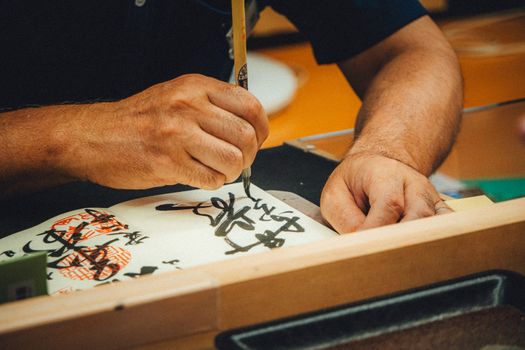
His studio was spartan yet beautiful: tatami mats, a low wooden table, shelves filled with ancient scrolls and brushes of every size, and the omnipresent scent of ink. The only sounds were the distant chirping of cicadas and the occasional gentle clatter of a tea cup. Before we even touched a brush, Sensei Hiroshi insisted on a moment of quiet reflection, a small bow to the tools – the fude (brush), suzuri (inkstone), sumi (ink stick), and hanshi (paper). He explained that these weren't just instruments; they were extensions of our spirit, worthy of respect. This wasn't just a lesson; it was a ritual.
### The First Stroke: More Than Just Writing, It’s a Way of Being
My first lesson was humbling, exhilarating, and deeply frustrating all at once. Sensei Hiroshi demonstrated the basic strokes, his hand moving with an effortless grace that belied the immense control required. He taught me the proper posture – back straight, shoulders relaxed, feet grounded. "The brush," he explained through Ms. Tanaka, "is an extension of your body, your breath, your heart. Before you write, you must become still."
I dipped my brush into the freshly ground sumi ink, the rich aroma filling my nostrils. My hand trembled as I attempted to replicate Sensei’s simple horizontal line. It was a disaster. My lines were wobbly, uneven, too thick, too thin. Sensei would gently correct my grip, adjusting my wrist, guiding my arm. He emphasized the importance of ma – the empty space, the pause between strokes, which is as significant as the strokes themselves. He spoke of iki, the vitality, the breath within each character.
He didn't criticize; he guided. He taught me to breathe with the brush, to allow the ink to flow, to trust the movement. There was a moment, after countless failed attempts, when a single stroke felt… right. It wasn't perfect, but it had a certain fluidity, an honesty. Sensei Hiroshi’s eyes twinkled, and he gave a rare, gentle nod of approval. In that instant, I understood. This wasn't about perfection; it was about presence. It was about the journey, not just the destination. I left that day not with a perfectly written character, but with a profound sense of peace and a burning desire to return.
### Beyond the Classroom: Integrating Shodo into Life and Travel
Since that first lesson, I've returned to Sakura no Fude every time I visit Kyoto, which is now at least once a year. Each visit is a deepening of my practice and my connection with Sensei Hiroshi and Ms. Tanaka. They've become like family. I’ve progressed from basic strokes to more complex kanji, and even tried my hand at some haiku. But the lessons extend far beyond the paper.
Shodo has taught me patience, discipline, and the beauty of imperfection. It's a meditative practice that forces you to slow down, to focus entirely on the present moment. This mindfulness has permeated my travels. Instead of rushing from one landmark to another, I now take time to sit, observe, and truly absorb my surroundings. I notice the subtle details: the way light filters through a temple garden, the intricate patterns on a kimono, the quiet dedication of a street vendor.
It's also opened doors to other cultural experiences. Through Sensei and Ms. Tanaka, I’ve been invited to local tea ceremonies, visited hidden temples not listed in guidebooks, and even attended a small, private koto concert. These aren't just events; they are glimpses into the authentic heart of Japan, experiences rooted in tradition and community. My Shodo journey has become a passport to a deeper, richer understanding of the country and its people.
### Practicalities: Your Path to the Brush in Japan
So, how can you find your own Shodo experience in Japan? It’s more accessible than you might think!
1. Finding a Workshop:
* Cultural Centers & Tourist Information: Many cities, especially Kyoto and Tokyo, have cultural centers or tourist information offices that offer lists of Shodo workshops for foreigners. Some hotels also arrange these.
* Online Platforms: Websites like Airbnb Experiences, Voyagin, Klook, and GetYourGuide often list calligraphy workshops. Look for highly-rated experiences with good reviews. These are usually designed for beginners and are English-friendly.
* Local Exploration: Like me, you might stumble upon a small studio in a traditional district (Gion in Kyoto, Yanaka in Tokyo). Look for signs saying "書道" (Shodo) or "書道体験" (Shodo Taiken). This often requires a bit of adventurous spirit and sometimes a basic grasp of Japanese or a translation app.
* Temple Workshops: Some temples, particularly in Kyoto, offer Shodo or Zazen (meditation) experiences that include a calligraphy component, often with a monk as the instructor. This offers a unique spiritual dimension.
2. What to Expect:
* Duration: Most beginner workshops range from 1 to 2 hours. More intensive, multi-session courses are also available.
* Language: Many workshops catering to tourists will have English-speaking instructors or translators. If you opt for a very local studio, be prepared for a language barrier, but the visual nature of the art often transcends words.
* Materials: All materials (brush, ink, inkstone, paper) are typically provided. You just need to show up!
* Cost: A single beginner session usually costs between ¥3,000 to ¥8,000 (approximately $20-$55 USD), depending on the location, instructor's reputation, and duration. Private lessons or longer courses will be more expensive.
* What to Wear: Comfortable clothing is best, as you'll be sitting for a while. Avoid white sleeves, just in case of an ink splash!
3. Etiquette:
* Respect the Tools: As Sensei Hiroshi taught, the tools are sacred. Handle them with care.
* Bow: A small bow when entering and leaving the studio, and to your instructor, shows respect.
* Remove Shoes: Always remove your shoes when entering a traditional Japanese home or studio.
* Silence: Shodo is a meditative practice. Maintain a quiet, respectful atmosphere during the lesson.
* Ask Questions: Don't be afraid to ask for clarification, but do so politely.
### Cultural Insights: The Soul of Shodo
Shodo, literally "the way of writing," is far more than just penmanship. It’s an art form deeply rooted in Zen Buddhism and Japanese aesthetics.
Mindfulness and Zen: The practice of Shodo is inherently meditative. The focus required to grind the ink, steady the brush, and execute a stroke demands complete presence. It's a moment of ichigo ichie* – "one time, one meeting," emphasizing the unique, unrepeatable nature of each stroke and each moment. This resonates deeply with Zen principles of living in the now.
* Wabi-Sabi: This Japanese aesthetic concept celebrates imperfection, transience, and simplicity. A perfect Shodo character isn't necessarily the goal; rather, it's the character that embodies the artist's spirit, even with its "flaws," that is most valued. Each stroke is a unique expression, never to be perfectly replicated.
* Spirit and Emotion: The brushstrokes are believed to reflect the artist's inner state. A character written with a clear mind and calm heart will possess a different energy than one written in haste or anger. It’s a powerful form of self-expression and introspection.
* History: Calligraphy arrived in Japan from China, evolving over centuries to develop distinct Japanese styles and characters (Hiragana and Katakana) alongside Kanji. It was, and still is, a highly revered art form, taught in schools and practiced by many.
### Getting There & Getting Around: Your Japan Travel Blueprint
Japan boasts one of the world's most efficient public transport systems.
* International Travel: Fly into Narita (NRT) or Haneda (HND) in Tokyo, or Kansai International (KIX) for direct access to Kyoto.
* Getting to Kyoto: The Shinkansen (bullet train) is the fastest and most convenient way to travel between major cities. From Tokyo, it's about a 2.5-hour journey to Kyoto. Consider purchasing a Japan Rail Pass if you plan extensive train travel.
* Getting Around Kyoto: Kyoto has an excellent network of buses and subway lines. A daily bus pass (around ¥600) is a cost-effective way to explore. Taxis are also readily available but more expensive. Walking and cycling are delightful ways to see the city's charming backstreets.
* Best Time to Visit: Spring (March-April) for cherry blossoms or Autumn (October-November) for vibrant fall foliage offer breathtaking backdrops to your cultural experiences. Summers can be hot and humid, while winters are cold but often less crowded.
### Safety and Budget Tips
Japan is famously one of the safest countries in the world. You can generally feel very secure exploring, even alone.
* Cash is King (Still): While cards are more widely accepted now, many smaller establishments, especially traditional ones or local eateries, still prefer or only accept cash. Always carry some yen.
* Communication: Download a translation app like Google Translate. Learning a few basic Japanese phrases (hello, thank you, excuse me) goes a long way.
* Budgeting for Shodo: If your budget is tight, look for group lessons over private ones. Some community centers might offer very affordable classes, though these might be less geared towards tourists. Combine your calligraphy experience with other free or low-cost activities like temple visits, park strolls, and enjoying local street food. Pack snacks and water to save on convenience store stops.
* Accommodation: Stay in guesthouses (ryokan or minshuku) or hostels for a more authentic and budget-friendly experience. Websites like Booking.com, Agoda, and Airbnb offer a wide range of options.
### Why I Keep Going Back: The Enduring Appeal
Every time I return to Sakura no Fude, it feels like coming home. Sensei Hiroshi, with his quiet wisdom, has become more than an instructor; he’s a mentor, a guide. The transformation I’ve experienced isn’t just in my ability to wield a brush, but in my approach to life itself. The patience, the mindfulness, the appreciation for the "ma" – the space between things – these are gifts that Shodo has given me, enhancing every aspect of my travel and daily existence.
It’s a connection that transcends language and culture, a silent dialogue between brush and paper, student and master. It’s a reminder that true travel isn't always about seeing new places, but often about seeing familiar things with new eyes, and discovering new facets of yourself along the way.
If you're seeking an experience that will challenge you, humble you, and ultimately enrich you in ways you never imagined, then I implore you: find your own Shodo master. Let the ancient art of the brush guide you to a deeper understanding of Japan, and perhaps, of yourself. It’s a journey I promise you’ll keep going back to.
Ready to find your inner artist and discover the magic of mindful travel? Share your experiences or ask me anything about planning your own Japanese calligraphy adventure in the comments below!
---
Visual journey



Tags
Share this adventure
Join the travel community
New adventures, cultural insights and travel inspiration, straight to your inbox.
We may receive a commission if you click on a link and buy a product, service or policy, at no extra cost to you. How affiliate links work.
Been there?