

Lost in the digital noise, I stumbled upon a hidden gem: Kalamkari, a 500-year-old Indian textile art whispered about by few. Join me as I recount my transformative journey learning this intricate craft from a living legend, a profound experience that connected me to centuries of tradition and beauty. ---
## I Learned a 500-Year-Old Craft From a Master Artisan That Nobody Talks About
I’ve traveled to over 40 countries, chased sunsets across continents, and navigated bustling markets from Marrakech to Medellín. Yet, there was a growing hollowness, a sense that I was merely skimming the surface. I craved authenticity, a deeper connection to the places I visited, something beyond the 'top 10' lists and Instagram hotspots. The endless pursuit of the next "must-see" had left me feeling… empty. I wanted to feel a place, not just see it.
Little did I know, this yearning would lead me down a dusty path in rural India, to a small village in Andhra Pradesh, where I would stumble upon a craft so ancient, so intricate, yet so profoundly overlooked, that it felt like discovering a forgotten language. This isn't about a trending destination or a Michelin-star meal; this is about Kalamkari, a 500-year-old art form, and the master artisan who brought its secrets to life for me. It’s an experience that not only changed how I travel but etched a piece of history into my very soul.
### The Whispers of Srikalahasti: My Serendipitous Discovery
My journey into the heart of Kalamkari began, as many profound travel experiences do, with an accidental conversation. I was in Bengaluru, feeling a familiar wanderlust but an unfamiliar desire for purpose. A local artist, whom I’d met through a friend, mentioned "Kalamkari" almost in passing. "It's a dying art," he sighed, "from a place called Srikalahasti, near Tirupati. Very few still practice it traditionally."
Dying art. The words resonated. No tourist brochures sang its praises, no glossy travel magazines featured its workshops. This was it. This was the authenticity I craved.
The next morning, I found myself on an overnight bus, rumbling towards Srikalahasti, a town primarily known for its ancient Sri Kalahasteeswara Temple. As we left the urban sprawl behind, the landscape transformed into lush green fields, dotted with palm trees and small, brightly painted homes. The air grew warmer, thicker, carrying the scent of dust and something subtly floral. The pace of life visibly slowed.
Srikalahasti itself is a vibrant, spiritual hub, but away from the main temple complex, its rhythm is distinctly rural. I navigated the narrow lanes, guided by a scribbled address and the occasional hint from a friendly local. The houses here were simpler, many adorned with colorful, hand-drawn motifs – a subtle nod to the town's artistic heritage. Then, I saw it: a small, unassuming building, its facade decorated with faded, intricate Kalamkari designs. A faint, earthy smell wafted from within. This was it. This was where the magic happened.
### Guru Venkatesh: A Living Canvas of Heritage
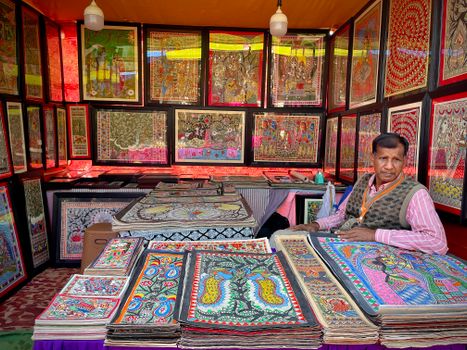
Stepping into the workshop was like stepping back in time. Sunlight streamed through a single window, illuminating motes of dust dancing in the air and highlighting bolts of raw cotton fabric stacked neatly in a corner. The walls were adorned with finished Kalamkari pieces – vibrant depictions of Hindu deities, epic scenes from the Ramayana, and intricate floral patterns, all rendered with a breathtaking precision I had never witnessed before.
Seated cross-legged on the floor, surrounded by small bowls of earthy-colored liquids, was an elderly man. His silver hair was pulled back in a simple knot, and his eyes, though framed by wrinkles, sparkled with a quiet intensity. This was Guru Venkatesh, the master artisan I had come to find. His hands, gnarled and stained with years of dye, moved with an almost hypnotic grace as he meticulously outlined a figure on a piece of fabric with a bamboo pen.
"Namaste," I offered, feeling a profound sense of awe.
He looked up, a gentle smile creasing his face. "Namaste. You have come for Kalamkari?" His English was limited, but his welcome was boundless.
Through a young apprentice who spoke a little English, I explained my desire to learn, not just observe. Guru Venkatesh listened patiently, his gaze unwavering. He spoke in Telugu, his voice soft yet firm, explaining his family's lineage, stretching back generations, preserving this sacred art form. He was initially hesitant; teaching an outsider, especially a foreigner, was not a common request. But perhaps sensing my genuine curiosity and respect, he eventually nodded. "You stay. You learn."
For three days, Guru Venkatesh became my guru, my teacher, and my window into a world of tradition, patience, and profound beauty. He didn't just teach the craft; he embodied its spirit, a living testament to a heritage that very few still champion.
### The Alchemy of Earth and Skill: Unraveling Kalamkari's Secrets
Kalamkari, literally meaning "pen craft" (kalam = pen, kari = craftsmanship), is not merely a painting technique; it's an elaborate, multi-stage process involving natural dyes, intricate hand-drawing, and a deep understanding of natural chemistry. It's a dance of precision and patience, a slow art in a fast world.
1. Fabric Preparation: The Canvas Awakens
The journey begins not with a brush, but with raw cotton fabric. First, it’s bleached to remove impurities, then meticulously soaked in a solution of buffalo milk and myrobalan fruit (haritaki). The tannins in the myrobalan act as a natural mordant, preparing the cloth to absorb and retain the vibrant natural dyes. After a thorough soaking, the fabric is dried under the scorching sun, becoming a crisp, off-white canvas ready for its transformation. The faint, sweet smell of the milk and fruit still lingers in my memory.
2. The Kalam: An Extension of the Soul
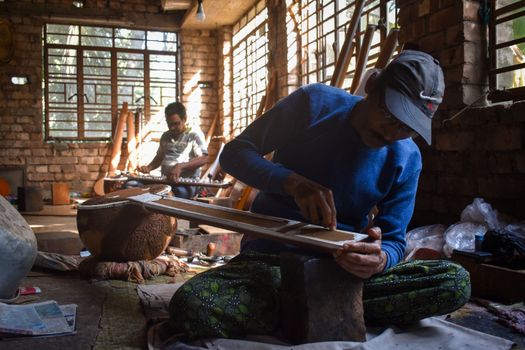
The primary tool is not a brush, but a "kalam" – a sharp-pointed bamboo pen with a tightly wound wad of cotton at one end, which acts as a reservoir for the dye. Guru Venkatesh showed me how to make one, carefully whittling the bamboo and wrapping the cotton with thread. "It's not just a tool," he explained through gestures, "it's an extension of the artisan's soul. It has to feel right."
3. The Palette of Nature: Crafting the Dyes
This was perhaps the most fascinating part. Kalamkari uses only natural, organic dyes, each one painstakingly prepared from plants and minerals.
* Black: The outline color, a rich, deep black, is made by fermenting jaggery (palm sugar) with rust or iron filings. The mixture is then left to mature for weeks, sometimes months, resulting in a thick, inky liquid.
* Red: The vibrant reds come from the roots of the madder plant, boiled and reduced to a potent extract.
* Indigo: The deep blues are derived from the leaves of the indigo plant, fermented and processed into a rich pigment.
* Yellow: Pomegranate peels, turmeric, or even certain flowers provide the sunny yellows.
* Green: A mix of indigo and yellow.
Each color tells a story, a connection to the earth itself. The workshop smelled faintly of fermentation, spices, and wet earth – a truly organic aroma.
4. The Process: A Symphony of Steps
* Outline: The artisan first draws the intricate outlines of the design using the kalam dipped in the black jaggery-iron solution. This requires immense precision and a steady hand, as there's no erasing. My heart pounded watching Guru Venkatesh draw a perfect curve freehand.
* Color Filling: Once the black outline dries, the colors are filled in, one by one. Each application of color is followed by a thorough wash in flowing water (historically, river water), and then sun-dried. This multi-stage washing and drying process is crucial for the dyes to set and achieve their characteristic muted, earthy tones.
* Layering and Detailing: Some designs involve multiple layers of color, requiring repeated applications, washes, and drying. The details are added with the finest tip of the kalam, bringing the figures to life.
The themes are predominantly spiritual – narratives from the Hindu epics, depictions of gods and goddesses, or intricate floral and animal motifs, each imbued with symbolic meaning. It's not just art; it's visual storytelling, passed down through generations.
### My Hands, My Heart: Attempting the Impossible
When it was my turn, Guru Venkatesh handed me a kalam and a small piece of prepared fabric. My initial excitement quickly turned into a mix of apprehension and amusement. My first attempt at drawing a simple leaf resulted in a wobbly, uneven blotch that looked more like a squashed insect than foliage. My hand, so accustomed to tapping on keyboards, felt clumsy and rebellious.
Guru Venkatesh, with infinite patience, gently guided my hand, showing me how to hold the kalam, how much pressure to apply, and how to control the flow of the dye. "Slowly, slowly," he murmured, his eyes twinkling. He demonstrated the delicate dance of the pen on the fabric, the rhythmic scratching sound it made, which was almost meditative.
My fingers soon became stained with indigo and madder, a badge of honor I wore proudly. I spent hours attempting to draw a simple lotus, then a peacock, feeling a profound respect for the generations of artisans who had perfected this craft. The earthy smell of the dyes, the rough texture of the cotton against my fingertips, the silent concentration in the room – it all combined into an immersive experience unlike any other.
There were moments of frustration, certainly. My lines were never as smooth, my colors never as even. But there were also small victories: a perfectly curved petal, a consistent line on a peacock's feather. Each small success brought a surge of satisfaction, a sense of connection to something ancient and beautiful. What looked simple was, in fact, a lifetime of practice, patience, and devotion.
By the end of my three days, I had managed to create a small Kalamkari scarf, adorned with a simple, albeit slightly imperfect, lotus motif. It wasn't a masterpiece, but it was mine. It carried the scent of natural dyes, the imprint of Guru Venkatesh's guidance, and the story of my own fumbling efforts. While there's no fixed 'course fee' like a modern art class, I offered a respectful donation of 7,000 INR (approx. $85 USD) for my three-day immersive learning experience, which was gratefully accepted and clearly went towards supporting the workshop and the family. It felt like a small price to pay for such an invaluable cultural exchange.
### Beyond the Canvas: Embracing Srikalahasti and Ethical Travel
My time in Srikalahasti wasn't just about learning Kalamkari; it was about immersing myself in a community that cherishes its heritage. Beyond Guru Venkatesh's workshop, I explored the town, visiting the ancient Sri Kalahasteeswara Temple, a stunning example of Dravidian architecture and a significant pilgrimage site. The local markets, bustling with vendors selling flowers, spices, and colorful textiles, offered a glimpse into daily life, far removed from the tourist-heavy zones of larger cities.
This experience solidified my belief in the power of slow, intentional travel. If you're inspired to seek out similar hidden gems and connect with local artisans, here are a few tips:
* Do Your Research (Beyond the Obvious): Look for UNESCO heritage crafts, GI-tagged products (Geographical Indication), or traditional arts specific to a region. These are often less commercialized.
* Seek Local Connections: Engage with local guides, guesthouse owners, or even taxi drivers. They often know about small, family-run workshops that aren't on any map. My initial conversation in Bengaluru was key.
* Stay Longer, Go Deeper: Don't just pop in for an hour. Dedicate a few days, or even a week, to truly learn and understand the craft. This allows for genuine connection.
* Be Respectful and Patient: Understand cultural norms, ask permission before taking photos, and be prepared for a slower pace of learning. Language barriers can be overcome with patience and gestures.
* Support Ethically: When you find an artisan, buy directly from them. Pay a fair price – remember, your purchase isn't just a souvenir; it's an investment in preserving a legacy and supporting a livelihood. Avoid bargaining aggressively, especially for handmade items.
* Share Responsibly: When you share your experience online, credit the artisans, mention their names, and encourage others to seek them out. This helps bring much-needed attention to these often-overlooked masters.
The preservation of crafts like Kalamkari is crucial. In an age of mass production, these intricate, handmade pieces are more than just objects; they are carriers of history, culture, and human skill. By seeking them out and supporting the artisans, we become part of their story, ensuring these ancient traditions don't fade into oblivion.
### A Thread of Time, Woven Into My Soul
Leaving Srikalahasti, I carried not just a hand-painted scarf, but a profound sense of gratitude and connection. Learning Kalamkari from Guru Venkatesh was more than just acquiring a new skill; it was a lesson in patience, dedication, and the enduring beauty of human craftsmanship. It was a reminder that true travel isn't about ticking off destinations, but about allowing yourself to be transformed by the people and cultures you encounter.
My imperfect Kalamkari scarf now hangs proudly in my home, a constant reminder of the earthy smells, the rhythmic scratching of the kalam, and the quiet wisdom of Guru Venkatesh. It’s a piece of history, etched not just on fabric, but in my soul.
So, I urge you, fellow traveler, to venture beyond the well-trodden paths. Seek out the untold stories, the forgotten crafts, the masters who keep history alive with their hands. Don't just visit places; experience them. What ancient craft will you discover next? Share your thoughts in the comments below, and let's inspire each other to travel deeper, connecting with the heart and soul of our world.
Tag #TripsoraAdventures and #HiddenCrafts if you discover your own forgotten art!
---
Visual journey


Tags
Share this adventure
Join the travel community
New adventures, cultural insights and travel inspiration, straight to your inbox.
We may receive a commission if you click on a link and buy a product, service or policy, at no extra cost to you. How affiliate links work.
Other angles on this trip
These notes are written by AI to show how different kinds of traveller might see this destination. They are not comments from real readers.