

Every traveler's worst fear: getting pickpocketed. It happened to me in the heart of Naples, and for a moment, my dream trip turned into a nightmare. But what if I told you I not only recovered *everything* but uncovered local secrets that made it possible? Read on to discover how I turned a crisis into an incredible triumph! ---
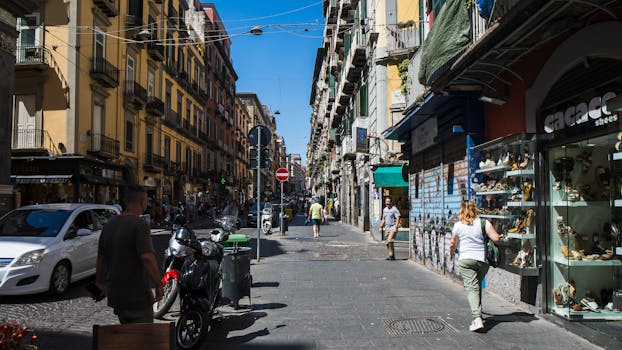
The aroma of frying dough, strong espresso, and sun-warmed lemons hung heavy in the air. Mopeds buzzed past like angry bees, their riders weaving impossibly through the narrow, laundry-strung alleys of Spaccanapoli. It was pure, unadulterated Naples – chaotic, vibrant, and utterly intoxicating. I was deep in the Pignasecca Market, a sensory overload of fresh produce, shouting vendors, and locals haggling with practiced ease. My camera was out, my senses were alive, and my guard, apparently, was down.
One moment, I was marveling at a stall piled high with glistening tomatoes, debating whether to try the tripe sandwich. The next, a slight brush against my side, a fleeting distraction, and then… a sudden, stomach-dropping lightness in my cross-body bag. My heart hammered a frantic rhythm against my ribs. I froze, a cold dread washing over me despite the Mediterranean heat. My wallet. My passport. My phone. All gone. Just like that.
Every traveler's nightmare had become my reality. In a city famed for its beauty, its history, and, yes, its petty crime, I had become a statistic. Panic, hot and nauseating, threatened to consume me. My dream Italian adventure, meticulously planned and saved for, felt like it was crumbling into a heap of stolen documents and vanished euros. For a split second, I wanted to cry, to scream, to simply give up. But then, something shifted. Call it stubbornness, call it a traveler's resilience, but I decided right then and there: I wasn't going to let this ruin my trip. And more importantly, I was going to get my stuff back. Little did I know, this resolution would lead me down a rabbit hole of local secrets and unexpected connections, uncovering a side of Naples most tourists never see.
### The Moment It All Went Wrong: Naples’ Electric Embrace (and its Shadow)
Pignasecca Market is a feast for the senses, but also a prime hunting ground for the city's nimble-fingered thieves. It was late morning, the market buzzing with its peak energy. I remember being captivated by a street musician playing a melancholic accordion tune, a perfect soundtrack to the bustling scene. My cross-body bag, which I usually kept zipped and worn across my front, had somehow shifted slightly to my side as I leaned in to smell some fresh basil. It was a momentary lapse, a fraction of a second of distraction, but that’s all it takes.
The "lightness" was the first sign. Then, the realization as my hand instinctively went to where my wallet should have been. Nothing. Just an empty compartment. My breath hitched. I spun around, scanning the faces in the crowd, a frantic, desperate energy coursing through me. Everyone looked ordinary. No one looked suspicious. They were just… locals, going about their day. The thief was long gone, a ghost in the crowd.
My mind raced. Passport, driver's license, credit cards, about €150 in cash I'd just withdrawn for the day's expenses, my phone with all its navigation and translation apps. Everything essential. My carefully constructed travel bubble had just burst. I felt foolish, angry at myself, and utterly vulnerable. The initial rush of adrenaline was quickly replaced by a profound sense of helplessness. I was in a foreign city, with limited Italian, and suddenly, no way to pay for anything or prove who I was. This was going to be a long day.
### The Bureaucracy & The Brush-Off: Why Locals Knew More
My first instinct, naturally, was to find the police. With a shaky voice and gestures, I managed to convey my predicament to a friendly-looking fruit vendor, who pointed me towards a small station a few blocks away. The Carabinieri office was surprisingly quiet, a stark contrast to the market's chaos. Inside, two officers listened patiently, or so it seemed. I stumbled through my explanation, repeating "rubato" (stolen) and "borsa" (bag) numerous times.
Their response, though polite, was disheartening. "Signorina, this happens. Many times. In Naples, especially." They took my statement, filled out a report that felt more like a formality than an active investigation, and handed me a copy. There was no real attempt to ask for details, no urgency, just a weary acceptance. It was a classic brush-off, the kind that makes you feel like just another statistic. They offered little hope, suggesting I cancel my cards and contact my embassy for a temporary passport. The message was clear: your stuff is gone, move on.
Leaving the station, deflated, I stopped at a tiny bar for a much-needed espresso. The barman, a gruff but kind-faced man in his sixties, noticed my tear-brimmed eyes and distraught expression. "Problema, signorina?" he asked, wiping down the counter. I explained, in broken Italian and desperate English, what had happened. He nodded slowly, his eyes holding a depth of understanding the police officers lacked. "The police… they cannot always help with these things," he said, lowering his voice slightly. "Sometimes, the street has its own way. Its own rules." He then subtly gestured with his chin towards a small, nondescript tabaccheria (tobacco shop) across the street. "Go to Giovanni," he whispered. "He knows things. He sees things."
It was a cryptic hint, a thread pulled from the city's hidden tapestry. The bureaucracy had failed me, but maybe, just maybe, the local grapevine held a different kind of justice. This was the first inkling of the "secret network" I was about to stumble into.
### Unlocking the "Secret Network": My Unconventional Investigation
Giovanni's tabaccheria was exactly as nondescript as the barman's gesture suggested. It was crammed with cigarettes, lottery tickets, stamps, and a general store's worth of miscellaneous items. Giovanni himself was a wizened man with sharp, knowing eyes that seemed to take in everything and reveal nothing. I approached him, heart pounding with a mix of fear and a strange, burgeoning hope.
"Buongiorno, signore," I began, trying to keep my voice steady. "Mi hanno rubato il portafoglio e il passaporto." (They stole my wallet and passport.)
He didn't miss a beat. His gaze flickered from my face to my empty bag, then quickly around his shop. "Pignasecca, sì?" he surmised. I nodded, stunned by his immediate accuracy. He sighed, a sound that conveyed a lifetime of witnessing such incidents. "Cash, they want. Documents… usually not."
This was the first crucial piece of "local wisdom." Thieves often target cash and quickly discard documents to avoid being caught with incriminating evidence. This meant there was a chance my passport and cards, though cancelled, might still be out there.
Giovanni then began to ask questions, not in the formal, detached way of the police, but with a quiet, observational intensity. What time? Where exactly? Did I see anyone? What did the bag look like? He wasn't looking for a suspect; he was piecing together the "how" and "where" of the incident within the context of the street's rhythms. He made a call on an old rotary phone, muttering rapidly in Neapolitan dialect, which I barely understood. He spoke to someone, then someone else. This was the "grapevine" in action.
He hung up. "Sometimes," he said, turning back to me, "they drop them. Near the bins. Or sometimes… the bins near the train station. Or maybe, if they know it's a tourist, they might even leave it with a friendly face, someone who will wait for a small reward." The idea of a "reward" made me uncomfortable, but the prospect of getting my documents back was powerful. He gave me a knowing look. "Come back in an hour. Buy a lottery ticket. See if luck changes."
I spent the next hour wandering aimlessly, trying to look inconspicuous, but my mind was reeling. I bought a small bottle of limoncello from a nearby stall, a small gesture of gratitude to the barman who'd pointed me to Giovanni. He simply smiled, a flicker of encouragement in his eyes. This wasn't about money; it was about community, about an unspoken understanding of how things really worked on these streets. This pursuit wasn't just about recovering my items; it was becoming an immersive, albeit stressful, cultural lesson.
### The Recovery Mission: From "Lost" to "Found"
An hour later, I returned to Giovanni's, my heart doing a nervous salsa. He looked up, a faint, almost imperceptible nod. "There's a chance," he said, his voice still low. "Near the bins, behind the market, where the big trucks collect at night. An old woman, Concetta. She sometimes finds things. She has a little stall with herbs." He gave me very precise directions, a labyrinthine path through alleys I would never have found on my own. "Go, speak to her. Be respectful. Tell her Giovanni sent you."
Armed with this new lead, I ventured back into the market's fringes. The area was less polished, more grit and graffiti. I found Concetta, a formidable woman with a weathered face and hands stained green from handling herbs, seated behind a small table piled with fragrant bunches of rosemary, oregano, and chili peppers. My stomach churned. This was it.
"Buongiorno, signora," I began, trying to sound confident. "Giovanni... il tabaccaio... mi ha detto che lei forse può aiutarmi." (Giovanni, the tobacconist, told me you might be able to help me.) I explained my situation again. She listened, her eyes assessing me. Then, without a word, she reached under her table and pulled out a small, slightly damp plastic bag. My heart leaped into my throat.
Inside, crumpled but intact, were my passport, my driver's license, and all my credit cards. My wallet itself was there, too, but empty. The €150 cash was gone, as expected, and my phone was nowhere to be found (a small price to pay, I rationalized). The relief that washed over me was immense, overwhelming. My eyes welled up. I stammered out a heartfelt "Grazie! Grazie mille!" (Thank you very much!).
"Hanno solo i soldi," she said simply, confirming what Giovanni had implied. "I soldi sono andati. Ma i documenti, no." (They only want the money. The money is gone. But the documents, no.) I offered her a reward, insisting. She initially refused, waving her hand dismissively. But I pressed, explaining that it was important to me to show my gratitude. Finally, she accepted €20, a small sum compared to the hassle and cost of replacing everything. She gave me a rare, almost shy smile. "Stia attenta, signorina." (Be careful, young lady.)
Walking back, clutching my recovered documents like precious jewels, I felt a profound sense of triumph mixed with awe for the intricate, unspoken systems of this city. I stopped back at Giovanni's, buying a large lottery ticket and a celebratory espresso. He simply nodded, a faint smile playing on his lips. "Ben fatto, signorina." (Well done, young lady.) The locals hadn't just helped me; they had opened a window into their world, a world where community ties and informal networks often solved problems faster than official channels.
### Beyond the Scare: Lessons Learned & Unofficial Wisdom
My pickpocketing incident in Naples was terrifying, but ultimately, it became one of the most unexpected and enlightening experiences of my trip. It taught me invaluable lessons, not just about safety, but about human connection and the resilience of a city.
Practical Prevention & Post-Incident Tips:
1. Divide and Conquer: Never keep all your valuables in one place. Carry only what you need for the day. Keep a backup credit card and some emergency cash separate, ideally in a hidden money belt or deep inside an anti-theft backpack (like those from Pacsafe or Travelon, which have slash-proof fabric and locking zippers). I now use a slim, RFID-blocking money belt under my clothes for my passport and main credit card, and carry a small "decoy" wallet with just a day's cash and a non-essential card.
2. Situational Awareness is Key: In crowded areas – markets, public transport (Naples' Metro Line 1 is beautiful but notorious), tourist hotspots – be extra vigilant. Avoid distractions like constantly checking your phone. Make eye contact; sometimes, just looking alert is enough to deter a potential thief.
3. Secure Your Phone: Phones are a prime target. Consider a phone lanyard that attaches to your belt or bag, especially when taking photos. Avoid putting your phone in back pockets.
4. Digital Backups: Before you leave home, make digital copies (photos on your cloud, email to yourself) of your passport, visa, driver's license, and credit cards (front and back, noting emergency numbers). This makes canceling cards and applying for emergency documents much faster.
5. Travel Insurance: This is non-negotiable. I was lucky to recover my documents, but travel insurance would have covered the stolen cash and potentially a replacement phone. Always read the fine print!
6. Emergency Contacts: Have a list of emergency contacts (banks, family, embassy) printed and stored separately from your main wallet and phone.
7. Learn Basic Phrases: Even a few words like "scusi" (excuse me), "aiuto" (help), and "rubato" (stolen) can go a long way in communicating your distress and connecting with locals.
8. Trust Your Gut: If a situation feels off, it probably is. Remove yourself.
Cultural Insights & The Power of Local Connection:
* Understanding the "Why": In many places, petty crime isn't always driven by maliciousness but often by desperation for quick cash. The fact that documents are often discarded is a clue to this motivation. This doesn't excuse the act, but it helps to understand the context.
* The Unofficial Network: My experience highlighted that official channels aren't always the most effective for recovering stolen items. Locals often have informal networks, a "grapevine" of information that operates outside the police force. They know where things get dropped, who might find them, and how to navigate the city's hidden currents.
* Respect and Gratitude: Approaching locals with respect, humility, and genuine gratitude (even a small token like buying something from their shop or offering a modest reward) can open doors. It’s about building a human connection, not just demanding help.
* Don't Let One Incident Define a Place: Naples is a city of incredible beauty, rich history, and genuinely warm, resilient people. One negative experience shouldn't overshadow the immense positive. This incident, in fact, made me appreciate the kindness and community spirit of its citizens even more.
Best Times to Visit & Getting Around:
To minimize crowds (and thus, pickpocketing opportunities), consider visiting Naples during the shoulder seasons: April-May or September-October. The weather is beautiful, and while still bustling, it's less intense than the peak summer months.
Getting around Naples involves a mix of walking, public transport (Metro Line 1 is very efficient for reaching key sites), and sometimes taxis. Be extra cautious on crowded buses and metro lines, especially during rush hour. Always keep your bag zipped and close to your body. When taking taxis, ensure they use the meter or agree on a price beforehand to avoid scams. For my recovery mission, walking was key – it allowed me to observe, ask, and connect with people on the street level, which is often where the real information lies.
My adventure didn't end with the recovery. It deepened my appreciation for Naples, for its complex character, and for the unexpected kindness of strangers. It was a stark reminder that travel isn't always glamorous Instagram shots; sometimes, it's messy, challenging, and profoundly human.
### Conclusion: From Nightmare to Neapolitan Triumph
Getting pickpocketed felt like a punch to the gut, a betrayal of my travel dreams. But finding my way through the labyrinthine alleys of Naples, guided by the quiet wisdom of its locals, turned that nightmare into a story of resilience, resourcefulness, and unexpected triumph. It taught me that even in moments of crisis, there's an opportunity to connect, to learn, and to discover the hidden heart of a place.
My wallet was empty, but my spirit was full. I didn't just get my documents back; I gained an invaluable insight into the intricate, unofficial pulse of Naples. This city, with its vibrant chaos and deep-seated community, didn't just steal my money; it gave me an unforgettable lesson in human connection.
So, next time you're planning an adventure, don't let the fear of what might happen deter you. Be smart, be prepared, but most importantly, be open. Open to the unexpected, open to the kindness of strangers, and open to the possibility that even a travel disaster can become the most incredible story you'll ever tell.
Have you ever had a similar experience? What local secrets did you uncover on your travels? Share your stories in the comments below! And don't forget to share this post to help fellow travelers stay safe and savvy on their adventures!
---
Visual journey
Tags
Share this adventure
Join the travel community
New adventures, cultural insights and travel inspiration, straight to your inbox.
We may receive a commission if you click on a link and buy a product, service or policy, at no extra cost to you. How affiliate links work.
Been there?