

In September 2025, a wrong turn in the Carpathian Mountains led me to Ciorna Vale, a village untouched by time, where life unfolds as it did a century ago. This isn't just a travel story; it's a journey into a living past that will challenge everything you know about modern existence.
## I Found a Village Where Time Stopped a Century Ago in September 2025
September 2025. The crisp Carpathian air filled my lungs, carrying the scent of pine and damp earth. My backpack felt heavy, but my spirit was light. I was on a mission, or so I thought: to conquer the famed Retezat peaks, a well-trodden path promising breathtaking vistas and the usual Instagram-worthy moments. But as any seasoned traveler knows, the greatest adventures rarely follow the map. Sometimes, the map leads you astray, or perhaps, it leads you exactly where you're meant to be. For me, that meant a detour, a forgotten trail, and a journey not just through space, but through time itself. What I found tucked away in a remote, verdant hollow wasn't just a village; it was a living, breathing echo of a world that ceased to exist for the rest of us a century ago. It was September 2025, and I had just stepped into 1925.
### The Fading Map and the Whispering Path
My initial plan was straightforward: a week-long trek through the Southern Carpathians, a digital detox from the always-on hum of 2025. Three days into my hike, a storm rolled in, thick and sudden, obscuring the familiar markers. Taking shelter in a rickety, abandoned shepherd’s hut, I pulled out my old, paper-bound hiking map – a relic I’d carried for years, preferring its tactile reliability over any digital GPS. Tucked into its folds, I found a smaller, even older scrap of parchment. It wasn't on my main map. It showed a faint, dotted line snaking off into a lesser-known valley, marked simply as 'Ciorna Vale' – Black Valley. My curiosity, always my most potent compass, was piqued.
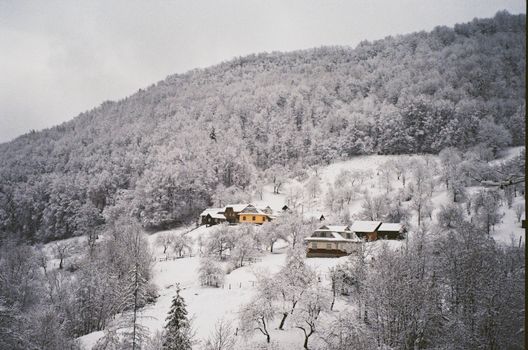
The storm passed, leaving behind a world washed clean and glistening. Instead of rejoining the main trail, I decided to follow the forgotten path. It was barely visible, overgrown with ferns and moss, demanding every ounce of my attention. The forest grew denser, the air cooler, and the silence deepened until all I could hear was the crunch of my boots, the rustle of leaves, and the distant murmur of a hidden stream. Hours passed. My phone signal vanished completely – a rare occurrence even in the most remote corners of 2025. A sense of profound isolation, both thrilling and slightly unnerving, enveloped me. Then, through a break in the ancient firs, I saw it: a wisp of smoke curling upwards, a patchwork of fields, and the distinct, geometric lines of wooden roofs nestled in the valley below. My heart pounded. I wasn't alone. And something about the scene felt… ancient.
### Stepping into Ciorna Vale: A Century Ago, Today
As I descended into the valley, the sounds grew clearer: the rhythmic clang of a blacksmith’s hammer, the distant bleating of sheep, the gentle murmur of voices speaking a dialect I barely recognized, yet somehow understood. The village itself was a tableau straight out of a history book. Houses were built from rough-hewn timber, their roofs thick with mossy thatch, smoke rising from stone chimneys. There were no power lines, no satellite dishes, no plastic in sight. Women in long, embroidered skirts and headscarves tended gardens, their hands deft with tools that looked centuries old. Men in homespun tunics guided oxen pulling wooden plows through fertile fields. Children, their faces smudged with dirt but eyes bright with curiosity, played with wooden toys and chased geese.
My modern hiking gear – my waterproof jacket, my high-tech boots, my smartwatch – felt like an alien invasion. They stared at me, not with hostility, but with a quiet, almost childlike wonder, mixed with a hint of apprehension. A young boy, no older than seven, dropped his wooden hoop and stared, wide-eyed. An old woman paused her weaving, her hands still on the loom, her gaze piercing. This wasn't a historical reenactment; this was life. The air smelled of woodsmoke, freshly baked bread, and damp earth. It was a smell I hadn't encountered since visiting open-air museums, but here, it was real, vibrant, and utterly authentic. It hit me then, with a jolt that went right to my bones: I hadn't just found a remote village. I had found a place where time had genuinely, inexplicably, stopped a century ago. It was September 2025, but in Ciorna Vale, it was unmistakably 1925.
### Days of Discovery: Living the Past
My initial encounter was with a man named Ion, his face etched with lines of sun and wind, his hands calloused from a lifetime of labor. He was the village elder, his eyes holding a wisdom that transcended words. With gestures and a handful of shared words from a forgotten dialect, I explained my presence – a lost traveler, a curious wanderer. There was no suspicion, only a quiet acceptance, and an offer of a simple meal and a place by the fire. That first night, I ate a stew unlike any I’d ever tasted, made from root vegetables and wild herbs, served in a wooden bowl. The bread was coarse, hearty, and baked in an outdoor oven. I slept on a straw mattress, under a thick wool blanket, the silence of the valley broken only by the chirping of crickets and the gentle rustle of leaves.
Over the next few days, I became a silent observer, then a hesitant participant. I helped harvest potatoes, my modern hands clumsy next to the villagers’ efficient movements. I watched Maria, a woman with nimble fingers, spin wool into yarn on a hand-cranked wheel, then weave it into intricate patterns. I learned to draw water from the village well, to chop firewood with an axe that felt impossibly heavy, and to milk a goat (with limited success, much to the amusement of the children). There were no screens, no notifications, no deadlines. Life revolved around the rhythms of nature: sunrise, sunset, the changing seasons, the needs of the land and the livestock.
The villagers spoke a blend of old Romanian and a local dialect, rich with ancient words. Communication was challenging but surprisingly effective. We communicated through smiles, shared tasks, and the universal language of human kindness. I learned about their traditions: evening storytelling by the fire, where legends of forest spirits and ancient heroes were passed down; the communal baking day; the harvest festivals. Their lives were hard, undeniably, but they were also rich in community, purpose, and a deep connection to their surroundings. I saw no signs of discontent, no longing for the 'modern' world. Their happiness was simple, profound, and rooted in their self-sufficiency and their strong communal bonds.
### Lessons from a Timeless Place
My time in Ciorna Vale wasn't just a trip; it was a profound re-education. In 2025, our lives are dictated by speed, efficiency, and constant connectivity. We chase the next big thing, the latest gadget, the fastest delivery. In Ciorna Vale, time wasn't a commodity to be saved or spent; it was a river, flowing at its own pace. The villagers lived in harmony with it, not against it. They didn't multitask; they focused entirely on the task at hand, whether it was mending a fence, preparing a meal, or telling a story.
I found myself shedding the anxieties of my modern existence. The constant urge to check my phone, to 'be productive,' to 'optimize' every moment – it all faded away. My mind cleared. I noticed the intricate patterns on a beetle's back, the way sunlight filtered through the leaves, the subtle changes in the wind. I tasted food with a newfound appreciation, knowing the effort that went into growing and preparing every ingredient. I slept deeply, truly rested.
The biggest lesson was the power of community. In Ciorna Vale, everyone had a role, and everyone contributed. There was an unspoken understanding, a mutual reliance that fostered incredible strength and resilience. They shared resources, celebrated together, mourned together. It was a stark contrast to the often-individualistic, fragmented societies we inhabit today. Their sustainability wasn’t a trend; it was their way of life, born out of necessity and a deep respect for the land that sustained them. Everything was reused, repaired, or repurposed. Waste was an alien concept. It made me question our relentless pursuit of 'progress' at what cost to our humanity and our planet.
### Preserving the Unseen: Ethical Travel in a Timeless World
Leaving Ciorna Vale was one of the hardest things I've ever done. The villagers, in their quiet way, had become family. Ion gave me a small, hand-carved wooden bird – a symbol of safe passage. Maria pressed a warm, freshly baked loaf of bread into my hands. I promised them I would tell their story, but with a profound sense of responsibility. This isn't a place for mass tourism, for busloads of selfie-stick-wielding tourists. It's a living, fragile piece of history, deserving of utmost respect and protection.
That's why I've chosen not to reveal its exact location. The Carpathian Mountains are vast and still hold many secrets. My hope is that it remains untouched, a sanctuary where their way of life can continue undisturbed.
However, the lessons from Ciorna Vale are universal, and they can inform how we approach all our travels, even to more accessible destinations. Here are my actionable tips for ethical and enriching travel, inspired by my journey:
*
Visual journey


Tags
Share this adventure
Join the travel community
New adventures, cultural insights and travel inspiration, straight to your inbox.
We may receive a commission if you click on a link and buy a product, service or policy, at no extra cost to you. How affiliate links work.
Other angles on this trip
These notes are written by AI to show how different kinds of traveller might see this destination. They are not comments from real readers.