

On a recent trip, I stumbled upon a truly magical oasis in the heart of Tokyo – a secret garden that felt like stepping into another world. This isn't just another park; it's a profound escape, a historical treasure, and now, it's the one place I tell everyone to visit in the bustling metropolis. ---
## I Found a Secret Garden in the Heart of Tokyo and Now It's All I Recommend
Tokyo. The name alone conjures images of neon-lit skyscrapers, Shibuya's chaotic scramble, bullet trains whizzing by, and the relentless hum of 14 million lives. It’s a city that grabs you, shakes you, and leaves you exhilarated, often a little overwhelmed. For years, I’ve been a loyal devotee to its electric energy, navigating its intricate subway lines, feasting on ramen, and getting lost in its boundless districts. I thought I knew Tokyo. I really did.
But on my last adventure, something shifted. After days of exhilarating sensory overload – the vibrant chaos of Takeshita Street, the spiritual calm of Senso-ji, the endless shopping of Ginza – I found myself yearning for a moment of quiet. A true escape, not just a slightly less crowded corner, but a complete departure from the urban symphony. I craved a breath of fresh air, a moment of stillness, a place where time seemed to slow down.
It was during this quest for calm that I stumbled upon it – a place so unexpectedly serene, so profoundly beautiful, that it felt like I'd uncovered a well-kept secret. Tucked away in plain sight, yet somehow overlooked by the endless streams of tourists, was a garden that instantly captured my heart. It wasn't just a green space; it was a portal, a whisper of old Japan, a tranquil haven that offered solace and beauty in equal measure. And now, my friends, it's the only place I recommend to anyone visiting Tokyo.
### The Serendipitous Discovery: My Escape from the Concrete Jungle
My discovery wasn't planned. It was a happy accident, born out of a desire to simply walk without a specific destination, a rare luxury in Tokyo. I'd spent the morning exploring the Ueno area, admiring the museums, but the crowds were starting to press in. Consulting my map for a less-trodden path, my eyes landed on a small green patch labeled "Kyu-Iwasaki-tei Gardens." The name didn't ring any bells, which, ironically, made it all the more appealing. No queues, no massive tour groups – just a quiet promise.
As I navigated the residential streets, the city noise slowly began to recede. The tall buildings gave way to charming, older homes, and the air grew noticeably fresher. A modest, almost unassuming gate appeared, guarded by a small, traditional ticket booth. The entrance fee was a mere ¥400 – a pittance for what awaited me. Stepping through that gate felt like crossing a threshold, not just into a garden, but into another era, another world entirely. The immediate silence was startling, broken only by the gentle rustle of leaves and the distant chirping of birds. My shoulders, which I hadn't realized were so tense, instantly dropped. This was it. This was the calm I had been searching for.
### Stepping Into a Different World: The Magic of Kyu-Iwasaki-tei Gardens
What makes Kyu-Iwasaki-tei Gardens so special, so profoundly secret despite its accessibility, is its unique blend of history, architecture, and natural beauty. It was once the residence of Hisaya Iwasaki, the third head of the Mitsubishi zaibatsu (one of Japan's largest industrial conglomerates), and dates back to the late 19th century. Unlike many of Tokyo's larger, more famous gardens, Kyu-Iwasaki-tei feels intimate and personal, almost like you're a guest in a grand, forgotten estate.
The first thing that strikes you is the magnificent Western-style mansion. Designed by British architect Josiah Conder, it’s a stunning example of Victorian architecture, complete with ornate fireplaces, stained glass windows, and exquisite woodwork. It feels utterly out of place, yet perfectly at home, in the heart of Tokyo. I spent a good hour just wandering through its rooms, imagining the lives lived within its walls. The detailed craftsmanship, the blend of European luxury with subtle Japanese influences, is simply breathtaking. Each room tells a story, and the quiet atmosphere allows you to truly absorb the historical weight of the place.
Adjacent to the mansion is a charming billiard house, also designed by Conder, featuring a unique Swiss chalet-style architecture. It’s a whimsical touch, adding another layer of unexpected charm to the estate. But the true heart of the "secret garden" lies beyond these buildings.
### Beyond the Blossoms: A Japanese Oasis and Hidden Gems
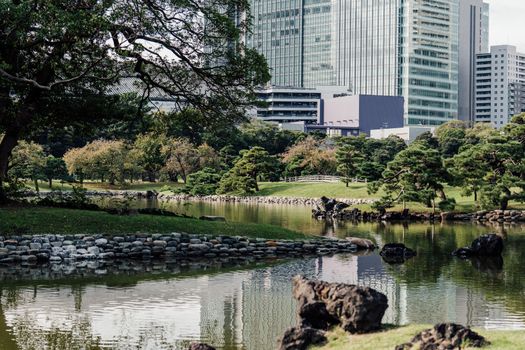
Behind the Western mansion, the landscape seamlessly transitions into a traditional Japanese garden. This is where the real magic unfolds. A meticulously landscaped pond garden, complete with stepping stones, ancient trees, and carefully placed lanterns, invites you to slow down and wander. The path meanders gently, revealing new perspectives at every turn.
I found a quiet bench overlooking the pond, where carp glided gracefully beneath the surface, and spent a good twenty minutes simply observing. The sounds of the city were completely muffled here, replaced by the gentle rustle of bamboo and the distant call of a crow. It was a moment of pure, unadulterated peace. I watched as sunlight dappled through the canopy of trees, illuminating moss-covered rocks and the vibrant green of the foliage. In autumn, I can only imagine the fiery spectacle of the maple leaves, and in spring, the delicate blush of cherry blossoms.
One of the most charming "hidden gems" within the garden is a small, traditional Japanese tea house nestled discreetly amongst the trees. While not always open for tea ceremonies, its presence adds to the authentic atmosphere, hinting at past gatherings and quiet contemplation. The contrast between the grand Western mansion and the serene Japanese garden is what truly makes Kyu-Iwasaki-tei so captivating. It's a harmonious blend of two worlds, reflecting a pivotal period in Japanese history when Western influences began to merge with traditional culture. It's a living museum, not just of nature, but of a bygone era.
### Planning Your Escape: Practical Tips for Your Visit
Ready to discover this secret garden for yourself? Here’s everything you need to know to make your visit seamless and memorable:
Location & How to Get There:
* Address: 1-35 Ikenohata, Taito City, Tokyo 110-0008, Japan
* Nearest Stations:
* Yushima Station (Chiyoda Line): Exit 1, about a 3-minute walk. This is often the most direct route.
* Ueno-Hirokoji Station (Ginza Line): About a 10-minute walk.
* Okachimachi Station (JR Yamanote Line): About a 10-15 minute walk.
* Keisei Ueno Station (Keisei Line): About a 10-minute walk.
The walk from any of these stations is pleasant, taking you through charming local streets.
Opening Hours & Entrance Fee:
* Hours: 9:00 AM to 5:00 PM (last entry at 4:30 PM)
* Closed: December 29th to January 1st
* Entrance Fee: ¥400 (adults). Children under 12 and seniors (65+) may have reduced or free entry, so check their official website or at the gate.
Best Time to Visit:
* Seasons: Each season offers unique beauty. Spring for cherry blossoms (late March-early April), summer for lush greenery, autumn for vibrant fall foliage (late November-early December), and winter for a stark, tranquil beauty.
* Time of Day: Go early in the morning (right at opening) or late afternoon (an hour or two before closing) for the most peaceful experience and best light for photography. Weekdays are generally less crowded than weekends.
What to Bring:
* Camera: You'll want to capture every corner of this beautiful place.
* Comfortable Shoes: While not an extensive walk, you'll be on your feet exploring the mansion and garden paths.
* Water Bottle: Stay hydrated, especially during warmer months.
* A Book or Sketchpad: If you want to truly soak in the tranquility, find a bench and lose yourself for a while.
Etiquette:
* Respect the Silence: This is a place of peace. Keep your voice low and avoid loud conversations.
* No Littering: Take all your trash with you.
* Stay on Paths: Protect the delicate landscaping.
* No Food/Drink: Generally, food and drink are not allowed inside the mansion or garden, except for water.
Combine with Nearby Attractions:
Kyu-Iwasaki-tei Gardens is conveniently located near Ueno Park, which houses several museums (Tokyo National Museum, Tokyo Metropolitan Art Museum, National Museum of Western Art), Ueno Zoo, and the Shinobazu Pond. You can easily spend a morning at the garden and then explore Ueno Park in the afternoon, or vice versa. This makes for a perfect day of culture, nature, and relaxation.
### Capturing the Magic: Your Instagram Guide to Kyu-Iwasaki-tei
This garden is an absolute dream for photographers and Instagram enthusiasts. Every corner offers a picturesque scene, begging to be captured.
* The Western Mansion: Frame its grand facade from the Japanese garden side, or get up close to capture its intricate details – the bay windows, the decorative eaves, the vibrant green of the ivy. Inside, the grand staircase and ornate ceilings are showstoppers.
* The Billiard House: Its unique Swiss chalet style makes for a fun, unexpected photo op.
* The Japanese Garden Pond: Capture the reflections of the trees on the water, the graceful carp, and the meticulously placed rocks. The bridge over the pond is another classic shot.
* Pathways and Foliage: Utilize the winding paths for leading lines, and play with the light filtering through the trees. Seasonal shots (cherry blossoms, autumn leaves) are particularly stunning.
* Details: Don't forget to zoom in on the smaller details – a moss-covered stone lantern, a delicate flower, the texture of an old tree trunk.
* Lighting: Golden hour (early morning or late afternoon) provides the softest, most magical light. Overcast days can also be great for even lighting, reducing harsh shadows.
Suggested Hashtags:
#KyuIwasakiteiGardens #TokyoSecretGarden #HiddenGemsTokyo #TokyoGardens #JapanTravel #ExploreTokyo #TokyoOffTheBeatenPath #TranquilTokyo #Japan #TravelJapan #TripsoraAdventures #TokyoVibes #GardensofJapan #HistoricalTokyo
Remember to tag @Tripsora and use #TripsoraAdventures when you share your discoveries!
### Why This Garden, Why Now?
In a city that constantly reinvents itself, Kyu-Iwasaki-tei Gardens stands as a quiet testament to Tokyo's enduring beauty and rich history. It’s a place that reminds you that even amidst the most vibrant urban landscapes, moments of profound peace and natural beauty can be found. It’s a space to breathe, to reflect, to connect with a different side of Japan, away from the tourist trails.
For me, it wasn't just a garden visit; it was a revelation. It taught me that sometimes, the most profound travel experiences are found not in chasing the next big attraction, but in allowing yourself to get wonderfully, serendipitously lost. It’s why I now champion this "secret garden" above all others. It offers an authentic, calming, and deeply beautiful experience that many visitors to Tokyo sadly miss.
So, the next time you find yourself in Tokyo, feeling the delightful pull of its energy but also a quiet yearning for serenity, do yourself a favor. Step off the well-worn path, follow the whispers of history, and discover the tranquil magic of Kyu-Iwasaki-tei Gardens. You won't just find a garden; you'll find a moment of pure bliss, a slice of paradise, and a secret you'll want to share with everyone, just like I did.
Now it's your turn! Have you discovered a hidden gem in Tokyo or another bustling city? Share your secret spots in the comments below – let's inspire each other to explore beyond the obvious!
---
Visual journey




Tags
Share this adventure
Join the travel community
New adventures, cultural insights and travel inspiration, straight to your inbox.
We may receive a commission if you click on a link and buy a product, service or policy, at no extra cost to you. How affiliate links work.
Other angles on this trip
These notes are written by AI to show how different kinds of traveller might see this destination. They are not comments from real readers.