

Forget everything you think you know about festivals. My journey into India's Holi Festival was a sensory explosion of color, joy, and unexpected connection, a truly transformative experience that went far beyond mere spectacle. Prepare to be inspired to shed your inhibitions and immerse yourself in one of the world's most vibrant celebrations. ---
## I Experienced This Festival From the Inside: India's Holi – A Technicolor Revelation
The first splash hit me before I even registered it. A cold, surprisingly heavy blob of purple, followed instantly by a shower of bright pink powder that seemed to materialize from thin air. My carefully oiled hair and skin, prepped diligently with coconut oil, barely stood a chance. I blinked, momentarily stunned, then looked up to see a group of laughing children, their faces already masterpieces of multi-hued chaos, pointing their water guns (pichkaris) at me with mischievous grins.
"Bura na mano, Holi hai!" (Don't mind, it's Holi!) they chanted, and suddenly, my initial apprehension melted away. A primal giggle bubbled up from deep within me, and I found myself laughing along, reaching for the bag of vibrant gulal (colored powder) I clutched in my hand, ready to retaliate. This wasn't just a festival; this was an initiation. This was Holi, and I was no longer an observer. I was in it.
For years, I'd seen the dazzling photos: people drenched in an impossible spectrum of colors, faces alight with pure joy, explosions of powder against ancient temple backdrops. It looked like pure magic, a painter's wildest dream brought to life. But seeing it from a screen is one thing; experiencing it – truly experiencing it – from the inside, integrated into the very fabric of the celebration, is an entirely different beast. It’s messy, it’s loud, it’s overwhelming, and it is, without a doubt, one of the most profoundly joyful and transformative experiences I’ve ever had.
My decision to plunge into the heart of Holi, specifically in the revered towns of Mathura and Vrindavan in Uttar Pradesh, India, wasn't just about witnessing a spectacle. It was about understanding the pulse of a culture, shedding my inhibitions, and connecting with a joy that felt ancient and universal. And let me tell you, it delivered.
### The Call of Colors: Why Mathura & Vrindavan for Holi?
If Holi is the heart of India, then Mathura and Vrindavan are its very soul. These twin towns, just a few hours south of Delhi, hold immense spiritual significance as the birthplace and childhood home of Lord Krishna. Here, Holi isn't just a day; it's an entire season, celebrated with an intensity and devotion that you won't find anywhere else. While celebrations erupt across India, the Braj region (which includes Mathura, Vrindavan, and Barsana) is renowned for its traditional and deeply rooted festivities.
I chose Mathura and Vrindavan for their authenticity. While Goa or Jaipur might offer a more tourist-friendly, diluted version, I wanted the raw, unadulterated experience. I wanted to hear the ancient chants, witness the rituals performed with fervent devotion, and feel the genuine spirit of community that permeates the air. And yes, I wanted to get absolutely, gloriously covered in color, side-by-side with locals who have celebrated Holi since childhood.
* Cultural Insight: Holi celebrates the triumph of good over evil (specifically, the legend of Holika Dahan and Prahlad), the arrival of spring, and a day to forget grievances, forgive, and embrace new beginnings. It’s also deeply tied to the playful mythology of Krishna and Radha, hence the special significance in the Braj region.
### More Than Just Colors: The Rituals & Preparations
My Holi journey began a few days before the main event. In Mathura, the air was already thick with anticipation. Markets buzzed with activity: vendors hawking mountains of gulal in every shade imaginable, vibrant abeer (wet colors), pichkaris of all shapes and sizes, and traditional sweets like gujiya.
The first significant event is Holika Dahan, a day before the main color play. I joined a crowd gathered around a massive bonfire, built from wood and cow dung cakes. This ritual symbolizes the burning of the demoness Holika, marking the victory of good over evil. The atmosphere was reverent yet joyful, families offering prayers and circumambulating the fire. It was a powerful prelude, grounding the upcoming exuberance in deep spiritual meaning.
The next morning, the energy was palpable. Locals were preparing their homes, cooking special dishes, and readying their stash of colors. I spent an hour with a sweet family I’d befriended at my guesthouse, oiling my entire body and hair with coconut oil – a crucial step to prevent the colors from staining too deeply and to make them easier to wash off. They also advised me on wearing old, dark clothes that I wouldn't mind staining permanently. I learned that many opt for white clothes to showcase the colors, but for an "inside" experience where you'll be doused repeatedly, dark colors are often more practical for the sheer volume of color.
* Budget Tip: Buy your colors and pichkaris from local street vendors. A small bag of gulal costs as little as 10-20 rupees ($0.12-$0.25), and a basic pichkari around 50-100 rupees ($0.60-$1.20). Don't overspend; you'll get plenty of colors from others!
### Diving Headfirst into the Madness: Holi Day!
And then came the big day. I woke up to the distant sound of drums and devotional music (bhajans and kirtans) drifting from the temples. The air, usually still and calm, vibrated with an electric energy. I headed straight for Vrindavan, specifically to the famous Banke Bihari Temple, known for its particularly fervent celebrations.
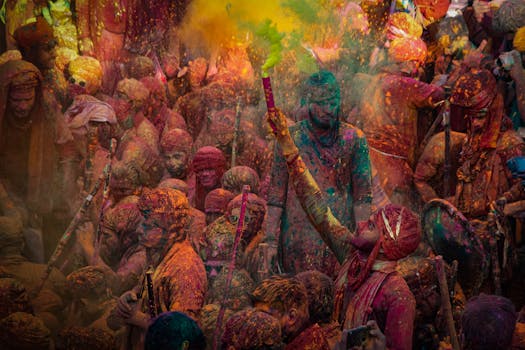
The moment I stepped onto the narrow lanes leading to the temple, I was engulfed. It was a riot of sound and color. People danced, sang, and playfully smeared each other with gulal. The air was thick with a sweet, earthy scent mixed with the fragrance of flowers and the pungent aroma of bhang (an edible cannabis preparation, often consumed in milk or sweets during Holi – more on this later).
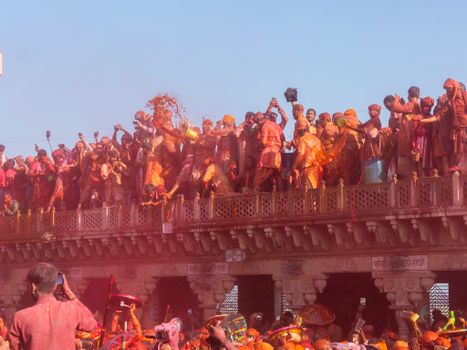
Inside the temple courtyard, it was an organized chaos. Priests threw colors and flowers from the altar, showering the devotees below. The crowd surged and swayed, a sea of joyful faces, all painted in hues of red, pink, green, blue, and yellow. I raised my hands, surrendered to the moment, and let the colors rain down on me. I smeared a streak of red on an elderly woman's cheek, and she reciprocated with a hearty laugh and a dab of green on mine. There were no strangers, only fellow participants in this grand, colorful communion.
Later, I wandered through the streets, joining impromptu dance parties, dodging water balloons launched from rooftops, and engaging in friendly color battles with passersby. The sheer unadulterated joy was infectious. People from all walks of life, all ages, all castes, came together as one, united by color and laughter. It was a beautiful, chaotic symphony of human connection.
* Personal Anecdote: At one point, a group of young men, already looking like walking rainbows, pulled me into their circle, teaching me basic bhangra dance moves. My awkward attempts were met with cheers and more color, making me feel utterly welcomed and part of their celebration. It was a moment of pure, uninhibited joy that transcended language barriers.
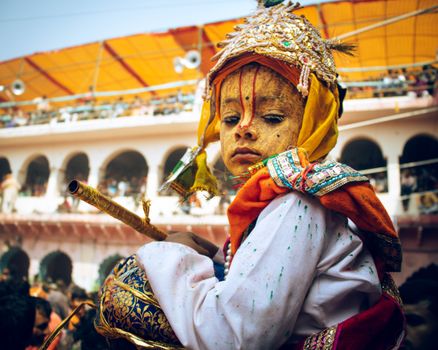
* Instagram-worthy moment: Capture the wide shots of crowds, but also focus on close-ups of smiling, color-drenched faces. The contrast of ancient temple architecture with modern revelry is also stunning.
### Navigating the Chaos: Practical Tips for a Smooth Holi
While the experience is exhilarating, it’s also intense. Here are essential tips for enjoying Holi safely and respectfully:
1. Protect Your Skin & Hair: Liberally apply coconut oil (or any thick oil) to your entire body, especially exposed skin and hair, before stepping out. This creates a barrier, making colors easier to wash off.
2. Guard Your Eyes: Wear sunglasses or goggles. This is non-negotiable. Colors can be irritating or even harmful if they get into your eyes.
3. Secure Your Valuables: Leave anything you don't absolutely need at your accommodation. For your phone and cash, use waterproof pouches or Ziploc bags, kept deep inside a zipped pocket. I used a fanny pack worn under my clothes, protected by a large Ziploc.
4. Dress Appropriately: Wear old clothes you’re willing to sacrifice. Dark colors help hide the stains better, but white can be fun for showcasing the color explosion. Avoid anything too revealing – culturally, modesty is appreciated, even in the festive chaos.
5. Stay Hydrated: The excitement, dancing, and sometimes warm weather can lead to dehydration. Carry a bottle of water or buy bottled water frequently.
6. Be Aware of Bhang: Bhang is a traditional cannabis-infused drink or edible, legally consumed in certain regions during Holi. While many locals partake, especially in Mathura/Vrindavan, exercise extreme caution if you choose to try it. It can be potent, and its effects can be delayed and unpredictable. If you do try it, do so in a safe, controlled environment with trusted companions and in very small quantities. Never accept bhang from strangers.
7. Cultural Sensitivity: While Holi is playful, it’s still important to be respectful. Avoid throwing colors at people who clearly don't want to participate (though this is rare on Holi day itself). Be mindful of women and children; unwanted touching is never okay. If someone says "no" or turns away, respect their wishes.
8. Avoid Isolated Areas: Stick to crowded, public spaces where the celebrations are vibrant. Solo travelers, especially women, should be extra vigilant in less populated areas.
9. Post-Holi Clean-up: Use mild soap and shampoo. Lemon juice or a mixture of gram flour (besan) and curd can help remove stubborn stains naturally. Don't scrub too hard.
10. Book in Advance: Accommodation and train tickets, especially to Mathura/Vrindavan, sell out months in advance. Plan early!
### Beyond the Colors: The Heart of the Festival
What struck me most wasn't just the visual spectacle, but the profound human element. Holi is a great equalizer. For a few glorious hours, social barriers dissolve. The rich and poor, young and old, men and women, all smear each other with joy, shouting "Holi hai!" It's a powerful reminder that beneath our external differences, we are all just humans craving connection, laughter, and a moment of pure, unadulterated happiness.
I saw families laughing together, strangers sharing sweets, and the elderly blessing younger participants with splashes of gulal. It's a festival of forgiveness, of new beginnings, and of celebrating the vibrant tapestry of life. As I washed off the last stubborn streaks of pink from my skin, I felt a sense of renewal, a lightness of spirit that lingered long after the colors faded. This wasn't just a trip; it was a reset.
* Local Perspective: I spoke to a sweet shop owner who told me, "On Holi, all grudges are forgotten. We embrace each other with colors, and start fresh. It's truly a day of joy for everyone." This sentiment resonated deeply, explaining the overwhelming positive energy.
### Planning Your Own Technicolor Dream: Logistics
Ready to dive into your own Holi adventure? Here's how to make it happen:
* Best Time to Visit: Holi usually falls in March, varying each year based on the lunar calendar (Purnima, or full moon, of the Phalguna month). Check the exact dates well in advance. The main celebrations often last two days (Holika Dahan followed by Rangwali Holi). Plan to arrive at least 2-3 days before the main event to soak in the pre-festival atmosphere and participate in Holika Dahan.
* How to Get There:
* Fly to Delhi (DEL): This is the closest major international airport.
* From Delhi to Mathura/Vrindavan:
* Train: The most popular and efficient option. Frequent trains run from Delhi to Mathura Junction (MTJ). Book tickets months in advance via IRCTC website or a travel agent. A chair car ticket typically costs around INR 300-600 ($3.50-$7.50). The journey takes about 2-3 hours.
* Bus: State-run and private buses operate frequently from Delhi's ISBT (Inter-State Bus Terminal) to Mathura. Cheaper than trains but can be slower and less comfortable. Expect fares around INR 200-400 ($2.50-$5).
* Taxi/Private Car: You can hire a private taxi from Delhi. This offers convenience but is significantly more expensive, costing anywhere from INR 2,500-4,000 ($30-$50) one-way. This is a good option if traveling in a group.
* Getting Around Mathura & Vrindavan:
* Auto-rickshaws and Cycle-rickshaws: Abundant and the primary mode of transport within and between the towns. Always negotiate the fare beforehand. A short ride within town might be INR 50-100 ($0.60-$1.20), while a ride between Mathura and Vrindavan could be INR 150-250 ($1.80-$3).
* Walking: Many of the temple areas and old city lanes are best explored on foot, but be prepared for crowds and uneven surfaces.
* Accommodation:
* Book EARLY! This cannot be stressed enough. Hotels and guesthouses fill up months in advance.
* Budget (Hostels/Basic Guesthouses): Expect to pay INR 800-1500 ($10-$18) per night for a clean, basic room or hostel bed. Look for options slightly away from the main temple areas for a bit more peace.
* Mid-Range Hotels: Good quality hotels range from INR 2500-5000 ($30-$60) per night. Many offer a safer, more controlled environment if you prefer to avoid the most intense street celebrations.
* Pro Tip: Some hotels organize private Holi celebrations, which can be a good option for families or those seeking a gentler experience.
* Budgeting:
* Daily Expenses (excluding accommodation): For a budget traveler, plan INR 1000-2000 ($12-$25) per day, covering food, local transport, water, and colors.
Food: Delicious street food and simple restaurant meals are very affordable, often INR 100-300 ($1.20-$3.50) per meal. Don't miss local specialties like kachori, jalebi, and lassi*.
### My Unforgettable Takeaway: Don't Just Observe, Participate!
My Holi experience was more than just a colorful spectacle; it was a profound lesson in joy, community, and letting go. It challenged my inhibitions, opened my heart to spontaneous connection, and left me with memories as vivid and lasting as the colors that stained my skin for days.
If you're seeking a travel experience that transcends the ordinary, that truly immerses you in the heart of a culture, and that leaves you feeling lighter, brighter, and more alive, then India's Holi Festival is calling your name. Don't just watch the photos; don't just dream about it. Plan your trip, embrace the chaos, and dive headfirst into the technicolor revelation. Go experience Holi from the inside – I promise, you won't regret it!
---
Visual journey


Tags
Share this adventure
Join the travel community
New adventures, cultural insights and travel inspiration, straight to your inbox.
We may receive a commission if you click on a link and buy a product, service or policy, at no extra cost to you. How affiliate links work.
Been there?