

Forget everything you thought you knew about food. My recent dining experience in absolute darkness wasn't just a meal; it was a profound journey that recalibrated my senses and utterly transformed my appreciation for taste. Prepare to have your mind (and palate) blown.
The flickering gas lamps of a Parisian alleyway cast long, dancing shadows, painting a scene straight out of a romantic novel. My partner, Alex, and I were on our annual "adventure trip," a tradition where we pick one unique, slightly terrifying experience to push our boundaries. This year's challenge? Dinner. In complete, utter, inky blackness.
I’d heard whispers of "dark dining" before – a concept where you eat an entire meal without the use of your sight. My initial reaction? Skepticism. "Why would I want to pay good money to struggle with my food in the dark?" I'd scoffed, picturing myself fumbling for a fork, spilling wine, and generally making a mess. Food, for me, has always been a visual feast first. The vibrant colors of a fresh salad, the artful plating of a Michelin-starred dish, the golden crust of a perfectly baked croissant – sight was paramount. I almost missed it, truly, almost dismissed it as a mere gimmick.
But then, a friend, a seasoned gastronome who rarely raves, described her own dark dining experience as "transformative." She claimed it wasn't just a meal, but a sensory awakening, a profound lesson in taste, texture, and connection. Her words lingered, planting a seed of curiosity that eventually blossomed into a reservation at Dans le Noir? in Paris. Little did I know, this single meal would not only challenge my preconceived notions but fundamentally alter how I perceive and appreciate every bite of food thereafter. It was a journey into the unknown that promised to heighten my senses, and it delivered far more than I could have imagined.
### The Veil of Darkness: Stepping into the Unknown
Dans le Noir?, meaning "In the Dark?" in French, is more than just a restaurant; it’s a global concept designed to immerse diners in a unique sensory experience. Located in a charming, albeit discreet, building in the heart of Paris, the anticipation began even before we crossed the threshold. The reception area was dimly lit, setting a contemplative mood. We were greeted by a friendly host who explained the process: we’d choose our menu theme (e.g., "Chef's Surprise," "Vegetarian," "Seafood") but the specific dishes would remain a mystery. No phones, no watches with glowing screens, no light-emitting devices of any kind were allowed. Everything was to be left in secure lockers. This wasn't just about eating in the dark; it was about truly disconnecting.
Our guide for the evening, a charming visually impaired gentleman named Jean-Luc, introduced himself with a warm smile. He would be our eyes, our navigator, and our server throughout the meal. His calm demeanor immediately put me at ease, reassuring us that we were in capable hands. He led us in a single-file line, hands on shoulders, through a heavy curtain. The transition was immediate and absolute. One moment, I could see the faint outline of Alex's back; the next, an impenetrable, suffocating blackness swallowed us whole. It wasn't just dark; it was the kind of darkness that felt thick, velvety, and utterly devoid of any light source. My eyes strained, trying to discern even the faintest glimmer, but there was nothing. It was disorienting, exhilarating, and a little terrifying all at once.
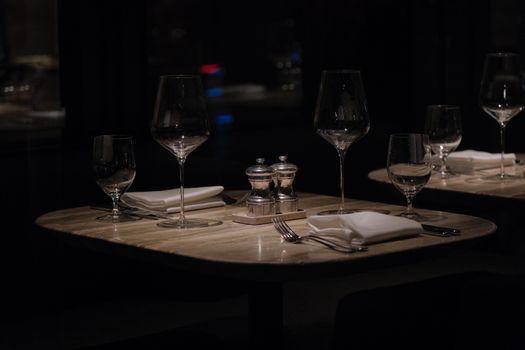
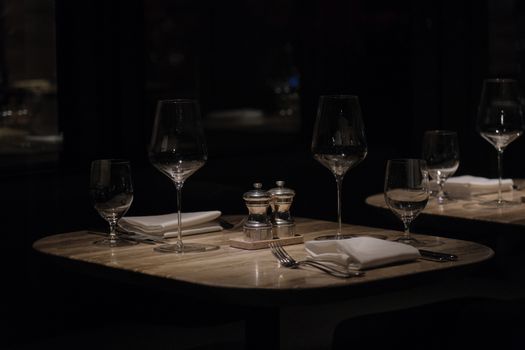
Jean-Luc expertly guided us to our table, his voice a comforting anchor in the void. He instructed us on how to find our chairs, how to locate our cutlery and glasses by touch. Every movement became deliberate, every sound amplified. The clinking of distant glasses, the murmur of conversations from other tables, the rustle of clothing – everything seemed sharper, more immediate. The air, too, felt different, carrying the subtle aromas of freshly baked bread and something savory and intriguing.
### A Symphony of Senses: Eating Without Sight
The first challenge? Pouring water. Jean-Luc patiently explained how to feel for the glass, how to gauge the water level with a finger inside the rim. It felt like a monumental task, a testament to how much we rely on our vision for even the simplest actions. Successfully pouring a glass of water felt like a small victory.
Then came the food. Our starters arrived, announced by Jean-Luc’s gentle voice. He guided our hands to the plate, explaining its approximate layout. My fork felt like an alien object as I gingerly probed the plate. What was this? A soft, creamy texture. Then something slightly firmer, with a distinct crunch. The first bite was an explosion. Without visual cues, my brain struggled to identify. Was it a vegetable? A cheese? The creaminess was rich, almost buttery, while the crunch added a delightful contrast. My nose, usually a secondary player, suddenly took center stage, detecting hints of herbs and a subtle earthiness.
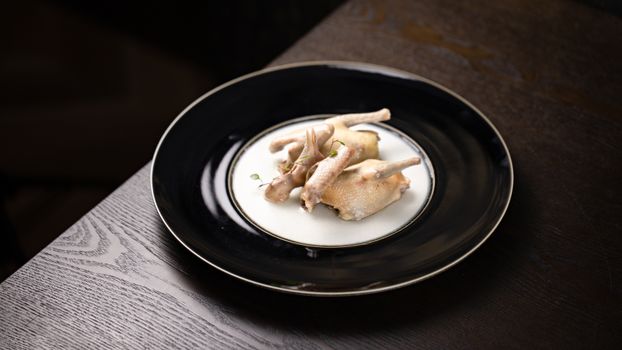
The main course was even more revelatory. I found myself dissecting each mouthful with an intensity I’d never applied to food before. A piece of protein – was it chicken? Fish? The texture was tender, flaky, suggesting fish, but the flavor was robust, almost meaty. Then, a side dish: small, spherical objects that burst with a sweet-tart juiciness, unlike any berry I could readily name. And a purée, incredibly smooth, with a hint of sweetness and an unexpected spice. My brain was working overtime, trying to piece together the puzzle of flavors and textures, comparing them to a vast mental database of past culinary experiences.
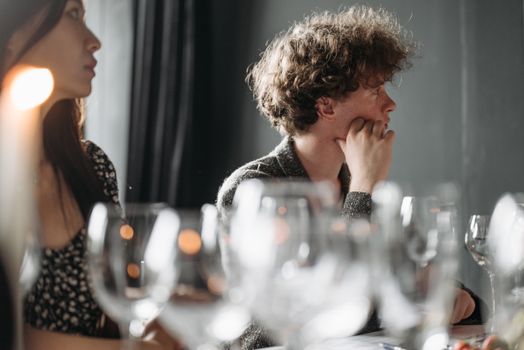
The conversation with Alex transformed too. Instead of commenting on the presentation or the color of the sauce, we found ourselves describing the textures, the unexpected bursts of flavor, the sensations on our tongues. "Did you get that hint of... citrus?" Alex would ask, and I'd nod, searching for it in my next bite. We were truly sharing the experience, not just the meal. The absence of visual distractions forced us to be present, to listen more intently, to engage with each other and with the food on a deeper level.
Dessert was the grand finale, a playful mix of sweet and savory that completely stumped me. A rich chocolate mousse was undeniable, but then there were tiny, crunchy elements that tasted faintly of salt and something herbaceous. It was a delightful, confusing, and ultimately delicious conclusion to a meal that defied all expectations.
### The Sensory Awakening: What I Discovered About Taste
Stepping back into the softly lit reception area felt like an awakening. My eyes, having adjusted to the darkness, now found the dim light almost blinding. It was then, as Jean-Luc described the dishes we had just eaten, that the true revelation hit me.
The Power of Texture:
I realized how much I had previously overlooked texture. Without sight, the mouthfeel of food became paramount. The silky smoothness of a purée, the satisfying crunch of a toasted nut, the delicate flakiness of a perfectly cooked fish – these sensations took on a whole new dimension, becoming as important as flavor itself. I’d never truly appreciated the role of a crisp crouton in a creamy soup until I couldn't see it.
Unmasking Flavor Bias:
My biggest takeaway was the profound impact of visual bias. We "eat with our eyes" far more than we realize. A bright green salad seems healthier, a perfectly seared steak more appetizing. But in the dark, these biases vanished. I tasted ingredients for their pure, unadulterated flavor, stripped of any preconceived notions based on color or presentation. That "fishy" protein I thought was salmon? It was actually perfectly cooked chicken, marinated in an unexpected citrus and herb blend. The "berries" in the side dish? Tiny, sweet roasted cherry tomatoes. My mind had played tricks on me, trying to categorize based on incomplete data.
The Symphony of Scent and Sound:
My sense of smell became a primary detective, identifying aromatic herbs and spices before the food even reached my mouth. And the sounds – the gentle clinking of cutlery, the hushed conversations, the subtle rustle of our guide's movements – created an unexpected auditory backdrop that somehow enhanced the overall experience, anchoring me in the moment.
Mindful Eating Redefined:
This wasn't just about a meal; it was a masterclass in mindful eating. I ate slower, chewed more thoroughly, and focused intently on every sensation. Each bite was an exploration, a puzzle to solve, a moment to savor. It forced me to be present, to truly experience the food, rather than simply consuming it.
### Beyond the Plate: The Unexpected Life Lessons
The impact of dining in darkness extended far beyond my palate. It offered a profound glimpse into the world of the visually impaired. Jean-Luc, our guide, navigated the pitch-black room with an ease and confidence that was both humbling and inspiring. He taught us how to trust senses we often neglect, how to rely on touch and sound in ways we never imagined. It fostered a deep sense of empathy and a new appreciation for the challenges faced by those living with visual impairments.
It also deepened my connection with Alex. Stripped of visual distractions, our conversation became more intimate, more focused. We shared a unique vulnerability, navigating an unfamiliar world together. We laughed at our clumsy attempts to find our mouths, marveled at unexpected flavors, and simply listened to each other without the usual distractions of a bustling restaurant. It was a truly bonding experience.
Ultimately, dining in darkness was a powerful reminder to challenge my assumptions, to embrace the unknown, and to open myself to new perspectives. It taught me that sometimes, by taking away one sense, you can unlock a greater appreciation for all the others.
### Planning Your Own Dark Dining Adventure
Inspired to embark on your own sensory journey? Here’s what you need to know:
1. Find a Restaurant: The Dans le Noir? chain has locations in several major cities worldwide (Paris, London, Barcelona, Madrid, and more). Other independent dark dining restaurants exist in cities like Montreal (O.Noir), New York, and across Asia. A quick online search for "dark dining," "blind dining," or "dining in darkness" in your desired city should yield results.
2. Book in Advance: These experiences are unique and often popular, so reservations are highly recommended, especially for weekends.
3. Expect a Price Tag: Dark dining is an experiential meal, and prices reflect that. In Paris, our three-course meal (excluding drinks) was around €70-€90 per person. Factor in drinks and service, and you're looking at a significant but worthwhile investment for a truly unforgettable experience.
4. Menu Choices: Most establishments offer a choice of menu themes (e.g., "meat," "fish," "vegetarian," or a "surprise" menu where you don't even know the theme). Opting for the "surprise" menu enhances the mystery and sensory challenge.
5. What to Expect on Arrival: You'll typically be asked to check all light-emitting devices (phones, watches) into lockers. You'll meet your visually impaired guide who will lead you into the dark dining room.
6. Maximizing Your Experience:
* Go with an Open Mind: This is key. Let go of expectations and embrace the unknown.
* Trust Your Guide: They are experts in navigating the dark and ensuring your comfort and safety.
* Engage Your Other Senses: Actively try to identify flavors, textures, and aromas. Talk about what you're experiencing with your dining companions.
* Dress Comfortably: You'll be focusing on the food, not your outfit. Avoid anything too restrictive or precious.
* Avoid Strong Perfumes/Colognes: These can interfere with your own and others' ability to smell the food.
* Don't Be Afraid to Get a Little Messy: It's part of the fun!
* Consider Who You Go With: A partner or a close friend who is also open to new experiences will make the conversation and shared discovery even richer.
7. Is It for Everyone? If you experience severe claustrophobia or anxiety in enclosed, dark spaces, this might be challenging. However, the experience is often described as more disorienting than truly frightening, and the presence of guides is very reassuring. Most find the initial apprehension quickly gives way to curiosity and delight.
### The Taste of Enlightenment
As a travel blogger, I'm always searching for experiences that truly transform, that offer a new lens through which to see the world. Dining in darkness at Dans le Noir? was precisely that. It wasn't just a meal; it was a profound lesson in mindfulness, empathy, and the incredible complexity of our senses. It taught me to truly taste, not just to eat.
So, the next time you're planning a trip, or even just looking for a unique night out in your own city, I urge you to consider this extraordinary culinary adventure. Let go of your sight, embrace the darkness, and prepare to have your palate, your mind, and your entire perception of food utterly revolutionized. You might just discover a world of flavor you never knew existed, and a deeper appreciation for the simple act of eating.
Have you ever dared to dine in the dark? Or is this an experience you'd love to try? Share your thoughts and questions in the comments below! Let's inspire each other to explore the world, one mindful bite at a time.
---
Visual journey
Tags
Share this adventure
Join the travel community
New adventures, cultural insights and travel inspiration, straight to your inbox.
We may receive a commission if you click on a link and buy a product, service or policy, at no extra cost to you. How affiliate links work.
Other angles on this trip
These notes are written by AI to show how different kinds of traveller might see this destination. They are not comments from real readers.