

The dream of working with toes in the sand often clashes with the reality of ruined tech. After a costly mistake, I cracked the code to turning any beach into a productive office without disaster. Discover how I redefined my workflow to embrace the ultimate remote work lifestyle.
## The Day the Dream Died (and Was Reborn): How I Work From Beaches Without Ruining My Laptop That Made Me Rethink Everything
I still remember the sinking feeling in my stomach. It was a scorching afternoon on a beautiful, but ultimately fatal, stretch of sand in Thailand. I’d just finished an email, closed my laptop, and leaned back, blissfully unaware of the tiny, insidious grains of sand that had worked their way into every crevice. When I opened it again, there was a faint, gritty crunch as I pressed a key. The screen flickered, then died.
Panic.
A brand new MacBook Pro, fried by salt, sand, and my sheer naivety. That day, the romanticized dream of working from a beach died a swift, painful, and expensive death. I was ready to give up on the beach office fantasy forever. But then, a stubborn voice inside me whispered: "There has to be a way."
Fast forward three years, and I’ve successfully worked from some of the world’s most stunning coastlines, my laptop purring contentedly, completely oblivious to the paradise surrounding it. This isn't just about waterproofing; it's about a complete mindset and strategy shift. It's about respecting the elements, understanding your gear, and embracing a new way of working. And I’m going to show you exactly how I did it – so you can finally live that sun-kissed, laptop-safe dream without the nightmare of a ruined device.
### The Beach Office Blueprint: More Than Just a Towel
My first mistake? Treating the beach like an extension of my living room sofa. I'd just plonk down, open my laptop, and expect magic. The reality was glare, overheating, and sand in places I didn't even know existed on a computer. The "rethink everything" started here.
Before even thinking about opening your laptop, you need to scout your spot like a hawk. This isn't just about finding a pretty view; it's about finding a functional, safe "office."
1. Shade is Non-Negotiable: Direct sun is the enemy of screens and batteries. It causes glare, making your screen unreadable, and rapidly overheats your device, shortening its lifespan. Look for natural shade – a perfectly angled palm tree, a rock formation, or the shelter of a beachfront café umbrella. If natural shade is scarce, consider a lightweight, portable beach umbrella or a pop-up tent. I once spent an hour walking along a beach in Sri Lanka, just looking for the perfect spot. I found it – a small, quiet cove with a lone palm tree offering perfect shade, just a stone's throw from a local café with surprisingly good Wi-Fi. It felt like discovering a secret garden.
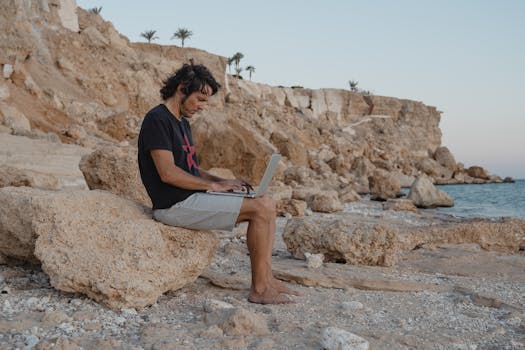
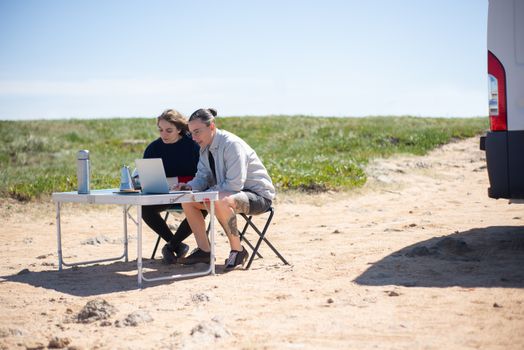
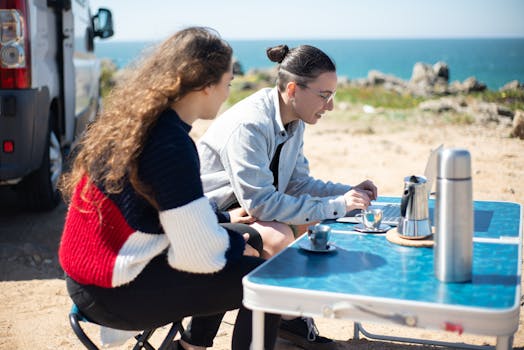
2. Stability and Elevation: Sand is not a stable surface, nor is it good for airflow. Your laptop needs to be elevated and on a firm, flat surface. Forget placing it directly on your towel. A small, foldable portable table (you can find ultra-light ones online), a sturdy cooler, or even a stack of books can work in a pinch. Elevation is key to both airflow, preventing overheating, and keeping insidious sand particles from entering your ports and vents.
3. Power Access (or lack thereof): Most pristine beaches don't come with power outlets. Assume you'll be working entirely off battery power or a portable charging solution. Plan your work accordingly (more on this later).
4. Noise Levels: Some beaches are bustling with hawkers, music, and children; others are serene and quiet. Choose your spot based on the type of work you need to do. Deep focus tasks might require a quieter cove, while administrative emails can be handled amidst cheerful chatter.
### The Unsung Heroes: Gear That Saves Your Tech (and Sanity)
Think of this as your beach battle armor. These aren't just luxuries; they're essential investments that will save you hundreds, if not thousands, in potential tech replacements.
1. Waterproofing – Your First Line of Defense:
* High-Quality Dry Bag: This is non-negotiable. Not just for your laptop, but for your phone, wallet, and any other valuables. I swear by my Sea to Summit 20L dry bag – it’s spacious enough for my laptop, a change of clothes, and other essentials, and it’s truly waterproof.
Waterproof Laptop Sleeve: For direct laptop protection, a sleeve that can withstand splashes and light rain is a lifesaver. Look for neoprene or similar materials. This goes inside* your dry bag for double protection.
2. Sand Protection – The Invisible Enemy: Sand gets everywhere. It's abrasive, conductive (when wet with salt water), and can wreak havoc on internal components.
* Silicone Keyboard Cover: A thin, clear silicone keyboard cover is your first line of defense against sand and even accidental liquid spills. They're cheap and incredibly effective.
* Anti-Glare Screen Protector: Reduces reflections from the sun and offers a sacrificial layer against scratches.
* Microfibre Cloths: Pack several. They are essential for gently wiping away salt spray, dust, and sand from your screen and surfaces without scratching. Never use abrasive materials!
3. Heat Management – Keeping Your Cool: Laptops hate heat. The combination of sun, ambient temperature, and intensive tasks can quickly lead to overheating.
* Portable USB Fan: A small, powerful USB-powered fan can make a huge difference in keeping your laptop cool. Look for one with a good battery life.
* Elevating Stand: Even a simple, foldable stand improves airflow dramatically by lifting your laptop off the surface. It also improves ergonomics.
4. Power Solutions – Staying Charged:
* High-Capacity Power Bank: My go-to is a 20,000mAh+ power bank. It can typically charge my laptop once or twice, and my phone multiple times. Invest in a reputable brand like Anker or RAVPower for reliability and fast charging. My Anker PowerCore 20000 has saved me countless times.
* Portable Solar Charger (Optional but useful): For truly remote locations, a portable solar panel can be a game-changer for topping up your power bank or even directly charging smaller devices.
5. Connectivity – Staying Online:
* Portable Wi-Fi Hotspot: Don't rely solely on public Wi-Fi, especially on beaches. A personal hotspot with a local SIM card (or an eSIM) is often the most reliable and secure option.
* Local SIM Card with Data: Often the most affordable and reliable way to get online, especially in Southeast Asia or Latin America. Purchase one upon arrival at the airport or a local store.
### Mastering the Elements: Sun, Sand, and Sea Spray
This is where the "rethink everything" truly kicks in. It's not just about gear; it's about environmental awareness and developing smart habits.
1. Sun Strategy:
* Timing is Everything: Early mornings (6-9 AM) and late afternoons (4-6 PM) offer softer light, cooler temperatures, and significantly less glare. These are your prime beach work hours.
* Portable Shade: As mentioned, a small beach umbrella or pop-up tent can be a wise investment if natural shade is unreliable.
2. Sand Strategy:
* The Golden Rule: Never, ever, EVER place your laptop directly on the sand. Use your mat, a large towel, or your portable table.
* Cleaning Ritual: Develop a meticulous cleaning routine. Before packing up, gently wipe down all surfaces with a microfibre cloth. Use a soft brush (like a clean makeup brush) for crevices and keyboard gaps. Compressed air is great, but use it sparingly and carefully, and always point away from the laptop to avoid forcing sand further in.
* Avoid Opening/Closing in Windy Conditions: This is when sand can most easily get inside. Try to open and close your laptop only in a protected environment.
3. Sea Spray Strategy:
* Distance is Key: Maintain a respectful distance from the water's edge. Even a gentle breeze can carry microscopic salt particles that are corrosive to electronics.
* Wind Direction: Be aware of the wind. If it's blowing inland from the sea, you're more susceptible to sea spray. Position yourself accordingly.
* Humidity: High humidity, common in tropical coastal areas, can cause condensation inside electronics. When not in use, store your laptop in a dry bag, ideally with a desiccant packet (those small "do not eat" silica gel packets) to absorb moisture.
I once watched a seasoned digital nomad in Mexico meticulously set up his workstation under a perfectly angled palm tree, checking wind direction and sun path like a seasoned sailor. It taught me that preparedness is an art form, and respecting the elements is paramount to protecting your tech.
### The Digital Nomad's Mindset Shift: Productivity by the Waves
The biggest revelation for me wasn't a gadget; it was a mental shift. The beach is not your typical office. Expecting it to be will only lead to frustration.
1. Setting Boundaries & Expectations: Embrace the beach's rhythm. Don't expect 8 hours of uninterrupted, hyper-focused work. Your beach office is about blending work with lifestyle. Be realistic about what you can achieve.
2. Focus Techniques:
* Noise-Canceling Headphones: Essential. While ocean sounds are beautiful, they can also be distracting. Good headphones can block out ambient noise and help you focus.
* Time Blocking & Pomodoro: Work in focused sprints (e.g., 25 minutes), then reward yourself with a quick dip, a walk along the shore, or simply gazing at the horizon for 5-10 minutes. It's about adapting, not resisting the allure of paradise.
3. Pre-planning & Offline Work: Download everything you need before heading out to the beach. Work offline as much as possible to conserve battery and avoid connectivity issues. Save all your work frequently.
4. Backup, Backup, Backup: Cloud storage is your best friend. Always assume the worst and have redundant backups of all your important files. External hard drives are also a good idea for an extra layer of security.
I used to get frustrated by distractions. Now, I see them as prompts for micro-breaks. A particularly beautiful wave? Time for a 5-minute stretch. A friendly dog wanders by? A quick pat before diving back into emails. It's about adapting and finding joy in the blend.
### Beyond the Beach: Finding Your Coastal Work Haven
Sometimes, the direct sand-and-sun setup isn't ideal, or you need a more traditional environment with a view. That's when you pivot to these coastal havens:
1. Beachfront Cafes & Restaurants: The ultimate hybrid. Ocean views, often reliable Wi-Fi, power outlets, coffee, and food. This offers a more controlled environment, minimizing direct exposure to sand and sea spray. Always check if they are "laptop friendly" or ask staff before settling in for a long session. In Canggu, Bali, places like 'The Lawn' or 'La Brisa' offer a vibrant atmosphere, though you'll be competing for power outlets. For something quieter, a small local warung often has a surprisingly strong connection.
2. Co-working Spaces with Ocean Views: Many popular digital nomad hubs now offer co-working spaces with stunning coastal vistas. Think Lisbon, Bali, or the Canary Islands. These provide professional amenities (fast Wi-Fi, ergonomic chairs, meeting rooms) with the added bonus of a beautiful backdrop.
3. Resort Lounges/Pool Areas: If you're staying at a resort, their common areas often have excellent Wi-Fi and comfortable seating with a view. These are usually well-maintained and offer a relaxed, yet productive, atmosphere.
4. Rooftop Bars (Evening Work): For evening tasks or creative brainstorming, a rooftop bar overlooking the ocean offers a magical ambiance. The cooler temperatures and the sound of the waves create a uniquely inspiring workspace.
### My Favorite Beach Work Spots (and What I Learned There)
Every beach has its personality, and your setup needs to adapt. Here are a few places where I’ve successfully blended work and waves:
* Koh Lanta, Thailand: This island offers rustic charm and long stretches of quiet beaches. Infrastructure is less developed, meaning more reliance on personal gear. My solar charger truly earned its keep here, keeping my power bank topped up. The lesson? Patience and self-sufficiency are key. Also, don't forget good mosquito repellent post-sunset!
* El Nido, Palawan, Philippines: With its stunning limestone cliffs and turquoise waters, El Nido is breathtaking. Wi-Fi can be spotty, but the views are unparalleled. Here, I embraced the 'slow internet, fast life' motto. I focused on tasks that didn't require heavy bandwidth, and pre-downloading all my files was vital. The reward for this adaptation was a quick dip in some of the clearest water I've ever seen between tasks.
* Cascais, Portugal (near Lisbon): This chic coastal town boasts beautiful promenades and excellent cafes with sea views. European coastal towns often offer a more 'civilized' beach work experience – great Wi-Fi, easy access to amenities, and a different climate. It’s a different kind of magic, blending comfort with the refreshing ocean breeze, perfect for long, productive sessions.
### Ready to Trade Your Cubicle for a Cabana?
That initial laptop disaster made me rethink everything about working remotely from beautiful, natural environments. It was never about avoiding the beach; it was about respecting it and equipping myself with the knowledge and tools to thrive there. The dream of working with toes in the sand, the gentle rhythm of the waves as your soundtrack, is not just a fantasy – it's a perfectly achievable reality.
With the right gear, a smart strategy, and a flexible mindset, you can protect your precious tech and unlock a world of productivity that feels less like work and more like living.
So, are you ready to trade your cubicle for a cabana? What's the most beautiful place you've ever worked from, or where do you dream of setting up your next beach office? Share your thoughts and tips in the comments below! And don't forget to share this guide with your fellow digital nomads – let's inspire more safe and productive beach work!
Visual journey


Tags
Share this adventure
Join the travel community
New adventures, cultural insights and travel inspiration, straight to your inbox.
We may receive a commission if you click on a link and buy a product, service or policy, at no extra cost to you. How affiliate links work.
Other angles on this trip
These notes are written by AI to show how different kinds of traveller might see this destination. They are not comments from real readers.