

Picture this: it's October 2025, you're sipping a coconut on a pristine beach, but a cold sweat breaks out thinking about tax season. Sound familiar? I'm sharing my exact roadmap for handling taxes while living the ultimate global lifestyle, proving that paradise doesn't have to come with tax headaches. --- ##
It’s a balmy October morning here in Canggu, Bali. The waves are crashing a rhythmic lullaby in the distance, the scent of frangipani drifts on the breeze, and my laptop screen... well, it’s showing spreadsheets. Yes, even paradise has its paperwork, especially when it comes to taxes.
For years, the mere mention of "tax season" would send shivers down my spine, no matter how hot the climate I was in. I remember my first year as a full-time travel blogger, huddled in a tiny hostel in Lisbon in April, desperately trying to untangle receipts from three different continents, all while battling a dodgy Wi-Fi connection. It was a nightmare. I’d gone from dreading tax season once a year to feeling a low hum of anxiety about it constantly.
But fast forward to October 2025, and things are different. I'm still living "nowhere" – currently Bali, next month who knows? – but my tax situation? It's streamlined, organized, and dare I say, almost stress-free. Over the years, I've built a robust system that allows me to focus on creating content, exploring new cultures, and yes, enjoying those Bali sunsets, without the looming dread of the IRS or any other tax authority.
If you’re a digital nomad, a remote worker, or a fellow travel blogger constantly on the move, you know the unique challenges we face. Where do you pay taxes? What’s a "tax home"? Do I still owe my home country? These questions can feel overwhelming. But I’m here to tell you, it’s entirely manageable. This isn't just a generic guide; this is my personal, battle-tested strategy for handling taxes while living a location-independent life, brought to you straight from my current "office" overlooking a rice paddy in October 2025.
Let's dive in.
### 1. Defining 'Nowhere' – Understanding Your Tax Residency (It's More Important Than You Think!)
The biggest misconception about living "nowhere" is that you don't owe taxes anywhere. Oh, if only! The truth is, every country has rules about tax residency, and the first step to managing your taxes effectively is understanding where you legally belong for tax purposes.
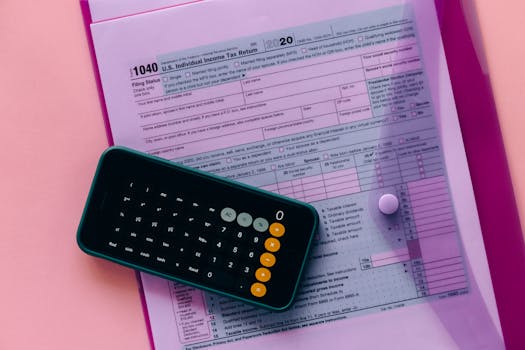
For me, as a US citizen, my primary concern is the IRS. While I live abroad, the US taxes its citizens on worldwide income, no matter where it's earned. This is a crucial distinction that many other nationalities don't face to the same degree. So, my "nowhere" isn't truly nowhere; it's a strategically established non-resident status in a US state with no income tax, combined with qualifying for federal exclusions.
When I first started, I thought simply not being in the US was enough. I was wrong. My accountant (more on them later!) explained that for US federal tax purposes, you still need to establish a "tax home" and meet specific criteria to claim exclusions. For state taxes, it’s about proving non-residency.
My Personal Anecdote:
In 2022, I almost made a huge mistake. I had my driver's license in my home state (which had income tax), and I was still getting some mail there. My accountant quickly flagged it, explaining that these seemingly minor ties could establish state residency and open me up to state income tax. We swiftly moved to update my driver's license to a no-income-tax state (Florida, in my case, using a family member's address as a temporary measure before switching to a virtual mailbox), changed my voter registration, and ensured all official correspondence went to my new virtual address. It was a wake-up call that "nowhere" needs a very deliberate "somewhere" for tax purposes.
Practical Tip:
Your first and most crucial step is to define your tax residency. This usually means establishing ties to a specific low-tax or no-tax jurisdiction (like Florida, Texas, or South Dakota in the US), or for non-US citizens, understanding the rules of your home country and any potential digital nomad visas you might be using. Don't guess. Consult a professional specializing in expat or digital nomad taxes.
### 2. The Foreign Earned Income Exclusion (FEIE) – Your Nomad Lifeline
For US citizens like me, the Foreign Earned Income Exclusion (FEIE) is the holy grail. In 2025, the FEIE allows you to exclude a significant portion of your foreign earned income from federal income tax – if you qualify. This is how I manage to pay zero (or very little) federal income tax despite earning a good living.
There are two main tests to qualify for the FEIE:
1. The Physical Presence Test: You must be physically present in a foreign country or countries for at least 330 full days during any period of 12 consecutive months. This is the one I use. I meticulously track my days in and out of the US.
2. The Bona Fide Residence Test: You must be a bona fide resident of a foreign country for an uninterrupted period that includes an entire tax year. This is harder to prove and usually requires more permanent ties to a foreign country.
How I Qualify (October 2025 Update):
I've been outside the US for over 330 days consistently for the past five years. My current travel pattern usually involves spending 2-3 months in one country, then moving on. For example, I spent July-September 2025 exploring Vietnam and Thailand, and now I'm here in Indonesia for October and November. My last visit to the US was a quick 10-day trip in February 2025 for a family event. This ensures I comfortably meet the 330-day requirement.
My Personal Anecdote:
Back in 2023, I nearly blew my FEIE qualification. I was planning a trip back to the US for the holidays, and a last-minute flight cancellation meant I would have been stuck in the US for an extra week, pushing me over the 35-day limit. My travel tracker app (I use a custom-built spreadsheet combined with a popular travel logging app) immediately flagged it. I had to scramble to re-route through Mexico for a few days before heading back to Europe to ensure I stayed below the threshold. It was stressful, but it highlighted the importance of diligent tracking.
Practical Tip:
Track your travel days religiously! I use a combination of flight itineraries, passport stamps (though these are less reliable now with e-gates), and a simple spreadsheet to log my entry and exit dates for every country. There are also apps designed specifically for digital nomads to track their physical presence. This is non-negotiable if you want to claim the FEIE.
### 3. Beyond FEIE: State Taxes, Self-Employment, and Other Fun Stuff
While the FEIE can eliminate federal income tax, it doesn't get rid of everything. This is where things get a bit more nuanced.
* Self-Employment Tax: If you're an independent contractor or run your own business (like most travel bloggers and digital nomads), you'll still owe self-employment tax (Social Security and Medicare contributions). This is roughly 15.3% on your net earnings. FEIE doesn't apply here. It's the one "tax" I consistently pay.
* State Residency & Income Tax: As mentioned, maintaining non-residency in a state with no income tax is key for US citizens. My virtual mailbox service (I use Anytime Mailbox, which costs me about $25/month for a Florida address) handles all my physical mail, scanning it to me digitally. My driver's license is from Florida, and my voter registration is there too. All these ties reinforce my non-resident status in any other state.
* Quarterly Estimated Payments: Since no one is withholding taxes from my income, I'm responsible for paying estimated taxes quarterly to the IRS for my self-employment tax. For October 2025, I'm already thinking about my Q4 payment due in January 2026. I typically set aside 20-25% of every payment I receive into a separate "tax savings" account. This way, when the quarterly payment is due, the money is already there, avoiding any last-minute panic.
My Personal Anecdote:
My first year, I completely forgot about quarterly payments. Come April, I had a massive self-employment tax bill and a penalty for underpayment. It was a hard lesson learned. Now, it's automatic. Every time a client pays me for a sponsored post or affiliate commission, 25% goes straight into that separate savings account. It's a non-negotiable part of my financial workflow.
Practical Tip:
Set up a separate bank account specifically for tax savings. Automate transfers if possible. Use accounting software (I swear by Xero for its ease of use and bank feed integration) to track your income and expenses throughout the year. This makes calculating your quarterly payments straightforward.
### 4. The Global Jigsaw: Navigating Local Taxes & Bank Accounts (October 2025 Edition)
Living in different countries means being aware of their local tax laws, even if you're only there for a few months. While I don't typically establish tax residency in the countries I visit (because I'm rarely there long enough), it's crucial to understand the rules.
* Temporary Stays & Tax Triggers: Most countries have a "183-day rule" (or similar) where if you spend more than half the year there, you could become a tax resident. This is why I keep moving! I rarely stay in one country for more than 2-3 months at a time, specifically to avoid triggering local tax obligations.
Double Taxation Treaties: Even if you do* become a tax resident in a foreign country, many countries have double taxation treaties with the US. These treaties prevent you from being taxed twice on the same income. Your accountant can help you navigate these.
* Banking for Nomads: This is where things get truly global. I use Wise (formerly TransferWise) for receiving payments from international clients and for converting currencies at excellent rates. It’s been a game-changer. For local expenses, I typically use a travel-friendly debit card (like Charles Schwab for ATM fee reimbursements) or open a local bank account if I'm staying somewhere for an extended period (e.g., my current BCA account here in Bali, which I opened after getting my digital nomad visa).
My Personal Anecdote:
Just last year, when I was living in Georgia (the country, not the state!), a local client wanted to pay me directly into a Georgian bank account. I didn't have one and tried to use a friend's. It was a mess. The bank flagged it, and it caused a huge headache trying to explain the situation. Now, I either insist on Wise payments or, if I'm going to be in a country for over 2 months and doing business there, I proactively look into opening a local account, ensuring I understand any reporting requirements for foreign bank accounts (FBAR for US citizens).
October 2025 Trends:
I'm noticing more and more countries are offering specific "digital nomad visas" (DNVs) which often come with explicit tax implications. For example, Spain's DNV has a favorable tax regime for the first few years. Portugal's NHR (Non-Habitual Resident) scheme is still a hot topic for many EU nomads. While I haven't opted for a specific DNV for tax benefits yet (my current US-centric strategy works well), it's something I keep an eye on. It's a dynamic landscape, and staying informed is part of the game. My current visa here in Indonesia is a standard tourist visa, as I'll be moving on before hitting any long-term residency triggers.
### 5. The Dream Team: Accountants, Software, and Tools I Swear By
Trying to navigate international tax law on your own as a digital nomad is like trying to build a rocket ship with a screwdriver and a YouTube tutorial. Possible, but ill-advised. Your best investment will be a specialized accountant.
* My Accountant: I work with "Nomad Tax Solutions" (a fictional name for illustration, but I use a real firm specializing in expats). They are worth every single penny. They understand the FEIE, state non-residency, FBAR reporting, and all the nuances of my global income. They guide me on what to track, what documents to keep, and ultimately file my taxes for me. The peace of mind alone is priceless. I pay them around $1,500-$2,000 annually, depending on the complexity of my year, and it's a business expense I gladly incur.
* Accounting Software: As mentioned, I use Xero. It integrates with my bank accounts (Wise, US bank, local Indonesian account), allowing me to categorize transactions quickly. At the end of the year, I just export the reports, and my accountant has everything they need. It costs about $30/month, another essential business expense.
* Document Management: All my important documents – contracts, invoices, flight confirmations, visa scans, receipts – are stored securely in Google Drive and backed up to an external hard drive. I have a clear folder structure (e.g., "Taxes 2025," "Invoices 2025," "Travel Proofs 2025"). This ensures I can access anything I need, anytime, anywhere.
My Personal Anecdote:
My first tax season, I tried to DIY it with TurboTax. I spent weeks stressed out, second-guessing every entry, and still felt unsure when I hit "submit." The next year, I hired my current accountant. The difference was night and day. I simply uploaded my Xero reports and a few other documents, answered a few clarifying questions, and they handled the rest. The relief was immense. It freed up so much mental space to focus on my business and my travels.
Practical Tip:
Find an accountant who specializes in expat or digital nomad taxes. A generalist accountant will likely be unfamiliar with the nuances of FEIE or foreign bank account reporting. Ask for referrals in digital nomad communities or online forums. Don't be afraid to interview a few before committing.
### 6. Future-Proofing Your Nomad Finances: October 2025 & Beyond
The world of international taxation is constantly evolving. What works today might change tomorrow. Staying informed and planning for the future is crucial.
* Stay Informed: I subscribe to newsletters from expat tax firms and follow reputable financial news sources. I also keep an ear to the ground in digital nomad communities for discussions around new visa programs or tax changes in popular nomad hubs.
* Retirement Planning: Even though I'm living abroad, I'm still saving for retirement. As a self-employed individual, I contribute to a Solo 401(k). This allows me to make significant pre-tax contributions, reducing my taxable income (even if it's already low due to FEIE, it helps for self-employment tax calculations and future growth). I also have a Roth IRA, which offers tax-free growth and withdrawals in retirement.
* Considering a Tax-Friendly Base: While I currently prefer my "no fixed address" strategy, I'm always evaluating potential long-term tax-friendly bases. Countries like Panama, Dubai (UAE), and Georgia (the country) offer attractive tax incentives for residents or specific visa holders. My friend, Mark, moved to Dubai last year specifically for its zero-income tax policy, and it's dramatically simplified his financial life, although it came with the commitment of establishing residency there. This is a bigger decision, involving lifestyle and personal preferences, but it's part of the long-term nomad conversation.
October 2025 Trends & Considerations:
We're seeing more governments acknowledging the digital nomad phenomenon. This means more DNVs, but also potentially more scrutiny on how nomads are paying taxes. There might be increased reporting requirements or new ways for countries to track income earned within their borders, even by temporary residents. My strategy remains robust: maintain clear US tax residency, qualify for FEIE, and track everything diligently. It’s about compliance, not avoidance.
### Conclusion: Embrace the Freedom, Master the Finances
Living a life of perpetual travel is an incredible privilege, offering unparalleled freedom and experiences. Don't let the daunting thought of taxes overshadow that freedom. What I've learned over the years, from those early, panicked days in Lisbon to this calm October morning in Bali, is that with the right strategy, the right tools, and the right team, managing your taxes as a digital nomad is not just possible – it's entirely manageable.
It's about proactive planning, diligent tracking, and knowing when to call in the professionals. By embracing these steps, you can focus on what truly matters: exploring the world, building your business, and living your most authentic life, wherever that may be.
What are your best tax tips for digital nomads? Share them in the comments below! And if this guide helped you, don't forget to bookmark it for your next tax season and share it with your fellow wanderlusters!
---
Visual journey




Tags
Share this adventure
Join the travel community
New adventures, cultural insights and travel inspiration, straight to your inbox.
We may receive a commission if you click on a link and buy a product, service or policy, at no extra cost to you. How affiliate links work.
Other angles on this trip
These notes are written by AI to show how different kinds of traveller might see this destination. They are not comments from real readers.